 Indietro
Chapter 4: Molecules and Compounds – Structured Study Notes
Guida di studio - Note intelligenti
 Appunti personalizzati basati sui tuoi materiali, ampliati con definizioni chiave, esempi e contesto.
Chapter 4: Molecules and Compounds
Chemical Compounds
Chemical compounds are substances formed when two or more elements combine in fixed ratios, resulting in entirely new properties. These elements can be the same or different, and the resulting compound is distinct from the individual elements.
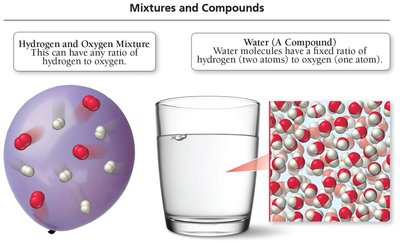
Mixtures vs. Compounds: Mixtures can have any ratio of elements, while compounds have a fixed ratio.
Example: Water (H2O) is a compound with a fixed ratio of hydrogen to oxygen, while a hydrogen-oxygen mixture can have any ratio.
Chemical Bonds
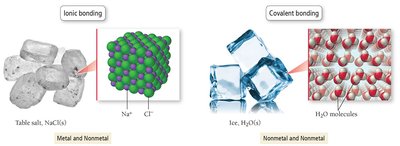
Atoms in compounds are held together by chemical bonds, which are classified into three main types: ionic, covalent, and metallic. This chapter focuses on ionic and covalent bonds.
Ionic Bonds: Formed by the transfer of electrons from one atom to another, typically between a metal and a nonmetal.
Covalent Bonds: Formed by the sharing of electrons between two nonmetals.
Ionic Bonds
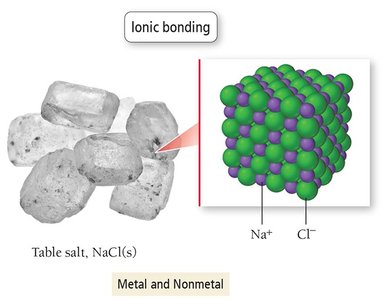
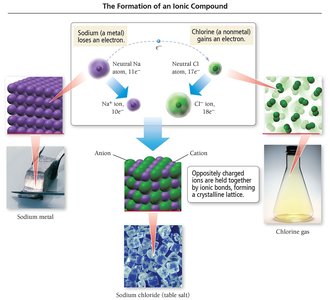
Ionic bonds involve the transfer of electrons from a metal atom to a nonmetal atom, resulting in the formation of oppositely charged ions (cations and anions) that attract each other.
Formation: Metal loses electrons to become a cation; nonmetal gains electrons to become an anion.
Example: Sodium (Na) transfers an electron to chlorine (Cl), forming Na+ and Cl−.
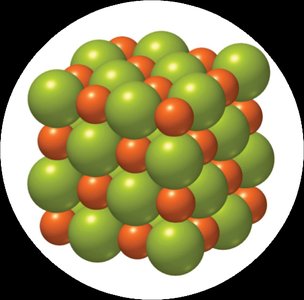
Structure: Ionic compounds form a crystal lattice, a regular 3D array of alternating cations and anions.
Covalent Bonds
Covalent bonds involve the sharing of electrons between two nonmetal atoms, resulting in the formation of molecules. These compounds are called molecular compounds.
Bonding: Atoms share pairs of electrons to achieve stable electron configurations.
Example: Water (H2O) is formed by covalent bonding between hydrogen and oxygen.
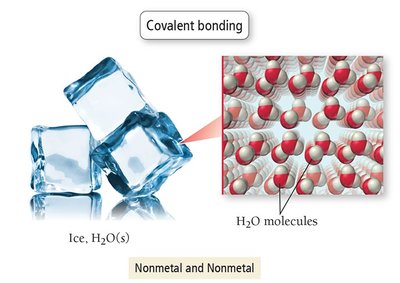
Chemical Formulas
Chemical formulas represent the composition of compounds. There are three main types:
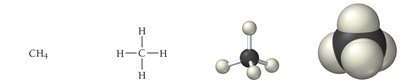
Structural Formula: Shows the arrangement of atoms and bonds.
Molecular Formula: Indicates the actual number of atoms of each element in a molecule.
Empirical Formula: Shows the simplest whole-number ratio of elements.
Molecular Models
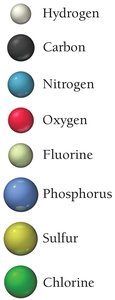
Molecular models visually represent the structure and shape of molecules. Two common types are:
Ball-and-Stick Model: Atoms are balls, bonds are sticks.
Space-Filling Model: Atoms fill the space between each other, showing the molecule's actual shape.
Lewis Structures
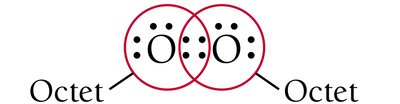
Lewis electron-dot structures depict the arrangement of valence electrons in atoms and molecules. They are essential for understanding chemical bonding, especially in covalent compounds.
Lewis Symbols: Represent valence electrons as dots around the element symbol.
Lewis Structures: Show how atoms share or transfer electrons to achieve stable configurations.
The Octet Rule
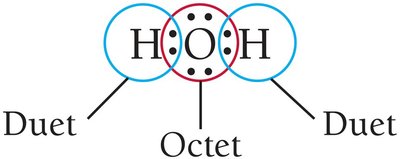
The octet rule states that atoms tend to gain, lose, or share electrons to achieve a noble gas-like configuration (eight valence electrons). There are exceptions:
Expanded Octets: Central atoms in row 3 or later can accommodate more than eight electrons.
Duet Rule: Hydrogen achieves stability with two electrons.
Incomplete Octets: Boron often forms compounds with only six electrons.
Ionic Compound Structure and Lattice Energy
Ionic compounds form a crystal lattice, maximizing attractions between cations and anions. Lattice energy is the energy released when one mole of an ionic compound forms from its ions in the gas phase.
Formula:
Factors Affecting Lattice Energy: Greater charges and shorter distances between ions increase lattice energy.
Naming Ionic Compounds
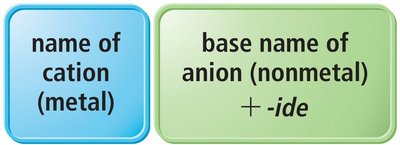
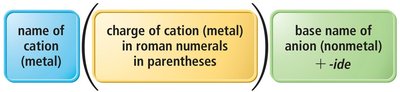
Ionic compounds are named based on the type of metal present:
Metals with One Type of Ion: Name the metal, then the nonmetal with '-ide' suffix.
Metals with Multiple Ions: Name the metal, indicate its charge with Roman numerals, then the nonmetal with '-ide' suffix.
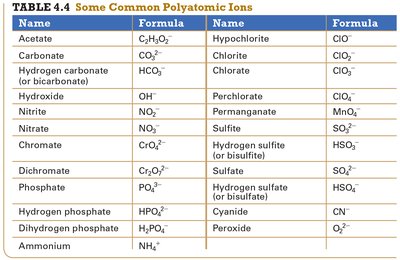
Polyatomic Ions
Polyatomic ions are charged groups of atoms that act as a single unit in ionic compounds. Most are oxyanions, containing oxygen and another element.
Examples: Nitrate (NO3−), Sulfate (SO42−), Ammonium (NH4+).
Naming: Use the name of the polyatomic ion in the compound name.
Covalent Bonding: Electrons, Double and Triple Bonds
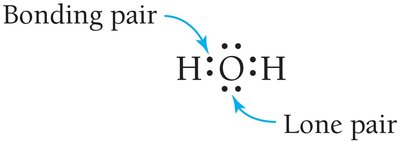
In covalent bonding, electrons shared between atoms are called bonding pairs, while those not shared are lone pairs. Atoms can share multiple pairs of electrons, forming double or triple bonds.
Single Bond: One pair of electrons shared.
Double Bond: Two pairs of electrons shared.
Triple Bond: Three pairs of electrons shared.
Naming Covalent (Molecular) Compounds
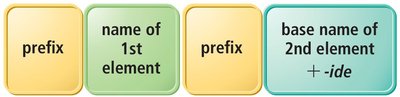
Molecular compounds are named using prefixes to indicate the number of atoms of each element.
Rules: Use prefixes for both elements, add '-ide' to the second element, and name elements in the order they appear in the formula.
Examples: CO2 is carbon dioxide, N2O5 is dinitrogen pentoxide.
Using Molar Mass
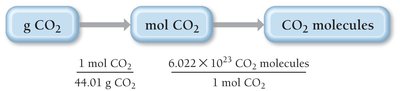
Molar mass is used to convert between mass, moles, and number of molecules. Avogadro’s number (6.022 × 10²³) is used to find the number of molecules in a given mass.
Conversion:
Example: Calculate the number of molecules in a sample using molar mass and Avogadro’s number.
Composition of Compounds
Percent composition is the percentage by mass of each element in a compound. It can be determined from the formula or experimental analysis.
Formula:
Chemical Formulas as Conversion Factors
Chemical formulas provide relationships between numbers (or moles) of atoms and molecules, useful for determining the amounts of constituent elements.
Determining Empirical and Molecular Formulas
The empirical formula shows the simplest ratio of elements, while the molecular formula shows the actual number of atoms in a molecule. To determine these:
Convert percentages to grams (assume 100 g if not given).
Convert grams to moles using molar mass.
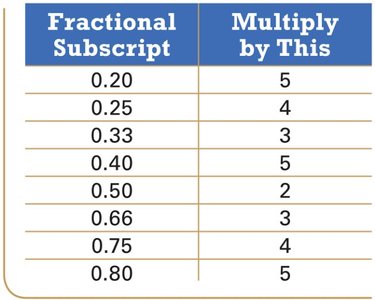
Divide by the smallest number of moles to get the atom ratio.
Multiply ratios to obtain whole numbers (see table for fractional subscripts).
Molecular formula is a whole-number multiple of the empirical formula: , where .
Summary Table: Common Polyatomic Ions
Name | Formula | Name | Formula |
|---|---|---|---|
Acetate | C2H3O2− | Hypochlorite | ClO− |
Carbonate | CO32− | Chlorite | ClO2− |
Hydrogen carbonate | HCO3− | Chlorate | ClO3− |
Hydroxide | OH− | Perchlorate | ClO4− |
Nitrite | NO2− | Permanganate | MnO4− |
Nitrate | NO3− | Sulfite | SO32− |
Chromate | CrO42− | Hydrogen sulfite | HSO3− |
Dichromate | Cr2O72− | Sulfate | SO42− |
Phosphate | PO43− | Hydrogen sulfate | HSO4− |
Hydrogen phosphate | HPO42− | Cyanide | CN− |
Dihydrogen phosphate | H2PO4− | Peroxide | O22− |
Ammonium | NH4+ |
