 Indietro
Chapter 9: Periodic Properties of the Elements – Structured Study Notes
Guida di studio - Note intelligenti
 Appunti personalizzati basati sui tuoi materiali, ampliati con definizioni chiave, esempi e contesto.
Periodic Properties of the Elements
Objectives and Overview
This chapter explores the periodic table, electron configurations, and the quantum-mechanical model's explanatory power. It covers periodic trends such as atomic size, ionization energy, electron affinity, and metallic character, providing foundational knowledge for understanding chemical behavior.
The Periodic Table
History and Structure
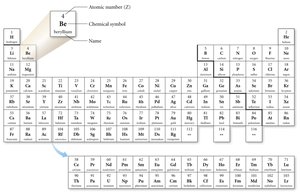
The periodic table organizes elements by increasing atomic number, revealing recurring chemical and physical properties. Early versions, such as Mendeleev’s table, predicted undiscovered elements and their properties, demonstrating the periodic law: when elements are arranged by increasing atomic mass, sets of properties recur periodically.
Periodic Law: Properties of elements repeat in a predictable pattern when arranged by atomic number.
Classification: Elements are classified as metals, nonmetals, and metalloids.
Groups and Periods: Vertical columns are groups (families), horizontal rows are periods.

Modern Periodic Table
Main Groups: s- and p-block elements.
Transition Metals: d-block elements.
Lanthanides and Actinides: f-block elements.
Electron Configurations and Quantum Mechanics
Electron Configuration Notation
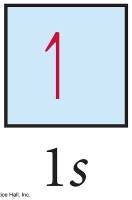
Electron configuration describes the arrangement of electrons in an atom’s orbitals. The notation uses numbers and letters to indicate principal energy levels and subshells (s, p, d, f).
Example: Hydrogen: 1s1
Principle Quantum Number (n): Indicates energy level.
Subshell (ℓ): Indicates orbital type (s, p, d, f).
Orbital Diagrams
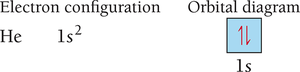
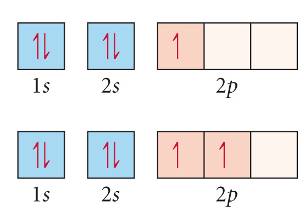
Orbital diagrams visually represent electron arrangements. Each orbital is depicted as a box, and electrons as arrows indicating spin.
Paired Electrons: Opposite spins in the same orbital.
Unpaired Electrons: Single electron in an orbital.
Quantum Numbers and Principles
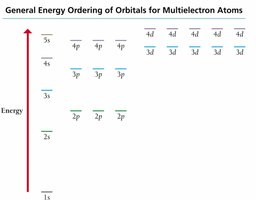
Pauli Exclusion Principle: No two electrons in an atom can have the same set of four quantum numbers.
Hund’s Rule: Electrons fill degenerate orbitals singly before pairing.
Aufbau Principle: Electrons occupy the lowest energy orbitals first.
Valence and Core Electrons
Definitions and Identification
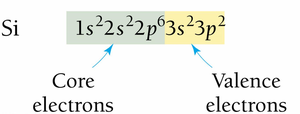
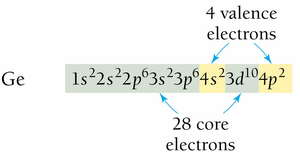
Valence electrons are found in the outermost shell and are responsible for chemical properties. Core electrons reside in inner shells and do not participate in bonding.
Valence Shell: Outermost principal energy level containing electrons.
Core Electrons: All other electrons not in the valence shell.
Electron Configuration Exceptions
Transition Elements and Exceptions
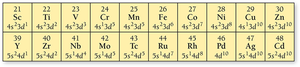
Some elements, especially transition metals, deviate from the expected electron configuration due to stability associated with half-filled or fully filled d subshells.
Example: Chromium (Cr) and Copper (Cu) have unusual electron configurations.
Periodic Trends
Atomic Radii
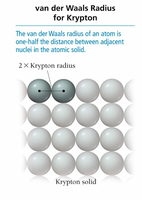
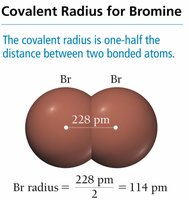
Atomic radius is a measure of the size of an atom. Two common definitions are van der Waals radius (nonbonding) and covalent radius (bonding).
Van der Waals Radius: Half the distance between nuclei of adjacent atoms in a solid.
Covalent Radius: Half the distance between nuclei of two identical atoms bonded together.
Trends in Atomic Radii
Down a Group: Atomic radius increases due to addition of electron shells.
Across a Period: Atomic radius decreases as effective nuclear charge increases, pulling electrons closer.
Effective Nuclear Charge (Zeff)
Effective nuclear charge is the net positive charge experienced by valence electrons, calculated as:
Formula:
Z: Number of protons in the nucleus.
S: Number of core electrons.
Ionic Radii
Cations: Smaller than parent atoms due to loss of electrons and reduced electron repulsion.
Anions: Larger than parent atoms due to gain of electrons and increased electron repulsion.
Trends: Ionic radius increases down a group and decreases across a period for ions of the same charge.
Isoelectronic Series
Isoelectronic ions have the same number of electrons and electron configuration. Their radii decrease with increasing nuclear charge.
Ionization Energy
Definition and Trends
Ionization energy is the minimum energy required to remove an electron from a gaseous atom or ion. It is an endothermic process.
First Ionization Energy (IE1): Energy to remove the first electron.
Successive Ionization Energies: Each subsequent removal requires more energy.
Trend: Increases across a period, decreases down a group.
Irregularities in Ionization Energy
Sublevel Stability: Full or half-full sublevels require extra energy to disrupt.
Examples: Be vs. B, N vs. O.
Electron Affinity
Definition and Trends
Electron affinity is the energy change when an electron is added to a gaseous atom. Most elements release energy (exothermic), but noble gases have positive electron affinities.
Trend: Generally becomes more negative across a period, less negative down a group.
Metallic Character
Properties and Trends
Metallic character describes how readily an element loses electrons. Metals are shiny, conductive, malleable, and tend to form cations. Nonmetals are dull, poor conductors, and tend to form anions.
Trend: Increases down a group, decreases across a period.
Summary of Periodic Trends
Comprehensive Overview
The periodic table reveals trends in atomic size, ionization energy, electron affinity, and metallic character, all explained by electron configuration and effective nuclear charge. Understanding these trends is essential for predicting element behavior and chemical reactivity.
Tables
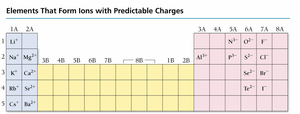
Elements That Form Ions with Predictable Charges
This table classifies elements by their typical ionic charges, aiding in predicting compound formation.
Group | Common Ion |
|---|---|
1A | Li+, Na+, K+, Rb+, Cs+ |
2A | Mg2+, Ca2+, Sr2+, Ba2+ |
3A | Al3+ |
5A | N3− |
6A | O2−, S2− |
7A | F−, Cl−, Br−, I− |
Orbital Blocks of the Periodic Table
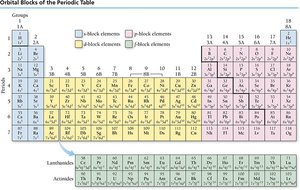
This table shows the division of the periodic table into s, p, d, and f blocks, corresponding to the type of orbitals being filled.
Block | Elements |
|---|---|
s-block | Groups 1A, 2A |
p-block | Groups 3A–8A |
d-block | Transition metals |
f-block | Lanthanides, Actinides |
Key Equations
Coulomb’s Law:
Effective Nuclear Charge:
Additional info:
Some content was expanded for clarity and completeness, including definitions and examples of periodic trends, quantum principles, and electron configuration exceptions.
