 Indietro
Chapter E: Units, Measurement, and Problem Solving – General Chemistry Essentials
Guida di studio - Note intelligenti
 Appunti personalizzati basati sui tuoi materiali, ampliati con definizioni chiave, esempi e contesto.
Units, Measurement, and Problem Solving
Introduction
This chapter introduces the foundational concepts of units, measurement, and problem solving in chemistry. Mastery of these topics is essential for accurate scientific communication and calculation.
Units of Measurement
Definition and Importance
Units are standardized quantities used to specify measurements (e.g., meters, kilograms).
Every measurement in chemistry must include both a number and a unit (e.g., 10 inches).
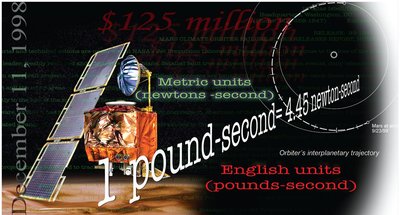
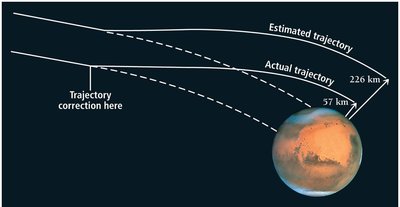
Using correct units is crucial to avoid costly errors in science and engineering.
International System of Units (SI Units)
The SI system (Système International d’Unités) is the globally accepted metric system for scientific measurements.
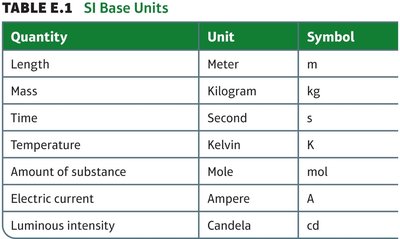
It consists of seven base units, each corresponding to a fundamental physical quantity.
Quantity | Unit | Symbol |
|---|---|---|
Length | Meter | m |
Mass | Kilogram | kg |
Time | Second | s |
Temperature | Kelvin | K |
Amount of substance | Mole | mol |
Electric current | Ampere | A |
Luminous intensity | Candela | cd |
Base Units and Their Physical Standards
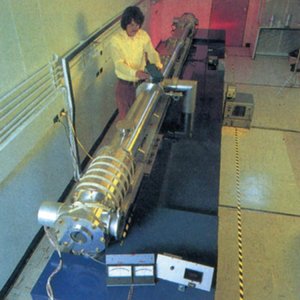
Length (meter, m): Defined as the distance light travels in a vacuum in 1/299,792,458 seconds.
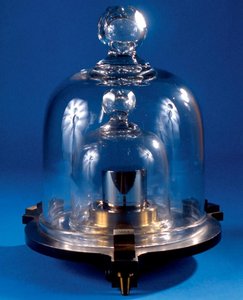
Mass (kilogram, kg): Originally defined by a platinum-iridium cylinder; now defined by physical constants.
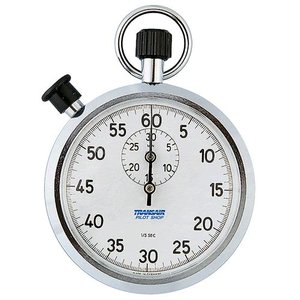
Time (second, s): Defined by the vibration of cesium atoms in atomic clocks.

Temperature Scales
Definition and Scales
Temperature measures the average kinetic energy of particles in a substance.
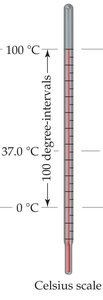
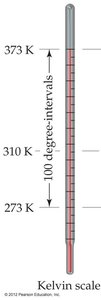
The Celsius and Kelvin scales are standard in scientific work.
Kelvin (K): SI unit of temperature; absolute zero is 0 K.
Celsius (°C): Water freezes at 0°C and boils at 100°C.
Fahrenheit (°F): Not used in scientific contexts; water freezes at 32°F and boils at 212°F.
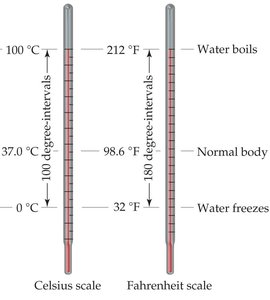
Conversion formulas:
The Metric System and Prefixes
Metric Prefixes
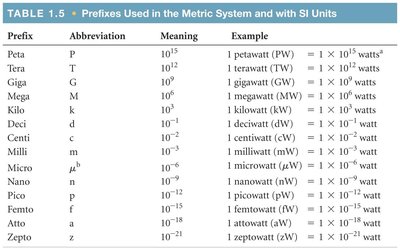
Prefixes are used to express multiples or fractions of base units, making measurements more convenient.
Prefix | Abbreviation | Meaning | Example |
|---|---|---|---|
Kilo | k | 103 | 1 kilogram (kg) = 1 × 10³ g |
Milli | m | 10-3 | 1 milliliter (mL) = 1 × 10⁻³ L |
Micro | μ | 10-6 | 1 micrometer (μm) = 1 × 10⁻⁶ m |
Nano | n | 10-9 | 1 nanogram (ng) = 1 × 10⁻⁹ g |
Derived Units
Volume and Density
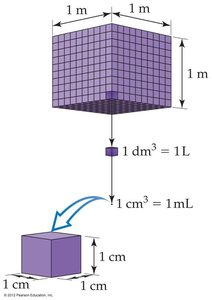
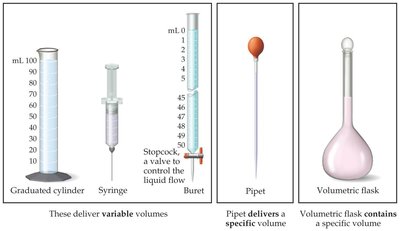
Volume (V): The amount of space an object occupies. SI unit is cubic meter (m3), but liter (L) and milliliter (mL) are commonly used in chemistry.
1 L = 1 dm3; 1 mL = 1 cm3
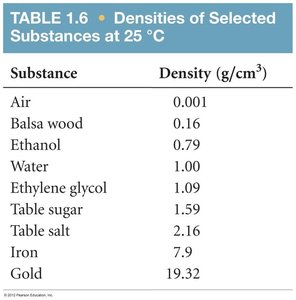
Density (d): The mass per unit volume of a substance.
Formula:
Substance | Density (g/cm3) |
|---|---|
Water | 1.00 |
Ethanol | 0.79 |
Iron | 7.9 |
Gold | 19.32 |

Uncertainty in Measurement
Exact vs. Inexact Numbers
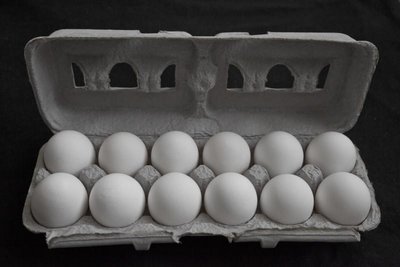
Exact numbers: Known with complete certainty (e.g., 12 eggs in a dozen).
Inexact numbers: Obtained by measurement; always involve some uncertainty.
Reporting Measurements
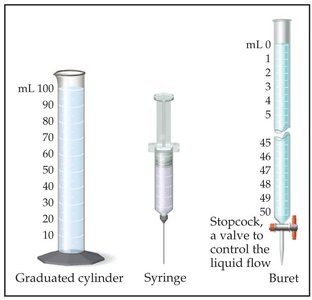
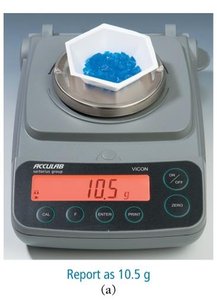
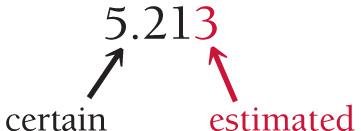
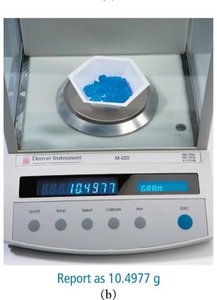
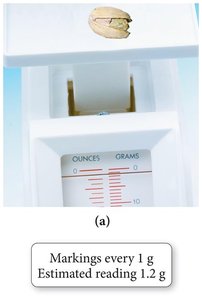
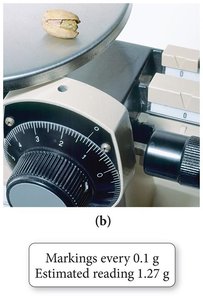
All measured values are reported with one estimated digit, reflecting the uncertainty of the measurement.
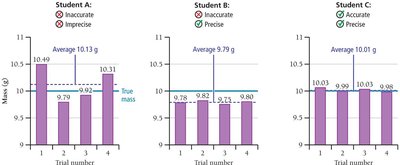
Accuracy vs. Precision
Accuracy: How close a measurement is to the true value.
Precision: How close repeated measurements are to each other.
Significant Figures
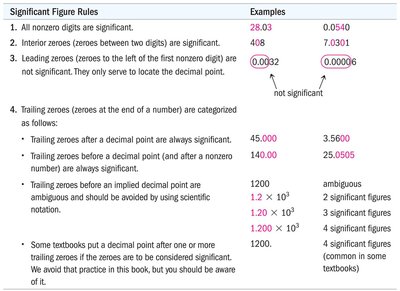
Rules for Significant Figures
All nonzero digits are significant.
Interior zeroes (between nonzero digits) are significant.
Leading zeroes (before the first nonzero digit) are not significant.
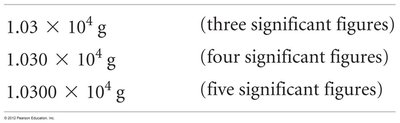
Trailing zeroes are significant only if a decimal point is present.
Significant Figures in Calculations
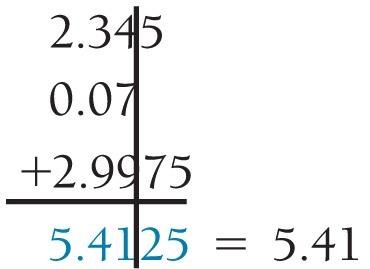
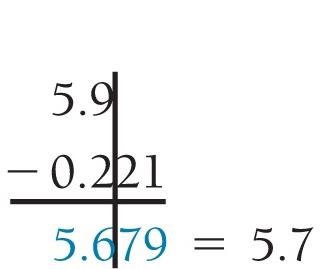
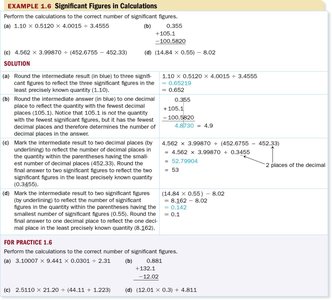
Addition/Subtraction: The result should have the same number of decimal places as the measurement with the fewest decimal places.
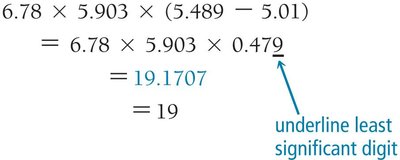
Multiplication/Division: The result should have the same number of significant figures as the measurement with the fewest significant figures.
Energy and Its Units
Definition and Types of Energy
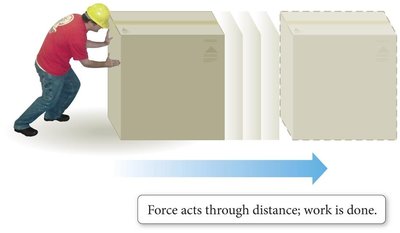
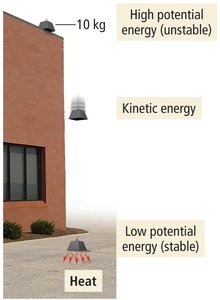
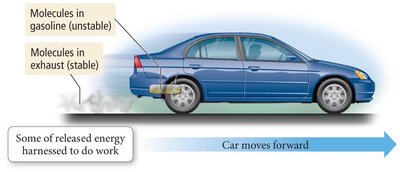
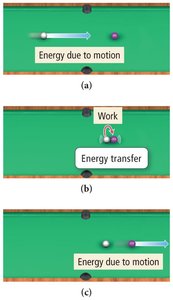
Energy is the capacity to do work or transfer heat.
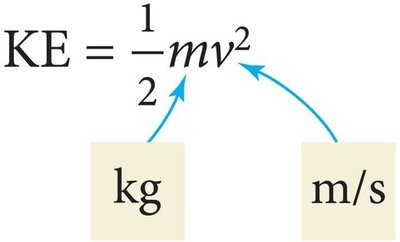
Kinetic energy (KE): Energy of motion.
Potential energy (PE): Stored energy due to position or composition.
Formula for kinetic energy:
Units of Energy
The joule (J) is the SI unit of energy.
1 calorie (cal) = 4.184 J
1 Calorie (Cal, used in nutrition) = 1000 cal = 1 kilocalorie (kcal)
Law of Conservation of Energy
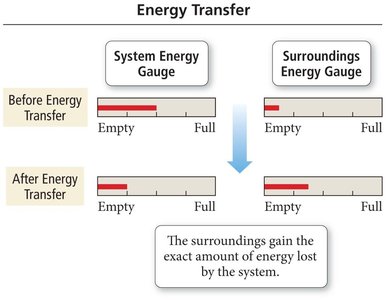
Energy cannot be created or destroyed, only transferred or converted from one form to another.
In chemical and physical changes, energy is exchanged between the system and the surroundings.
Exothermic process: System loses energy (as heat) to surroundings.
Endothermic process: System gains energy (as heat) from surroundings.
Solving Chemical Problems: Dimensional Analysis
Dimensional Analysis and Conversion Factors
Dimensional analysis is a method for converting between units using conversion factors.
A conversion factor is a ratio of equivalent values (e.g., 1 in = 2.54 cm).
Set up calculations so that units cancel, leaving the desired unit.
Multi-Step and Power Conversions
For conversions involving units raised to a power (e.g., cm3 to mL), raise both the number and the unit to the power.
Solving Problems Using Equations
Identify the equation relating the quantities (e.g., ).
Rearrange to solve for the unknown, substitute known values, and compute the answer with correct units and significant figures.
Summary
Understanding and using correct units is essential in chemistry.
Measurements always include uncertainty, reflected in significant figures.
Energy is a key concept, with specific units and conservation laws.
Dimensional analysis is a powerful tool for solving chemical problems.
