 Indietro
CHEM 1411 General Chemistry I Syllabus and Course Structure
Guida di studio - Note intelligenti
 Appunti personalizzati basati sui tuoi materiali, ampliati con definizioni chiave, esempi e contesto.
Course Overview
Introduction to General Chemistry I
This course, CHEM 1411 (General Chemistry I), provides a foundational introduction to the principles of chemistry. The curriculum is designed to cover essential topics such as matter and measurements, atomic structure, chemical bonding, stoichiometry, properties of gases, liquids, solids, and solutions, as well as laboratory techniques and safety. The course is structured to include lectures, assignments, quizzes, exams, and laboratory activities, ensuring a comprehensive understanding of both theoretical and practical aspects of chemistry.
Course Topics and Learning Outcomes
Major Topics Covered
Matter and Measurements: Understanding the fundamental properties of matter, classification, and measurement techniques.
Atoms and Elements: Exploring atomic structure, nuclear and electronic configurations, and periodic trends.
Chemical Bonding and Molecular Geometry: Describing bonding in molecules and ions, and predicting molecular shapes.
Stoichiometry: Solving quantitative chemical problems, including writing and balancing equations.
Gas Laws and Kinetic Molecular Theory: Applying gas laws and understanding molecular motion.
Thermochemistry: Determining the role of energy in physical and chemical changes.
Laboratory Techniques: Practicing safe and accurate experimental methodologies, including proper handling of chemicals and equipment.
Student Learning Outcomes
Define and classify matter, compounds, and chemical reactions.
Determine atomic structure and identify periodic trends.
Describe chemical bonding and molecular shapes.
Solve stoichiometric and gas law problems.
Write and balance chemical equations; apply nomenclature rules.
Conduct laboratory experiments safely and accurately.
Interpret experimental data and relate observations to theoretical principles.
Course Structure and Assessment
Modules and Assessment Types
The course is divided into 16 modules, each corresponding to a chapter from the "Chemistry: Atoms First" textbook. Each module includes assignments, quizzes, labs, and discussions. Assessments are designed to reinforce learning and provide opportunities for practical application.
Exams: Four mid-term exams (lowest score dropped), plus a mandatory cumulative final exam.
Quizzes: Five quizzes (lowest score dropped).
Labs: Twelve laboratory activities, including virtual labs and guided inquiry.
Worksheets: Twelve worksheets to reinforce key concepts.
Discussions: Five discussion sessions to promote engagement and understanding.
Extra Credit: Bonus activities available throughout the semester.
Grading Breakdown
Assessment | Number | Points | Percent of Final Grade |
|---|---|---|---|
Exams | 4 (lowest dropped) | 10/exam (40) | 25% |
Quizzes | 5 (lowest dropped) | 10/quiz (50) | 20% |
Labs | 12 | 10/lab (120) | 25% |
Worksheets | 12 | 10/homework (120) | 10% |
Discussions | 5 | 5/discussion (25) | 5% |
Final Exam | 1 | 15 | 15% |
Course Materials
Required Textbook
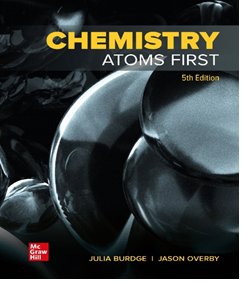
Chemistry: Atoms First, 5th Edition by Julia Burdge and Jason Overby (McGraw-Hill)
ALEKS 360 access for online assignments and practice
Laboratory and Safety
Lab Techniques and Procedures
Use basic laboratory apparatus and apply experimental methodologies.
Demonstrate safe and proper handling of laboratory equipment and chemicals.
Record experimental work accurately and communicate results clearly.
Design and conduct fundamental experiments based on chemical principles.
Course Schedule
Module-by-Module Breakdown
Each module covers a specific chapter and includes assignments, labs, quizzes, and exams.
Modules progress from introductory concepts (matter, measurements) to advanced topics (thermochemistry, gas laws, molecular geometry).
Lab activities reinforce theoretical concepts and develop practical skills.
Academic Policies and Support
Attendance and Academic Integrity
Regular attendance and participation are required.
Academic integrity and honesty are expected at all times.
Late work is not accepted; all assignments must be submitted by the due date.
Student Support Services
Virtual and on-campus tutoring available.
Technical support and orientation for online learning.
Disability services and accommodations provided as needed.
Summary
CHEM 1411 General Chemistry I is a comprehensive course covering the fundamental principles of chemistry, with a strong emphasis on both theoretical understanding and practical laboratory skills. The course is structured to ensure mastery of key concepts through a variety of assessments and activities, supported by the "Chemistry: Atoms First" textbook and ALEKS online resources.
