 Indietro
Chemical Bonding and Molecular Geometry: Ionic and Covalent Compounds
Guida di studio - Note intelligenti
 Appunti personalizzati basati sui tuoi materiali, ampliati con definizioni chiave, esempi e contesto.
Chemical Bonding and Molecular Geometry
Compounds and Chemical Bonds
A compound is a substance composed of two or more elements combined in a specific ratio and held together by chemical bonds. Compounds can be classified based on the types of bonds that hold their atoms together: ionic, covalent, or metallic. This chapter focuses on ionic and covalent bonding, which are fundamental to understanding chemical structure and reactivity.
Ionic bonding involves the electrostatic attraction between oppositely charged ions, typically formed between metals and nonmetals.
Covalent bonding involves the sharing of electron pairs between atoms, usually nonmetals.
Familiar examples of compounds include water (H2O) and sodium chloride (NaCl).
Classification of Elements: Metals, Nonmetals, and Metalloids
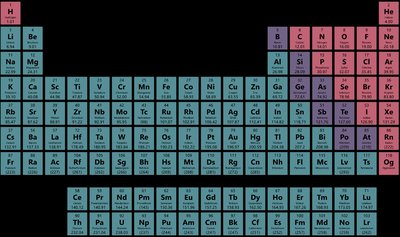
Elements are categorized based on their physical and chemical properties:
Metals: Good conductors of heat and electricity, typically solid (except mercury), ductile, and malleable.
Nonmetals: Poor conductors, can exist in all physical states, and are generally brittle when solid.
Metalloids: Exhibit properties intermediate between metals and nonmetals; often semiconductors.
Ionic Bond Formation and Lattice Energy
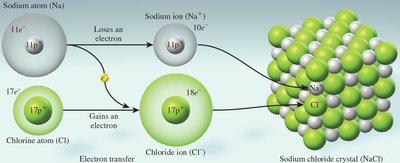
Ionic compounds are formed when electrons are transferred from a metal atom to a nonmetal atom, resulting in the formation of cations and anions. The resulting electrostatic attraction forms a crystal lattice.
Lattice energy is the energy required to separate one mole of an ionic solid into its constituent ions in the gas phase. It is a measure of the stability of an ionic compound.
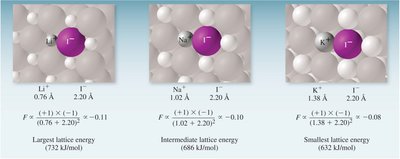
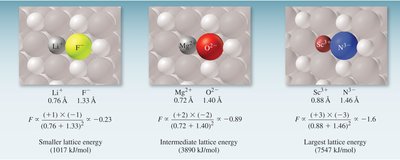
Lattice energy increases with greater ionic charge and decreases with increasing ionic radius.
Factors Affecting Lattice Energy
Lattice energy is proportional to the product of the charges of the ions and inversely proportional to the distance between them:
Smaller ions and higher charges result in larger lattice energies.
Electron Configurations of Ions and Isoelectronic Species
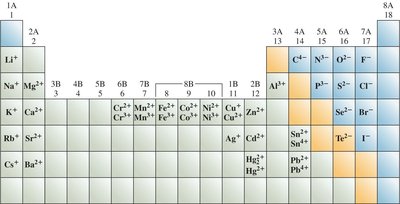
When atoms form ions, they gain or lose electrons to achieve a stable electron configuration, often resembling the nearest noble gas. Species with the same electron configuration are called isoelectronic.
Example: Na (1s22s22p63s1) loses one electron to become Na+ (isoelectronic with Ne).
Cl (1s22s22p63s23p5) gains one electron to become Cl– (isoelectronic with Ar).
Bond Polarity and Electronegativity
Electronegativity and Bond Types
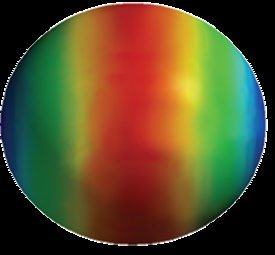
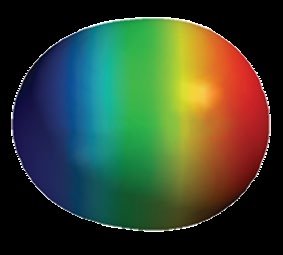
Electronegativity is the ability of an atom in a compound to attract electrons to itself. The difference in electronegativity between two atoms determines the type of bond formed:
Nonpolar covalent bond: Electronegativity difference < 0.5
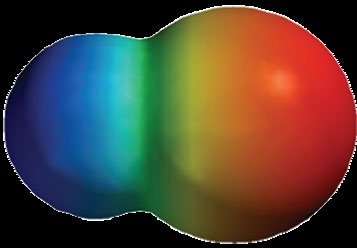
Polar covalent bond: Electronegativity difference between 0.5 and 2.0
Ionic bond: Electronegativity difference ≥ 2.0
In polar covalent bonds, electrons are shared unequally, resulting in partial charges (δ+ and δ–).
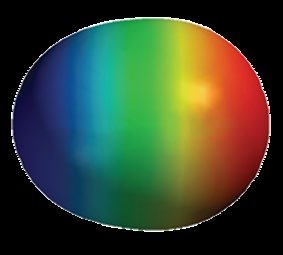
Dipole Moment and Percent Ionic Character
The dipole moment (μ) is a quantitative measure of bond polarity, defined as:
Q = magnitude of the charge
r = distance between charges
Measured in debye units (D): 1 D = 3.336 × 10⁻³⁰ C·m
The percent ionic character of a bond compares the observed dipole moment to the value expected for a completely ionic bond:
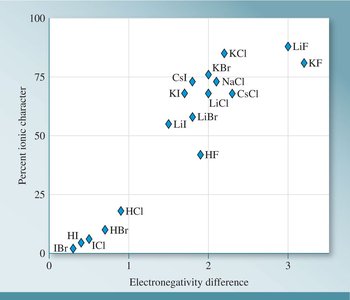
Naming and Writing Formulas for Ionic Compounds
Types of Ionic Compounds
Metal + Nonmetal (e.g., NaCl, CaCl2)
Metal + Polyatomic ion (e.g., Ca(BrO3)2)
Polyatomic ion + Nonmetal (e.g., NH4Cl)
Polyatomic ion + Polyatomic ion (e.g., NH4NO3)
Formulas are written so that the total positive and negative charges balance to zero.
Naming Ionic Compounds
Name the cation first (use Roman numerals for transition metals with variable charge).
Name the anion, changing the ending to -ide for monatomic ions or using the polyatomic ion name.
For compounds with polyatomic ions, retain the polyatomic ion's name.
Example: FeCl2 is iron(II) chloride; FeCl3 is iron(III) chloride.
Writing Formulas from Names
Determine the charges of the ions involved.
Balance the charges using the lowest whole-number ratio (cross-multiplication method).
Write the empirical formula.
Polyatomic Ions and Oxoanions
Polyatomic Ions
Polyatomic ions are charged species composed of two or more atoms covalently bonded. Common examples include sulfate (SO42–), nitrate (NO3–), and ammonium (NH4+).
Oxoanions are polyatomic anions containing oxygen and another element. Their names depend on the number of oxygen atoms:
Most O: per...ate (e.g., ClO4–, perchlorate)
Base: ...ate (e.g., ClO3–, chlorate)
One fewer O: ...ite (e.g., ClO2–, chlorite)
Least O: hypo...ite (e.g., ClO–, hypochlorite)
Naming Molecular Compounds
Binary Molecular Compounds
Binary molecular compounds consist of two nonmetals. Greek prefixes indicate the number of atoms:
1: mono- (usually omitted for the first element)
2: di-
3: tri-
4: tetra-
5: penta-
6: hexa-
7: hepta-
8: octa-
9: nona-
10: deca-
Example: CO2 is carbon dioxide; N2O5 is dinitrogen pentoxide.
Hydrates and Common Inorganic Compounds
Hydrates
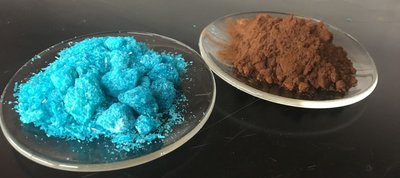
A hydrate is a compound that contains a specific number of water molecules within its solid structure. The water can be removed by heating, resulting in an anhydrous compound.
Example: Copper(II) chloride dihydrate (CuCl2·2H2O) is blue; the anhydrous form is brown.
Lewis Dot Symbols and the Octet Rule
Valence Electrons and Lewis Dot Symbols
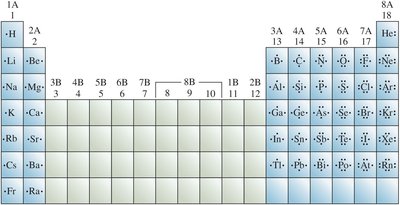
Valence electrons are the outermost electrons involved in bonding. Lewis dot symbols represent valence electrons as dots around the element symbol. The number of dots equals the number of valence electrons.
Lewis Structures and Multiple Bonds
Lewis structures depict covalent bonding by showing shared electron pairs as dashes or pairs of dots. Atoms may form single, double, or triple bonds to achieve a stable electron configuration (octet rule).
Single bond: one shared pair
Double bond: two shared pairs
Triple bond: three shared pairs
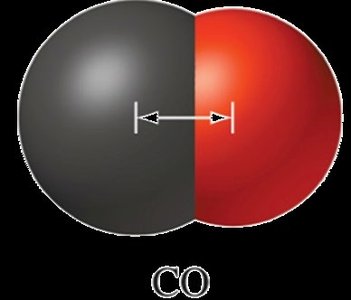
Bond length decreases and bond strength increases with the number of shared pairs.
Steps for Drawing Lewis Structures
Count total valence electrons (add for negative ions, subtract for positive ions).
Draw the skeletal structure (least electronegative atom is central).
Connect atoms with single bonds.
Complete octets of terminal atoms with lone pairs.
Place remaining electrons on the central atom.
If the central atom lacks an octet, form multiple bonds as needed.
Check for the best formal charges.
