 Indietro
Chemical Bonding and Molecular Geometry: Study Notes
Guida di studio - Note intelligenti
 Appunti personalizzati basati sui tuoi materiali, ampliati con definizioni chiave, esempi e contesto.
Chemical Bonding and Molecular Geometry
Compounds and Ionic Bonding
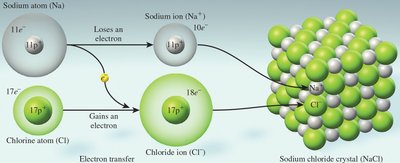
Compounds are substances composed of two or more elements combined in a specific ratio and held together by chemical bonds. Ionic bonding refers to the electrostatic attraction that holds oppositely charged ions together in an ionic compound. Typically, ionic compounds are formed between metals and nonmetals, resulting in the transfer of electrons from the metal to the nonmetal, producing cations and anions.
Cation: A positively charged ion formed by the loss of electrons.
Anion: A negatively charged ion formed by the gain of electrons.
Chemical Formula: Denotes the constituent elements and their ratio in the compound (e.g., NaCl).
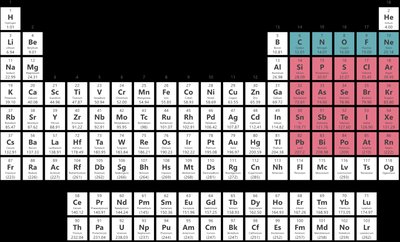
Classification of Elements: Metals, Nonmetals, and Metalloids
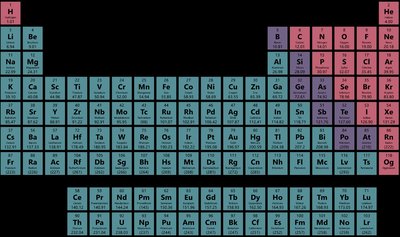
Elements are classified based on their physical and chemical properties into metals, nonmetals, and metalloids.
Metals: Good conductors of heat and electricity, typically solid (except mercury), ductile, and malleable.
Nonmetals: Poor conductors, can exist in all physical states, and are generally brittle.
Metalloids: Exhibit properties intermediate between metals and nonmetals; often semiconductors.
Lattice Energy and Ionic Compound Stability
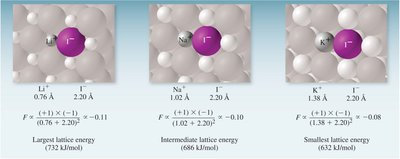
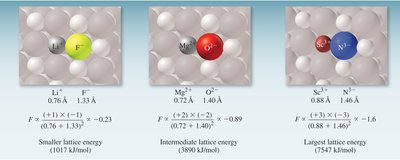
Lattice energy is the energy required to convert one mole of an ionic solid into its constituent ions in the gas phase. It is a measure of the stability of an ionic compound and depends on the charges of the ions and the distance between them.
Formula: , where is the charge and is the distance between ions.
Higher charges and smaller distances result in larger lattice energies and greater stability.
Electron Configurations of Ions and Isoelectronic Species
When atoms form ions, their electron configurations change to achieve a stable, noble gas configuration. Species with the same electron configuration are called isoelectronic.
Example: Na: ; Na+: (isoelectronic with Ne)
Example: Cl: ; Cl−: (isoelectronic with Ar)
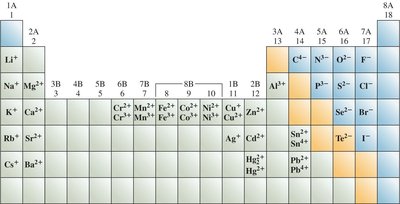
Types of Chemical Bonds: Covalent, Polar Covalent, and Ionic
Chemical bonds can be classified based on the sharing or transfer of electrons:
Pure Covalent Bond: Electrons are shared equally between atoms (e.g., H2).
Polar Covalent Bond: Electrons are shared unequally, resulting in partial charges (e.g., HF).
Ionic Bond: Complete transfer of electrons from one atom to another, forming ions (e.g., NaCl).
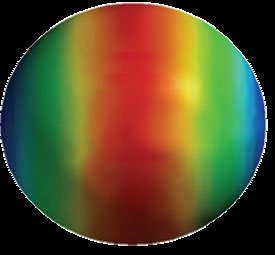
Electronegativity and Bond Polarity
Electronegativity is the ability of an atom to attract electrons in a chemical bond. The difference in electronegativity between two atoms determines the bond type:
ΔEN < 0.5: Nonpolar covalent
0.5 ≤ ΔEN < 2.0: Polar covalent
ΔEN ≥ 2.0: Ionic
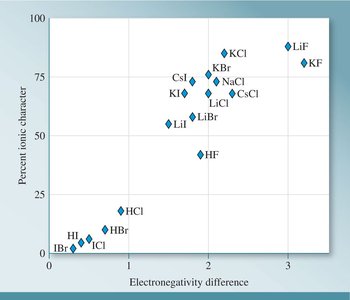
Polyatomic Ions and Naming Ionic Compounds
Polyatomic ions are ions composed of two or more atoms covalently bonded, carrying a net charge. Naming ionic compounds involves identifying the cation and anion, using Roman numerals for transition metals, and applying specific rules for polyatomic ions and oxoanions.
Examples: NaCl (sodium chloride), Ca(BrO3)2 (calcium bromate), NH4NO3 (ammonium nitrate)
Oxoanions: Names depend on the number of oxygen atoms (e.g., chlorate ClO3−, perchlorate ClO4−).
Lewis Dot Symbols and the Octet Rule
Lewis dot symbols represent valence electrons as dots around the element symbol. The octet rule states that atoms tend to gain, lose, or share electrons to achieve eight valence electrons, similar to noble gases.
Valence Electrons: Outermost electrons involved in bonding.
Lewis Structures: Show bonding and lone pairs in molecules.
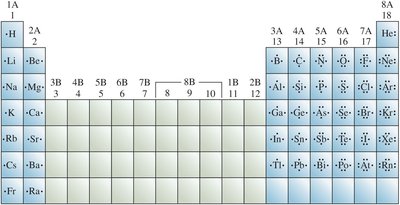
Lewis Structures and Multiple Bonds
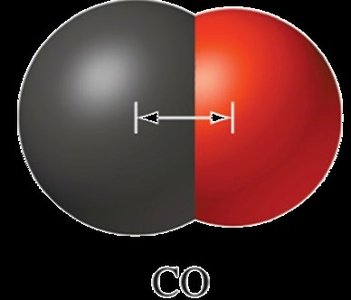
Lewis structures depict the arrangement of atoms, bonds, and lone pairs in a molecule. Multiple bonds (double, triple) involve sharing more than one pair of electrons and are shorter and stronger than single bonds.
Bond Length: Distance between nuclei of bonded atoms.
Bond Strength: Energy required to break a bond; increases with bond order.
Formal Charge and Resonance
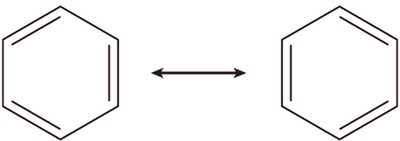
Formal charge helps determine the most plausible Lewis structure when multiple possibilities exist. Resonance structures are different representations of a molecule where only the positions of electrons differ, not the arrangement of atoms.
Formal Charge Formula:
Resonance: Actual structure is a hybrid of all valid resonance forms.
Exceptions to the Octet Rule
Some molecules do not follow the octet rule:
Incomplete Octet: Central atom has fewer than eight electrons (e.g., BF3).
Odd-Electron Molecules: Free radicals with an unpaired electron (e.g., NO).
Expanded Octet: Central atom has more than eight electrons (possible for elements in period 3 or higher, e.g., SF6).
Coordinate Covalent Bonds (Dative Bonds)
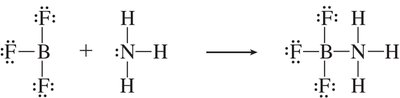
A coordinate covalent bond forms when both electrons in a shared pair come from the same atom. This is common in Lewis acid-base reactions.
Example: NH3 donates a lone pair to BF3 to form a coordinate bond.
Molecular Geometry and the VSEPR Model
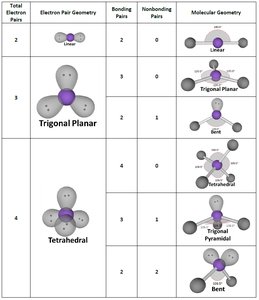
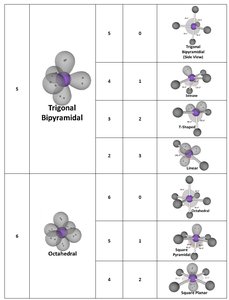
The Valence Shell Electron Pair Repulsion (VSEPR) model predicts the shapes of molecules based on the repulsion between electron domains (bonding and lone pairs) around the central atom.
Electron-Domain Geometry: Arrangement of all electron domains (bonding and lone pairs).
Molecular Geometry: Arrangement of only the atoms (ignoring lone pairs).
Common Geometries: Linear, trigonal planar, tetrahedral, trigonal bipyramidal, octahedral.
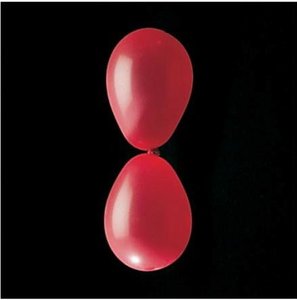
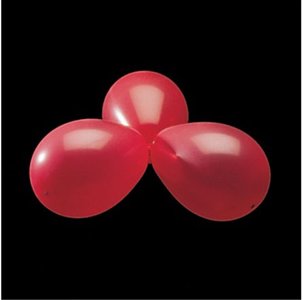
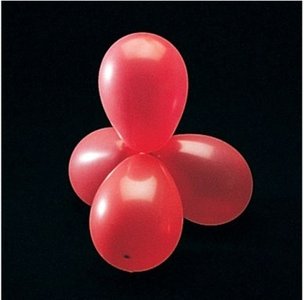

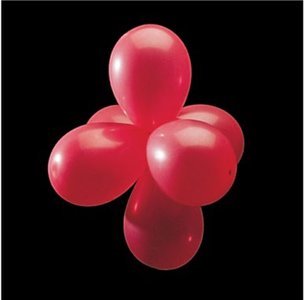
Electron-Domain and Molecular Geometry: Examples
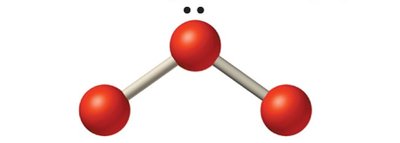
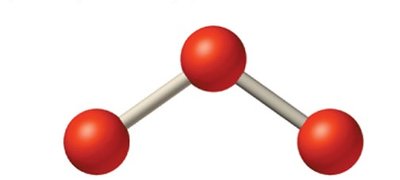
When lone pairs are present, the molecular geometry differs from the electron-domain geometry. For example, a trigonal planar electron-domain geometry with one lone pair becomes a bent molecular geometry.
Bond Angles and Deviations from Ideal Geometry
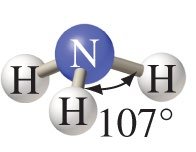
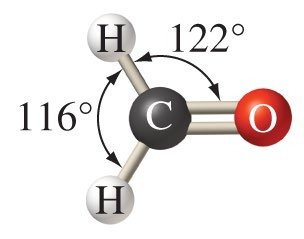
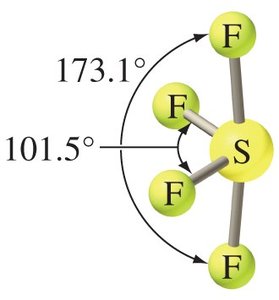
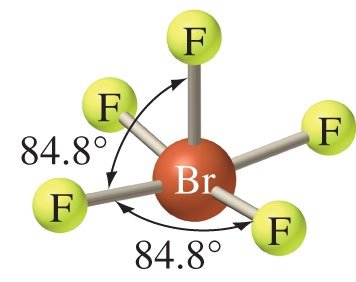
Bond angles are determined by the arrangement of electron domains. Lone pairs and multiple bonds can cause deviations from ideal bond angles due to increased repulsion.
Example: In NH3, the bond angle is 107°, less than the ideal 109.5° due to lone pair repulsion.
Example: In CH2O, bond angles deviate from ideal values due to double bonds.
Molecular Polarity
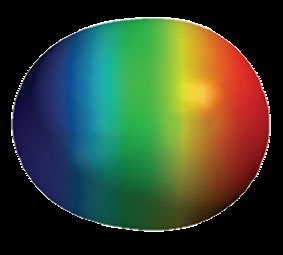
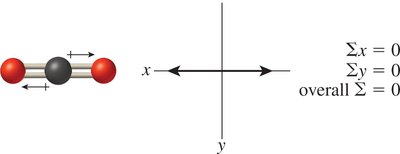
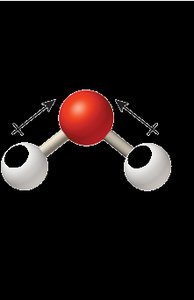
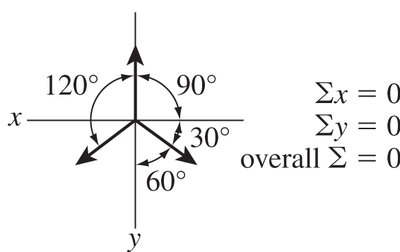
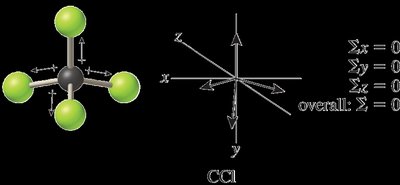
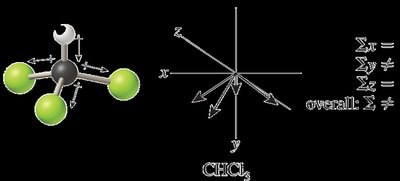
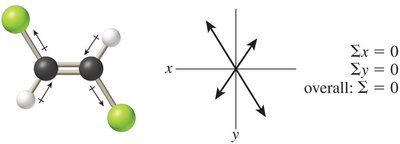
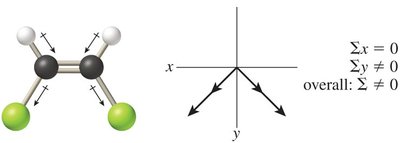
Molecular polarity depends on both the polarity of individual bonds and the molecular geometry. A molecule is polar if the vector sum of its bond dipoles does not cancel out.
Nonpolar Molecules: CO2, CCl4 (symmetrical geometry cancels dipoles)
Polar Molecules: H2O, CHCl3 (asymmetrical geometry results in a net dipole)
Intramolecular and Intermolecular Forces
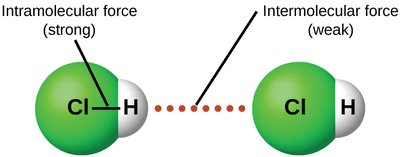
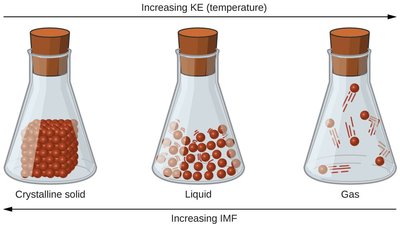
Intramolecular forces are the strong forces holding atoms together within a molecule (covalent bonds). Intermolecular forces (IMFs) are weaker forces between molecules and are responsible for physical properties such as boiling and melting points.
Types of IMFs: Dispersion (London), dipole-dipole, hydrogen bonding, ion-dipole, dipole-induced dipole, ion-induced dipole.
Strength Order: Ionic > H-bonding > dipole-dipole > dispersion
Dispersion, Dipole-Dipole, and Hydrogen Bonding
Dispersion forces arise from temporary dipoles in all molecules. Dipole-dipole forces occur between polar molecules. Hydrogen bonds are a special, strong type of dipole-dipole interaction involving H bonded to N, O, or F.
Dispersion: Increases with molecular size and surface area.
Hydrogen Bonding: Responsible for high boiling points of water and other compounds.
Trends in Intermolecular Forces and Physical Properties
Stronger intermolecular forces lead to higher melting and boiling points. Increasing molecular weight and surface area also increase these properties. Ionic compounds generally have the highest melting and boiling points, followed by substances with hydrogen bonding, dipole-dipole, and dispersion forces.
Example: NaCl > H2O > Cl2 in boiling point.
