 Indietro
Chemical Bonding and Molecular Structure: Study Guide
Guida di studio - Note intelligenti
 Appunti personalizzati basati sui tuoi materiali, ampliati con definizioni chiave, esempi e contesto.
Chemical Bonding and Molecular Structure
What is a Chemical Bond?
Chemical bonds are attractive forces that hold groups of atoms together, allowing them to function as a unit. Bonding is fundamental to the formation of compounds, which are more stable (lower energy) than their constituent elements. Energy is released when a bond is formed, and energy is required to break a bond.
Bond energy: The energy required to break a bond.
Physical properties: Bonding affects melting point, hardness, conductivity, and solubility.
Energy concept: Formation of bonds releases energy; breaking bonds requires energy.
Types of Chemical Bonds
There are three primary types of chemical bonds, each with distinct characteristics and effects on molecular properties.
Ionic bonds: Electrostatic attraction between ions, typically formed between metals and nonmetals. These bonds result in high melting points and solid-state crystalline structures.
Covalent bonds: Electrons are shared between nuclei. Sharing is rarely equal, leading to polar or nonpolar covalent bonds.
Metallic bonds: Involves a 'sea' of delocalized electrons surrounding metal ions, resulting in excellent electrical conductivity.
Coulomb’s Law and Bond Energy
Coulomb’s Law is used to calculate the energy of ionic bonds:
Where r is the distance between ion centers (nm), Q1 and Q2 are ion charges, and E is energy in Joules. A negative sign indicates an attractive force.
Valence Electrons and Lewis Dot Structures
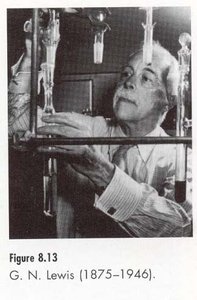
Valence electrons are the outermost electrons (ns, np, and sometimes nd for transition elements). Lewis dot structures, introduced by G.N. Lewis, emphasize the stability of rare gas configurations (octet rule: s2p6).
Chemical Bond Formation
Bond formation involves balancing attractive and repulsive forces between atoms. The bond length is the distance between nuclei where energy is minimized.
Bond length: Minimum energy distance between nuclei.
Bond energy: Energy decrease is larger for chemical bonds than for van der Waals forces.
Orbital Theory and Bonding
Orbital theory describes how atomic orbitals combine to form bond orbitals, which are concentrated between nuclei. The energy of electrons in bond orbitals is lower than in isolated atomic orbitals.
Bond orbital: Describes motion of two electrons of opposite spin.
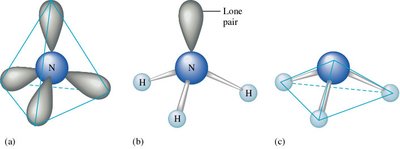
Lone pair orbital: Orbitals of electrons not involved in bonding, often distorted away from the bond region.
Electronegativity and Bond Type
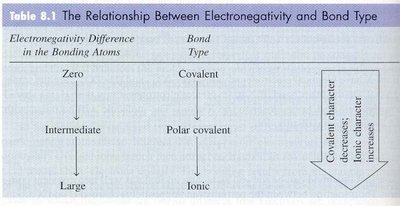
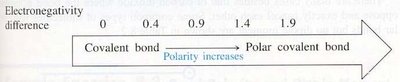
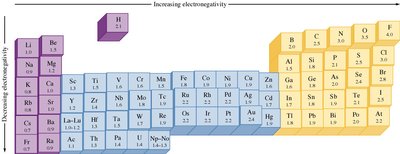
Electronegativity (En) is the ability of an atom in a molecule to attract shared electrons. The difference in electronegativity determines bond type:
Ionic: En difference > 1.67
Covalent: En difference < 1.67
Nonpolar covalent: En difference < 0.4
Bond Polarity and Dipole Moment
Bond polarity arises from differences in electronegativity. A dipole moment is the separation of charge in a molecule, determined by the size of the charge and the distance of separation.
Nonpolar bond: Equal sharing of electrons.
Polar bond: Unequal sharing, setting up partial positive and negative poles.
Ionic bond: Complete transfer of electrons.
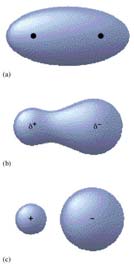
Ionic Bonding and Crystal Lattice
Ionic bonding results in a regular array of cations and anions called a crystal lattice. The energy changes involved in forming an ionic compound can be visualized in an energy diagram.
Enthalpy of dissociation: Energy required to decompose an ion pair from a lattice.
Lattice energy: Calculated using a modified form of Coulomb’s Law.
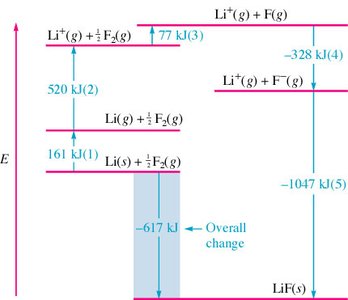
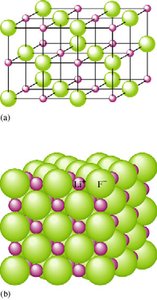
Covalent Bonding and Lewis Structures
Covalent compounds are formed by sharing electron pairs. The Localized Electron (LE) Bonding Model assumes electron pairs are localized either on atoms (lone pairs) or between atoms (bonding pairs).
Lewis Structures: Show valence electron arrangement.
Octet Rule: Atoms strive for eight valence electrons.
Single bond: One pair shared (σ bond).
Double bond: Two pairs shared (one σ, one π bond).
Triple bond: Three pairs shared (one σ, two π bonds).
Exceptions to the Octet Rule
Some molecules do not obey the octet rule:
Fewer than eight: H (2 electrons), Be (4 electrons), B (6 electrons).
Expanded valence: Central atom has d-orbitals (period 3 or higher).
Odd-electron compounds: NO, NO2, ClO2.
Resonance Structures
Resonance occurs when more than one valid Lewis structure can be drawn for a molecule. Resonance structures differ only in the placement of electrons, not atoms.
Resonance hybrid: Composite structure representing the average of all resonance forms.
Bond order: Fractional in resonance structures (e.g., ozone).
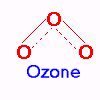
Bond Properties: Order, Length, and Energy
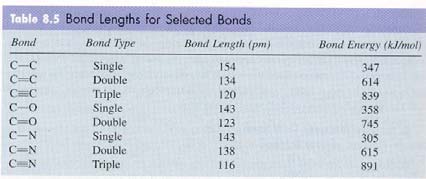
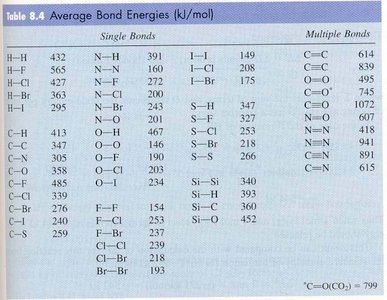
Bond order is the number of bonding electron pairs shared between two atoms. Higher bond order means shorter bond length and higher bond energy.
Bond order: 1 (single), 2 (double), 3 (triple), fractional (resonance).
Bond length: Decreases with increasing bond order.
Bond energy: Increases with bond order.
Formal Charge
Formal charge helps determine the most favored Lewis structure. It is calculated as:
Principle of electroneutrality: Atoms should have formal charges as close to zero as possible.
Stability: Negative formal charge should reside on the most electronegative atom.
Molecular Shape and VSEPR Theory
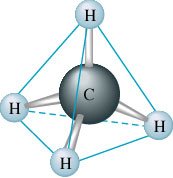
Valence Shell Electron Pair Repulsion (VSEPR) theory predicts molecular shape by minimizing electron pair repulsions. The number of σ bonds and lone pairs about the central atom determines the geometry.
Structural pair/electronic geometry: Based on total pairs (bonds + lone pairs).
Molecular geometry: Based on positions of atoms only (ignore lone pairs).
Pairs | Geometry | Bond Angle |
|---|---|---|
2 | Linear | 180° |
3 | Trigonal planar | 120° |
4 | Tetrahedral | 109.5° |
5 | Trigonal bipyramidal | 120° & 90° |
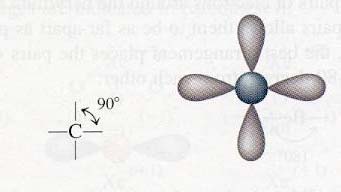
6 | Octahedral | 90° |



Expanded Valence and Molecular Shapes
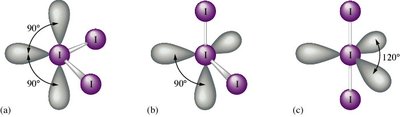
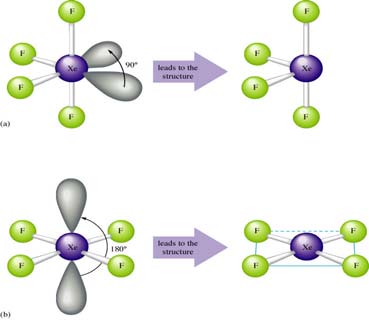
Elements with principal energy level 3 or higher can expand their valence using d orbitals. This allows for more than four bonding sites.
XeF4: Octahedral electronic geometry, square planar molecular geometry.
I3-: Linear molecular geometry due to lone pair arrangement.
Molecular Polarity
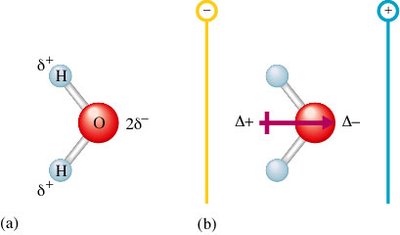
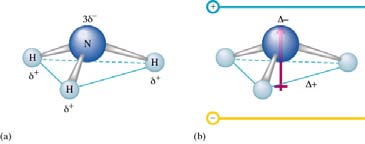
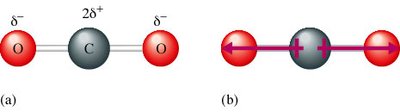
Molecular polarity depends on both bond polarity and molecular geometry. A molecule may have polar bonds but be nonpolar overall if dipole moments cancel.
Dipole moment: Product of charge size and separation distance.
Water: Strong negative pole due to lone pairs.
Ammonia: Negative pole due to lone pair.
Carbon dioxide: Nonpolar due to cancellation of dipole moments.
Summary Table: Characteristics of Bond Types
Bond Type | Characteristics |
|---|---|
Ionic | Electrons transferred, metal + nonmetal, high melting point, crystalline, conducts electricity when molten/dissolved |
Covalent | Electrons shared, nonmetals, any state, low melting point, nonconductors |
Metallic | Delocalized electrons, metals, crystalline, variable melting point, excellent conductors |
Key Study Advice
Always draw the Lewis structure when answering bonding questions.
Use formal charge and resonance concepts to determine the most stable structure.
Apply VSEPR theory to predict molecular geometry and polarity.
