 Indietro
Chemical Bonding, Compounds, and Formulas: Foundations of General Chemistry
Guida di studio - Note intelligenti
 Appunti personalizzati basati sui tuoi materiali, ampliati con definizioni chiave, esempi e contesto.
Chemical Bonding: Concepts and Types
What is a Chemical Bond?
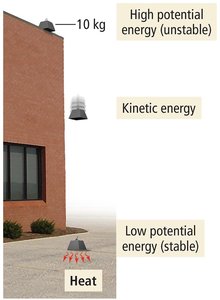
A chemical bond is the force that holds atoms together in compounds. Bonds form because they lower the potential energy of the system, resulting in greater stability for the atoms involved. The concept of a chemical bond is nuanced and can be described as a spectrum rather than a strict classification.
Bond formation releases energy (exothermic process).
Bond breaking requires energy input (endothermic process).
Bonds form when the potential energy of the system is minimized.
Bond Length and Energy
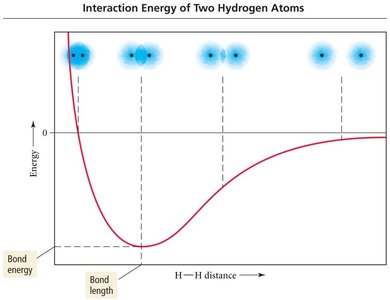
Bond length is the equilibrium distance between the nuclei of two bonded atoms where the attractive and repulsive forces balance. The energy associated with this distance is called bond energy (or bond dissociation energy).
At the bond length, the system is at its lowest potential energy.
Breaking a bond requires energy input (endothermic), while forming a bond releases energy (exothermic).
Types of Chemical Bonds
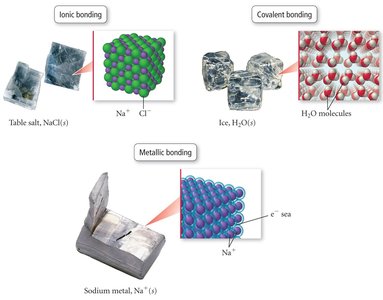
Chemical bonds are classified based on how electrons are distributed between atoms. The main types are:
Ionic bonds: Formed by the transfer of electrons from a metal to a nonmetal, resulting in electrostatic attraction between cations and anions.
Covalent bonds: Formed by the sharing of electrons between two nonmetals.
Metallic bonds: Involve a 'sea' of delocalized electrons surrounding positive metal ions.
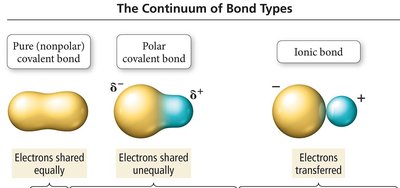
Most bonds are not purely ionic or covalent but exist on a spectrum of bond character, depending on the difference in electronegativity between the atoms involved.
Ionic Compounds and Lattice Energy
Formation of Ionic Compounds
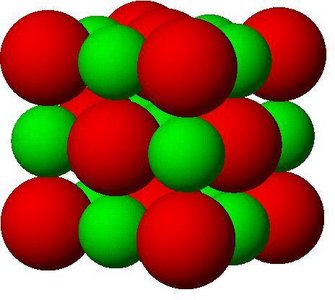
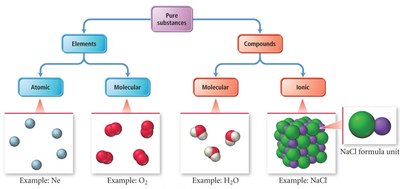
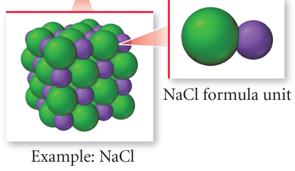
Ionic compounds are composed of positive and negative ions arranged in a repeating three-dimensional lattice. The overall compound is electrically neutral.
Metals lose electrons to form cations; nonmetals gain electrons to form anions.
The formula unit represents the simplest ratio of ions in the compound.
Lattice Energy
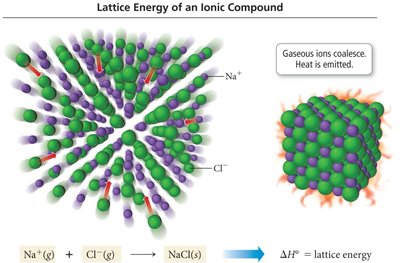
Lattice energy is the energy released when gaseous ions combine to form an ionic solid. It is a measure of the strength of the forces holding the ions together in the lattice.
Lattice energy is exothermic (energy is released).
It depends on the charges of the ions and the distance between them, as described by Coulomb's Law:
Higher charges and smaller ionic radii result in larger (more negative) lattice energies.
Covalent Compounds and Molecular Structure
Covalent Bonding
Covalent bonds result from the sharing of electrons between two nonmetal atoms. The shared electrons are attracted to the nuclei of both atoms, holding them together.
Bond strength and length depend on the degree of orbital overlap and the atoms involved.
Examples include H2, O2, and H2O.
Molecular vs. Ionic Compounds
Molecular compounds are composed of molecules (discrete groups of atoms held together by covalent bonds), while ionic compounds are composed of ions arranged in a lattice.
Molecular compounds: low melting/boiling points, poor conductors, can be solid, liquid, or gas.
Ionic compounds: high melting/boiling points, conduct electricity when molten or dissolved, usually solid at room temperature.
Chemical Formulas and Nomenclature
Types of Chemical Formulas
Chemical formulas provide information about the composition and structure of compounds:
Empirical formula: Simplest whole-number ratio of elements in a compound.
Molecular formula: Actual number of atoms of each element in a molecule.
Structural formula: Shows how atoms are connected.
Ball-and-stick/space-filling models: Visualize 3D molecular structure.
Naming Ionic Compounds
The name of an ionic compound consists of the cation (metal) name followed by the anion (nonmetal) name, with the nonmetal ending changed to -ide. For metals with variable charges, a Roman numeral indicates the charge.
Example: FeCl2 is iron(II) chloride; FeCl3 is iron(III) chloride.
Polyatomic ions retain their names (e.g., sulfate, nitrate).
Naming Molecular Compounds
Molecular (covalent) compounds use prefixes to indicate the number of each atom:
Mono- (1), di- (2), tri- (3), tetra- (4), penta- (5), hexa- (6), hepta- (7), octa- (8), nona- (9), deca- (10)
The first element keeps its name; the second element ends in -ide.
Example: CO2 is carbon dioxide; PCl5 is phosphorus pentachloride.
Naming Acids
Acids are named based on their composition:
Binary acids (H + one other element): Prefix hydro- and suffix -ic acid (e.g., HCl is hydrochloric acid).
Oxyacids (H + polyatomic ion): Suffix -ic acid for ions ending in -ate, -ous acid for ions ending in -ite (e.g., H2SO4 is sulfuric acid, H2SO3 is sulfurous acid).
Mole Calculations and Percent Composition
Molar Mass and Mole Conversions
The molar mass of a compound is the mass of one mole of its entities (in g/mol). It is calculated by summing the atomic masses of all atoms in the formula.
Example: Molar mass of H2O = 2(1.008) + 16.00 = 18.02 g/mol
Use molar mass as a conversion factor between grams, moles, and number of particles.
Percent Composition
Percent composition is the percentage by mass of each element in a compound. It can be calculated from the formula or experimental data:
% Element = (mass of element / mass of compound) × 100
Empirical and Molecular Formulas
The empirical formula gives the simplest ratio of elements, while the molecular formula gives the actual number of atoms. To determine these:
Convert mass percentages to moles.
Divide by the smallest number of moles to get whole-number ratios.
Molecular formula = (empirical formula) × n, where n = (molar mass / empirical formula mass).
Combustion Analysis
Combustion analysis is used to determine the empirical formula of organic compounds by measuring the amounts of CO2 and H2O produced.
Find moles of C from CO2, H from H2O, and O by difference.
Summary Table: Types of Chemical Bonds and Properties
Bond Type | How Formed | Representative Particles | Properties |
|---|---|---|---|
Ionic | Electron transfer (metal + nonmetal) | Formula units | High melting/boiling points, conductors when molten/aqueous, brittle solids |
Covalent | Electron sharing (nonmetal + nonmetal) | Molecules | Low melting/boiling points, poor conductors, various physical states |
Metallic | Delocalized electrons (metal atoms) | Atoms in a 'sea' of electrons | Malleable, ductile, good conductors |
