 Indietro
Chemical Bonding I: Lewis Structures, Bond Types, and Molecular Geometry
Guida di studio - Note intelligenti
 Appunti personalizzati basati sui tuoi materiali, ampliati con definizioni chiave, esempi e contesto.
Chemical Bonding I: Lewis Structures, Bond Types, and Molecular Geometry
Bonding Theories and Molecular Imposters
Bonding theories explain how and why atoms attach together to form molecules, and why some combinations are stable while others are not. These theories are essential for predicting molecular shapes and properties, which are crucial in understanding drug interactions, such as morphine mimicking endorphins due to similar molecular shapes.
Lewis Bonding Theory
Lewis theory is a foundational model in chemistry that emphasizes the role of valence electrons in chemical bonding. It predicts molecular stability, shape, size, and polarity by representing atoms and their valence electrons as dots and lines.
Valence Electrons: Electrons in the outermost shell involved in bonding.
Octet Rule: Atoms are most stable when they have eight valence electrons (except hydrogen, which follows the duet rule).
Covalent Bonding: Sharing of electrons between atoms.
Why Do Atoms Bond?
Atoms form chemical bonds to lower their potential energy. The potential energy is minimized when the attractions between nuclei and electrons outweigh repulsions.
Nucleus-to-nucleus repulsions
Electron-to-electron repulsions
Nucleus-to-electron attractions
Types of Bonds
Bonds are classified based on the types of atoms involved and the nature of electron sharing or transfer.
Covalent Bonds: Electrons are shared between atoms.
Polar Covalent Bonds: Unequal sharing of electrons, resulting in partial charges.
Ionic Bonds: Electrons are transferred, creating ions.
Bond Polarity and Electronegativity
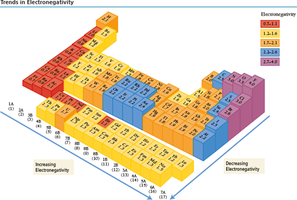
Bond polarity arises from differences in electronegativity, the ability of an atom to attract electrons in a bond. The greater the difference, the more polar the bond.
Electronegativity Trend: Increases across a period, decreases down a group.
Fluorine: Most electronegative element.
Francium: Least electronegative element.
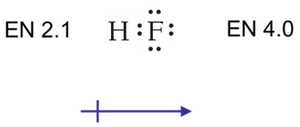
Bond Polarity Example
In a hydrogen fluoride (HF) molecule, fluorine attracts electrons more strongly than hydrogen, resulting in a polar bond.
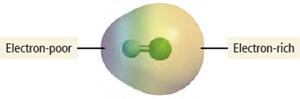
Electronegativity Difference and Bond Type
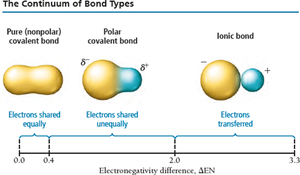
The type of bond formed depends on the difference in electronegativity (ΔEN):
ΔEN = 0: Pure covalent (nonpolar)
ΔEN = 0.1–0.4: Nonpolar covalent
ΔEN = 0.5–1.9: Polar covalent
ΔEN ≥ 2.0: Ionic
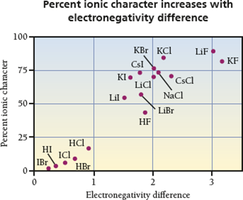
Percent Ionic Character
The percent ionic character measures how much a bond resembles a purely ionic bond, based on its dipole moment and electronegativity difference.
Lewis Structures: Writing and Interpreting
Lewis structures represent the distribution of valence electrons in molecules and ions, helping predict shapes and properties.
Skeletal Structure: Less electronegative atom is usually central; hydrogen is always terminal.
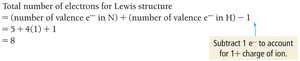
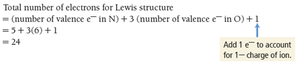
Valence Electron Count: Sum electrons from each atom; adjust for ion charge.
Electron Distribution: Assign electrons to bonding pairs and lone pairs, aiming for octets (or duets for H).
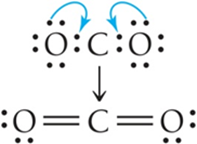
Multiple Bonds: Form double or triple bonds if needed to complete octets.
Example: Lewis Structure for CO2
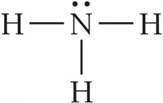
Example: Lewis Structure for NH3
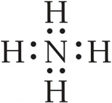
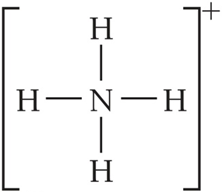
Example: Lewis Structure for NH4+ (Polyatomic Ion)
Resonance and Formal Charge
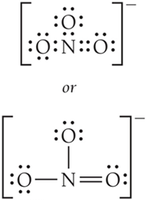
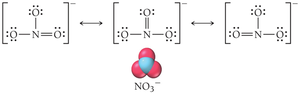
Resonance occurs when multiple valid Lewis structures exist for a molecule, differing only in electron placement. The actual molecule is a resonance hybrid, intermediate between these forms. Formal charge helps identify the most stable resonance structure.
Resonance Structures: Must have same connectivity; only electron positions change.
Formal Charge: Calculated as:
Stability: Structures with fewer and smaller formal charges are more stable; negative formal charge should be on the most electronegative atom.
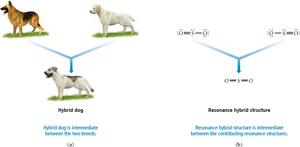
Example: Resonance in NO3-
Exceptions to the Octet Rule
Some molecules and ions do not follow the octet rule:
Odd-electron species (free radicals): Molecules with an odd number of electrons.
Incomplete octets: Atoms like boron and hydrogen may have fewer than eight electrons.
Expanded octets: Atoms in the third period or below can have more than eight electrons when they are the central atom.
Bond Energies and Bond Lengths
Bond energy is the energy required to break one mole of a bond in the gaseous state. Bond length is the distance between nuclei of bonded atoms.
Bond Strength: More shared electrons = stronger bond; shorter bonds = stronger bond.
Bond Length Trends: Decreases across a period, increases down a group.
VSEPR Theory and Molecular Geometry
Valence Shell Electron Pair Repulsion (VSEPR) theory predicts molecular shapes based on repulsions between electron groups around a central atom.
Electron Groups: Lone pairs, single, double, triple bonds, or single electrons.
Basic Geometries: Linear, trigonal planar, tetrahedral, trigonal bipyramidal, octahedral.
Bond Angles: Determined by geometry and presence of lone pairs.
Linear Geometry (2 Electron Groups)
Trigonal Planar Geometry (3 Electron Groups)
Tetrahedral Geometry (4 Electron Groups)
Trigonal Bipyramidal Geometry (5 Electron Groups)
Octahedral Geometry (6 Electron Groups)
Effect of Lone Pairs on Molecular Structure
Lone pairs occupy more space than bonding pairs, causing bond angles to decrease from ideal values. This leads to shapes like bent and trigonal pyramidal.
Derivatives of Trigonal Bipyramidal and Octahedral Geometries
Lone pairs in these geometries lead to shapes such as seesaw, T-shaped, linear, square pyramidal, and square planar.
Table: Electron and Molecular Geometries
The following table summarizes the electron and molecular geometries based on the number of electron groups and lone pairs:
Electron Groups | Electron Geometry | Molecular Geometry | Bond Angles |
|---|---|---|---|
2 | Linear | Linear | 180° |
3 | Trigonal Planar | Trigonal Planar / Bent | 120° / <120° |
4 | Tetrahedral | Tetrahedral / Trigonal Pyramidal / Bent | 109.5° / <109.5° |
5 | Trigonal Bipyramidal | Trigonal Bipyramidal / Seesaw / T-shaped / Linear | 120°, 90°, 180° |
6 | Octahedral | Octahedral / Square Pyramidal / Square Planar | 90°, 180° |
Predicting Molecular Geometries
To predict molecular geometry:
Draw the Lewis structure.
Count electron groups around the central atom.
Classify each group as bonding or lone pair.
Refer to the geometry table for shape and bond angles.
Representing Three-Dimensional Shapes
3-D molecular shapes are represented on paper using wedges and lines to indicate atoms in and out of the plane.
Polarity of Molecules
Molecular polarity depends on the presence of polar bonds and the overall shape. If dipole moments do not cancel, the molecule is polar.
Polar Bonds: Arise from electronegativity differences.
Vector Addition: Used to determine net dipole moment.
Vector Addition for Dipole Moments
Dipole moments are vectors; their sum determines molecular polarity. If vectors cancel, the molecule is nonpolar; if not, it is polar.
Practice Problem: Is a Molecule Polar?
Example: NH3 (Ammonia) has three polar bonds and a trigonal pyramidal geometry, resulting in a net dipole moment and making the molecule polar.
Summary: Understanding Lewis structures, bond types, resonance, formal charge, and VSEPR theory is essential for predicting molecular shapes and properties, including polarity, which affects solubility and reactivity.
