 Indietro
Chemical Bonding II: Valence Bond Theory and Molecular Orbital Theory
Guida di studio - Note intelligenti
 Appunti personalizzati basati sui tuoi materiali, ampliati con definizioni chiave, esempi e contesto.
Chemical Bonding II
Problems with Lewis Theory
The Lewis theory provides a foundational understanding of chemical bonding, but it has several limitations. It often fails to predict accurate bond strengths, bond lengths, and bond angles, especially in molecules where resonance is significant. Additionally, Lewis theory does not correctly predict magnetic properties, such as the paramagnetism of O2, which it incorrectly predicts as diamagnetic.
Valence Bond Theory: Orbital Overlap and the Chemical Bond
Valence Bond (VB) Theory applies quantum mechanics to molecules, proposing that bonds form when atomic orbitals overlap. The nature of the interaction depends on whether the orbitals align along the axis between nuclei (sigma bonds) or outside the axis (pi bonds).
Valence electrons reside in quantum-mechanical atomic orbitals (s, p, d, f, or hybrid).
Bond formation occurs when two atomic orbitals interact, containing two spin-paired electrons.
Molecular shape is determined by the geometry of interacting orbitals.
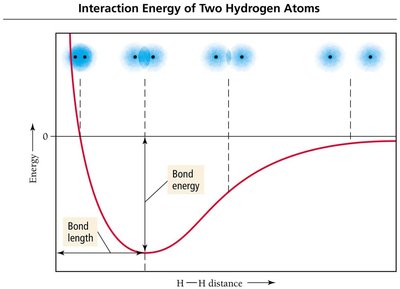
Interaction Energy of Two Hydrogen Atoms
When two hydrogen atoms approach each other, their interaction energy decreases, reaching a minimum at the bond length. The bond energy is the energy required to break the bond.
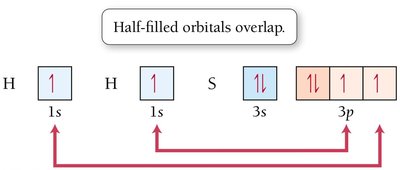
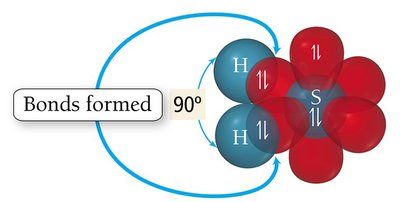
Orbital Diagram for the Formation of H2S
Bonding occurs through the overlap of half-filled orbitals, as illustrated in the formation of H2S.
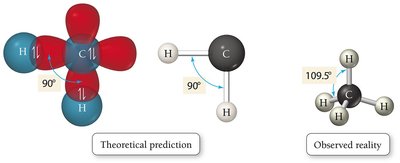
Unhybridized Carbon Orbitals in CH4: Predict the Wrong Bonding and Geometry
Using only unhybridized orbitals for carbon in methane (CH4) predicts 90° bond angles, which contradicts the observed tetrahedral geometry with 109.5° angles.

Hybridization
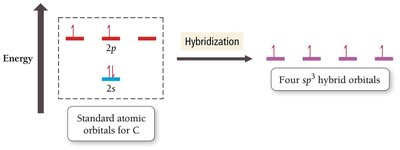
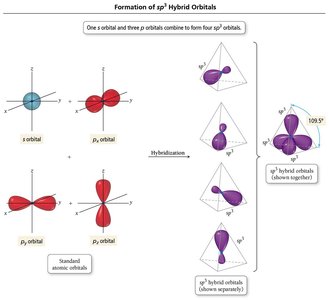
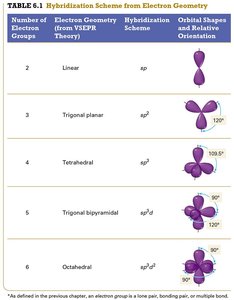
Hybridization is the mixing of atomic orbitals in the valence shell to form new, degenerate hybrid orbitals. This process maximizes bonding and stability. The types of hybridization include sp, sp2, sp3, sp3d, and sp3d2. The same atom can exhibit different hybridizations depending on its bonding environment.
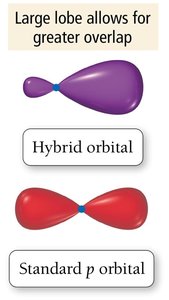
Hybrid orbitals have larger lobes, allowing greater overlap and stronger bonds.
Number of hybrid orbitals formed equals the number of atomic orbitals combined.
Hydrogen cannot hybridize due to its single orbital.
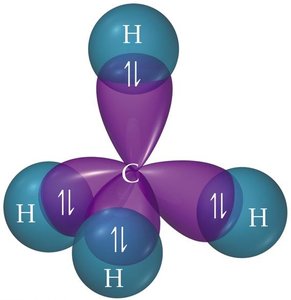
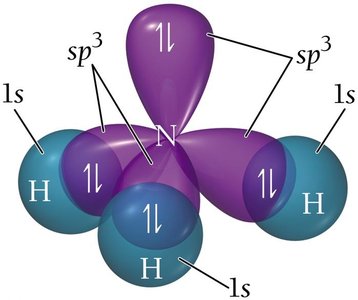
sp3 Hybridization
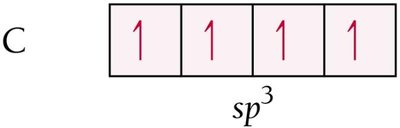
Atoms with four electron groups adopt sp3 hybridization, resulting in tetrahedral geometry and 109.5° bond angles. All bonds and lone pairs occupy hybrid orbitals.
sp2 Hybridization
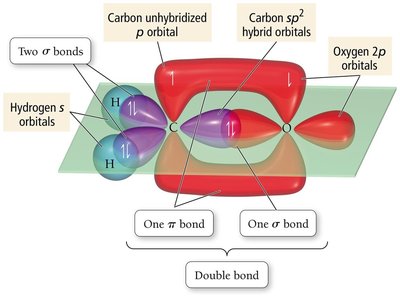
Atoms with three electron groups use sp2 hybridization, forming a trigonal planar geometry with 120° bond angles. The atom uses hybrid orbitals for sigma bonds and lone pairs, and a nonhybridized p orbital for pi bonds.
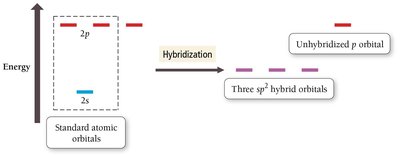
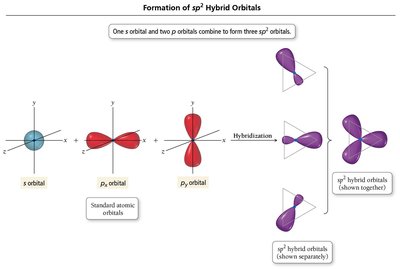
Types of Bonds: Sigma and Pi Bonding
Sigma (σ) bonds result from end-to-end overlap of orbitals, while pi (π) bonds arise from side-by-side overlap of unhybridized p orbitals.
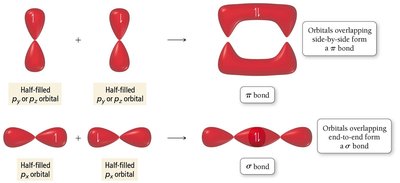
Orbital Diagrams of Bonding
Hybrid orbitals overlap to form σ bonds, while unhybridized p orbitals overlap to form π bonds.
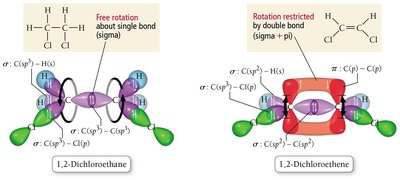
Bond Rotation
Single bonds (σ) allow free rotation, while double bonds (σ + π) restrict rotation.
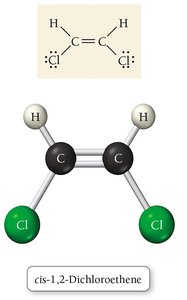
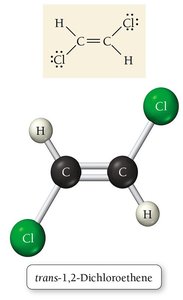
Cis & Trans Isomers of 1,2-Dichloroethene
Restricted rotation in double bonds leads to cis and trans isomers.
sp Hybridization and Triple Bonds
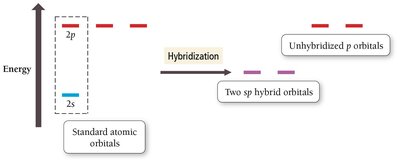
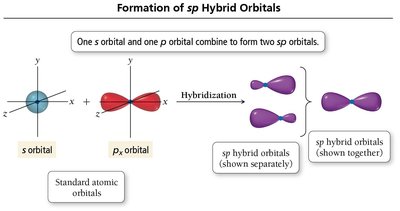
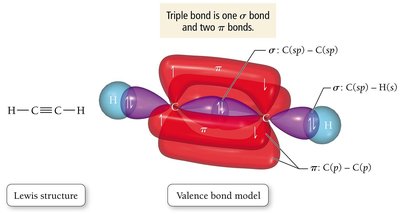
Atoms with two electron groups use sp hybridization, resulting in linear geometry and 180° bond angles. Triple bonds consist of one σ bond and two π bonds.
sp3d and sp3d2 Hybridization
Atoms with five electron groups use sp3d hybridization (trigonal bipyramidal geometry), while those with six groups use sp3d2 hybridization (octahedral geometry). These hybridizations involve empty d orbitals from the valence shell.
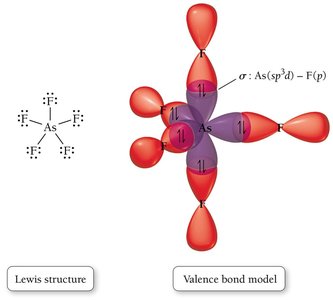
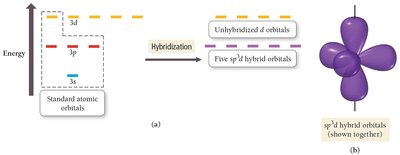
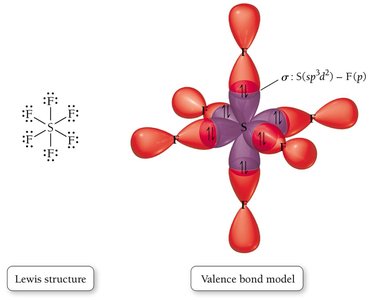
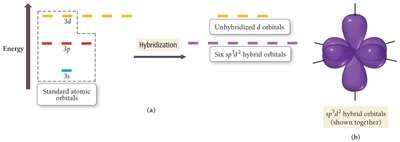
Predicting Hybridization and Bonding Scheme
Draw the Lewis structure.
Use VSEPR theory to predict electron group geometry.
Select the hybridization scheme matching the geometry (see Table 6.1).
Sketch atomic and hybrid orbitals, showing overlap.
Label bonds as σ or π.
Molecular Orbital (MO) Theory: Electron Delocalization
Overview of MO Theory
MO theory applies Schrödinger’s equation to molecules, generating molecular orbitals that are delocalized over the entire molecule. Electrons are not localized to individual atoms but belong to the whole molecule.
LCAO: Linear Combination of Atomic Orbitals
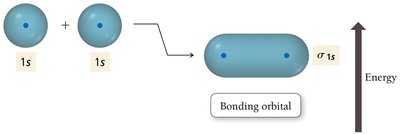
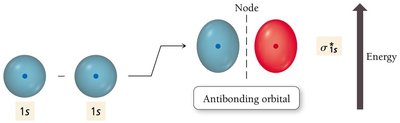
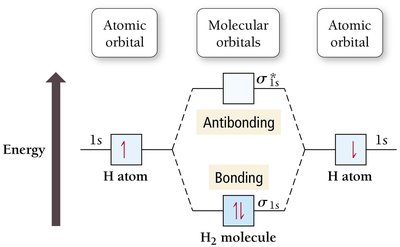
Molecular orbitals are formed by combining atomic orbitals, either constructively (bonding) or destructively (antibonding).
Molecular Orbital Theory: Bond Order and Properties
Bond order is calculated as:
Higher bond order means stronger and shorter bonds.
If bond order = 0, the molecule is unstable and will not form.
Paramagnetism arises from unpaired electrons in MO diagrams; diamagnetism from all paired electrons.
MO Diagram for H2
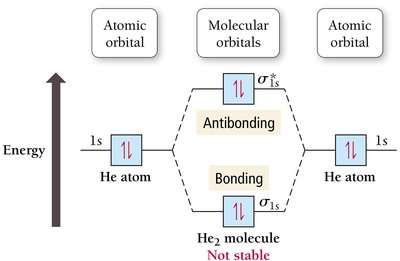
MO Diagram for He2
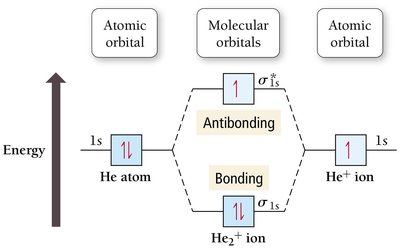
MO Diagram for He2+
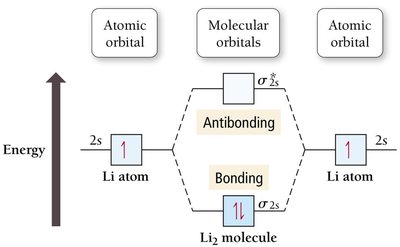
Second-Period Homonuclear Diatomic Molecules
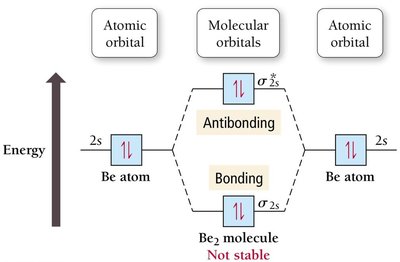
MO diagrams for Li2 and Be2 illustrate stability based on bond order.
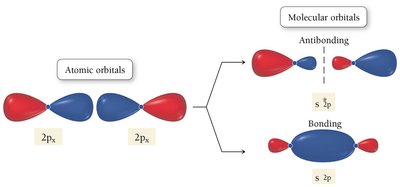
Interaction of p Orbitals
p orbitals interact to form bonding and antibonding molecular orbitals, with different spatial arrangements for 2px, 2py, and 2pz.
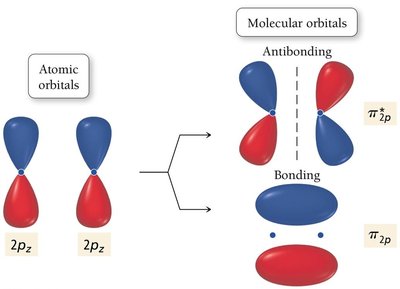
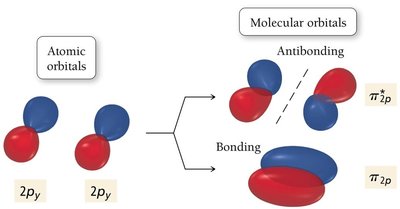
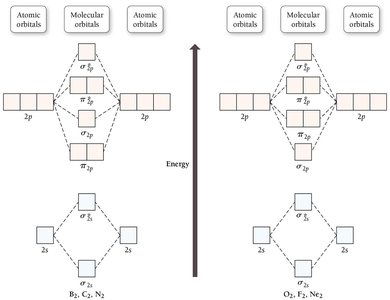
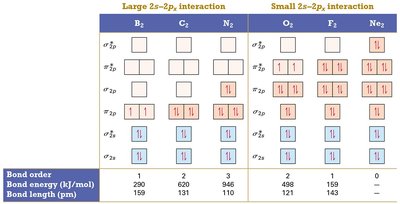
Molecular Orbital Energy Ordering
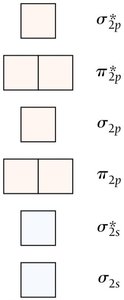
Energy ordering of molecular orbitals varies for different diatomic molecules, affecting bond order, bond energy, and bond length.
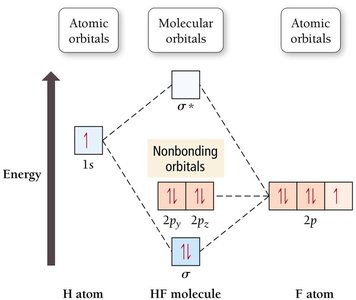
Heteronuclear Diatomic Molecules and Ions
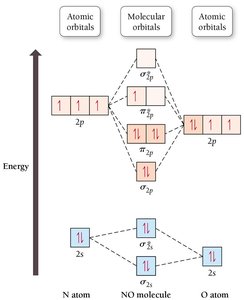
When atomic orbitals of different types and energies combine, the orbital closest in energy to the molecular orbital contributes more. More electronegative atoms have lower energy orbitals, contributing more to bonding MOs. Nonbonding MOs remain localized on the atom donating its atomic orbitals.
MO Theory for Polyatomic Molecules
For polyatomic molecules, atomic orbitals from all atoms combine to form delocalized molecular orbitals, providing a more accurate description of molecular properties than Lewis or VB theories.
Example: Benzene's delocalized π system is explained by MO theory.
Additional info: MO theory is essential for understanding electronic structure, magnetism, and reactivity in complex molecules.
----------------------------------------
