 Indietro
Colligative Properties, Colloids, and Reaction Rates: Study Notes for General Chemistry
Guida di studio - Note intelligenti
 Appunti personalizzati basati sui tuoi materiali, ampliati con definizioni chiave, esempi e contesto.
Colligative Properties
Osmosis and Osmotic Pressure
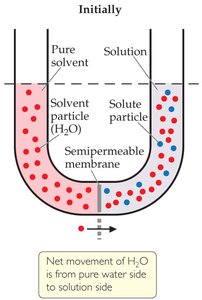
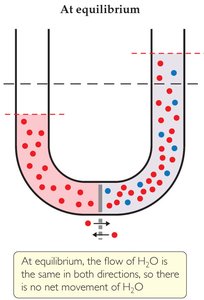
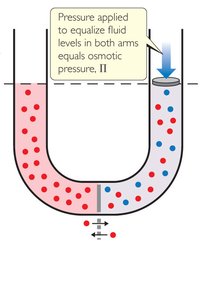
Osmosis is the movement of solvent molecules (typically water) through a semipermeable membrane from a region of lower solute concentration to a region of higher solute concentration. This process continues until the osmotic pressure, which is the pressure required to stop the net flow of solvent, is reached.
Osmotic Pressure (Π): The pressure needed to prevent osmosis. It can be calculated using the formula: where i is the van't Hoff factor, M is molarity, R is the gas constant, and T is temperature in Kelvin.
Semipermeable Membrane: Allows only solvent molecules to pass, not solute particles.
Direction of Water Flow: Water moves from the less 'salty' (lower solute concentration) side to the more 'salty' (higher solute concentration) side.
Effects of Osmosis on Cells
Osmosis has significant biological effects, especially in cells.
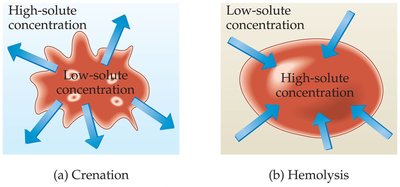
Hypotonic Environment: Lower solute concentration outside the cell causes water to flow into the cell, potentially leading to hemolysis (cell bursting).
Hypertonic Environment: Higher solute concentration outside the cell causes water to flow out, leading to crenation (cell shrinking).
Reverse Osmosis
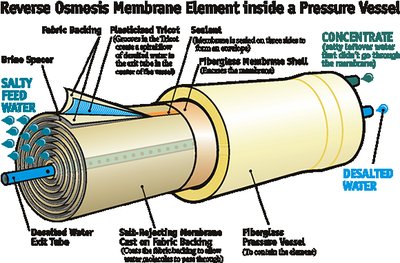
Reverse osmosis is a process where pressure is applied to overcome osmotic pressure, forcing solvent to move from a region of high solute concentration to low solute concentration. This is commonly used in water purification.
Application: Used to desalinate seawater and purify drinking water.
Determining Molar Mass from Colligative Properties
Colligative properties such as freezing point depression and vapor pressure lowering can be used to determine the molar mass of an unknown solute.
Freezing Point Depression: The decrease in freezing point is proportional to the molality of the solute. where K_f is the freezing point depression constant, m is molality.
Vapor Pressure Lowering: The mole fraction of solvent can be determined from the change in vapor pressure, allowing calculation of the number of moles and thus the molar mass of the solute.
Colloids
Definition and Properties
A colloid is a mixture where particles (solute) are dispersed in another substance (solvent) and are 5–1000 nm in size. Colloids are intermediate between true solutions and suspensions.
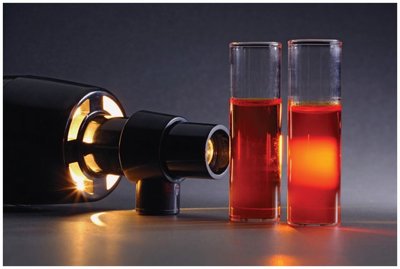
Colloidal Dispersion: Particles are large enough to scatter light (Tyndall Effect) but do not settle out on standing.
Tyndall Effect: The scattering of light by colloidal particles, distinguishing colloids from true solutions.
Classification of Mixtures
Solutions: Ions or small molecules, do not scatter light, do not separate on standing.
Colloids: Particles 5–1000 nm, scatter light, do not separate on standing.
Suspensions: Particles >1000 nm, may scatter light or be opaque, particles settle out on standing.
Types of Colloids
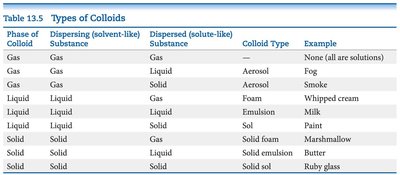
Colloids are classified based on the phase of the dispersed and dispersing substances.
Phase of Colloid | Dispersing (solvent-like) Substance | Dispersed (solute-like) Substance | Colloid Type | Example |
|---|---|---|---|---|
Gas | Gas | Gas | — | None (all are solutions) |
Gas | Gas | Liquid | Aerosol | Fog |
Gas | Gas | Solid | Aerosol | Smoke |
Liquid | Liquid | Gas | Foam | Whipped cream |
Liquid | Liquid | Liquid | Emulsion | Milk |
Liquid | Liquid | Solid | Sol | Paint |
Solid | Solid | Gas | Solid foam | Marshmallow |
Solid | Solid | Liquid | Solid emulsion | Butter |
Solid | Solid | Solid | Solid sol | Ruby glass |
Examples of Colloids
Milk: An emulsion of fat droplets in water.
Opal: Contains spheres of colloidal SiO2.
Gold Colloids: Used in stained glass and scientific research.



Hydrophilic and Hydrophobic Colloids
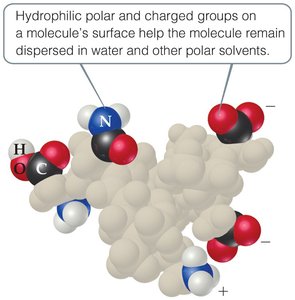
Hydrophilic Colloids: Water-loving; large proteins like enzymes fold so polar parts are on the outside, stabilizing them in water.
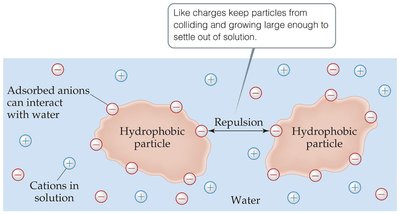
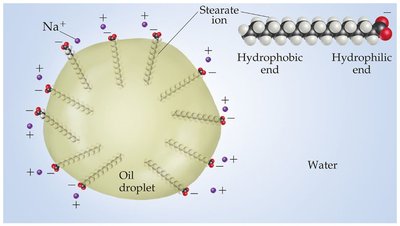
Hydrophobic Colloids: Water-fearing; stabilized by adsorbing ions or using emulsifying agents.
Reaction Rates
Speed of Reactions
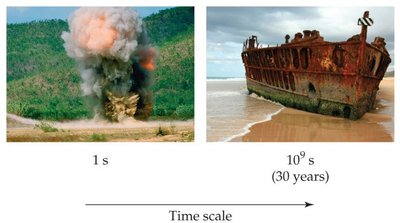
The rate of a chemical reaction is the change in concentration of reactants or products per unit time. Reaction rates can vary widely, from fractions of a second to years.
Factors Affecting Reaction Rates:
Physical state of reactants (homogeneous vs. heterogeneous)
Reactant concentrations (higher concentration increases rate)
Temperature (higher temperature increases rate)
Presence of a catalyst (catalysts increase rate)
Average Reaction Rate
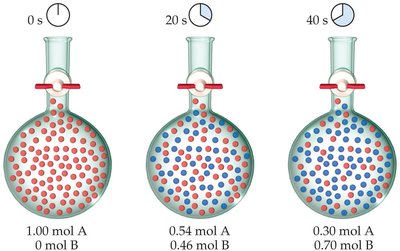
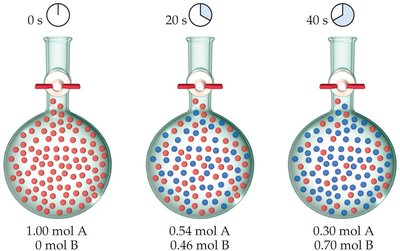
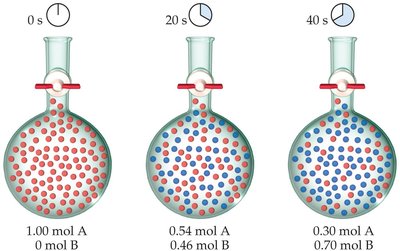
The average rate of appearance of a product or disappearance of a reactant is calculated as the change in concentration divided by the change in time.
Appearance of B:
Disappearance of A:
Rates are always expressed as positive quantities.
Instantaneous Rate of Reaction
The instantaneous rate is the rate at a specific moment in time, often determined by the slope of the concentration vs. time curve.
Application: Used to analyze reaction mechanisms and kinetics.
Example: The decomposition of hydrogen peroxide is much faster in the presence of a catalyst. Additional info: Reaction rates are fundamental to understanding chemical kinetics and are influenced by molecular collisions and energy barriers. ----------------------------------------
