 Indietro
Compounds—How Elements Combine: Structure, Bonding, and Molecular Properties
Guida di studio - Note intelligenti
 Appunti personalizzati basati sui tuoi materiali, ampliati con definizioni chiave, esempi e contesto.
Compounds—How Elements Combine
3.1 Electron Arrangements and the Octet Rule
Understanding how electrons are arranged in atoms is fundamental to predicting how elements combine to form compounds. The arrangement of electrons in energy levels, or shells, determines the chemical properties of an element.
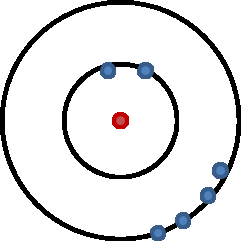
Electron Cloud: Electrons occupy a region around the nucleus called the electron cloud, where their exact location is uncertain but their energy levels are quantized.
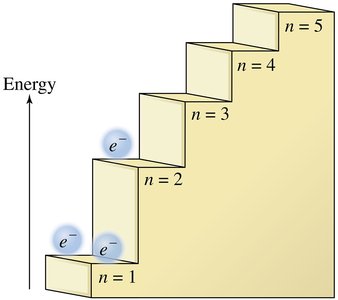
Energy Levels: Electrons can only exist in specific energy levels (n = 1, 2, 3, ...), with lower levels closer to the nucleus and higher levels farther away. Each level can hold a maximum number of electrons, calculated by .
Filling Order: Electrons fill the lowest available energy levels first.
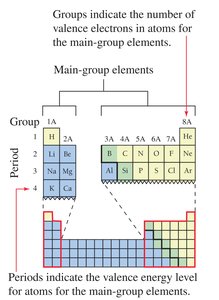
Valence Electrons: The electrons in the outermost shell (valence shell) are called valence electrons and are responsible for chemical bonding.
Periodic Table Trends: Elements in the same group have the same number of valence electrons, which explains their similar chemical behavior.
Octet Rule: Atoms tend to gain, lose, or share electrons to achieve a stable configuration of eight valence electrons (an octet), similar to the noble gases.
3.2 In Search of an Octet, Part 1: Ion Formation
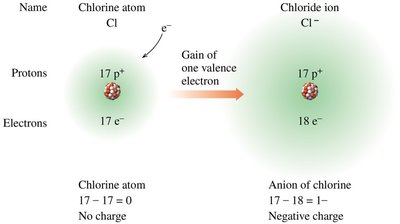
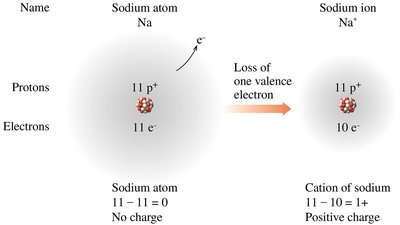
Atoms can achieve an octet by gaining or losing electrons, forming ions. The resulting charged particles are essential for the formation of ionic compounds.
Cations: Atoms that lose electrons become positively charged ions (cations).
Anions: Atoms that gain electrons become negatively charged ions (anions).
Isoelectronic: Ions with the same number of electrons as a noble gas are called isoelectronic with that noble gas.
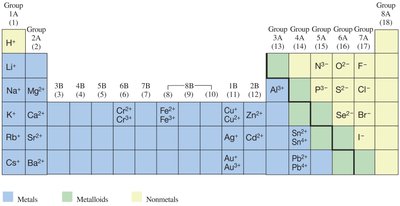
Group Trends: Main group metals (Groups 1A, 2A, 3A) form cations with charges equal to their group number. Nonmetals (Groups 5A, 6A, 7A) form anions with charges equal to 8 minus their group number.
Polyatomic Ions: Some ions consist of groups of atoms bonded together, carrying a net charge (e.g., SO, NO).
3.3 Ionic Compounds—Electron Give and Take
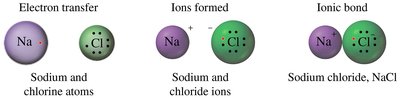
Ionic compounds are formed when metals transfer electrons to nonmetals, resulting in the electrostatic attraction between cations and anions (ionic bonds).
Ionic Bond: The force of attraction between oppositely charged ions.
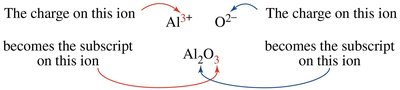
Formula Unit: The simplest ratio of ions in an ionic compound that results in a net charge of zero.
Writing Formulas: The total positive and negative charges must balance. Subscripts indicate the ratio of ions.
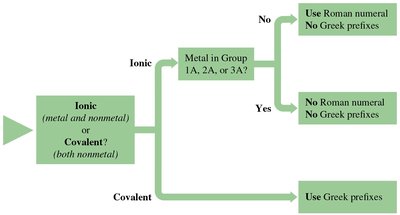
Naming: The cation is named first, followed by the anion. For transition metals, a Roman numeral indicates the cation's charge.
3.4 In Search of an Octet, Part 2: Covalent Bond Formation
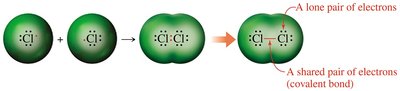
Nonmetals achieve octets by sharing electrons, forming covalent bonds. The resulting compounds are called molecules.
Covalent Bond: A bond formed by the sharing of electrons between two nonmetals.
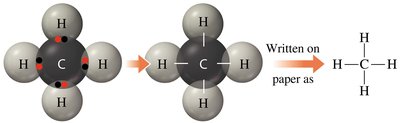
Lewis Structures: Diagrams that show the arrangement of valence electrons among atoms in a molecule.
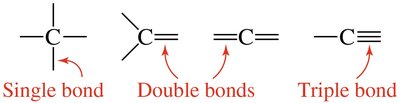
Bond Types: Single, double, and triple bonds correspond to the sharing of one, two, or three pairs of electrons, respectively.
Naming: Binary covalent compounds use Greek prefixes to indicate the number of each atom (e.g., CO is carbon dioxide).

3.5 The Mole: Counting Atoms and Compounds
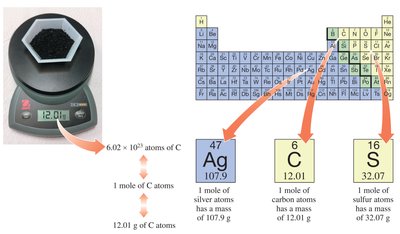
The mole is a counting unit that allows chemists to relate the mass of a substance to the number of particles it contains.
Avogadro's Number: One mole contains particles (atoms, molecules, or ions).
Molar Mass: The mass of one mole of a substance, numerically equal to its formula weight in grams per mole.
Conversions: Use the molar mass to convert between grams and moles, and Avogadro's number to convert between moles and number of particles.
3.6 Getting Covalent Compounds into Shape
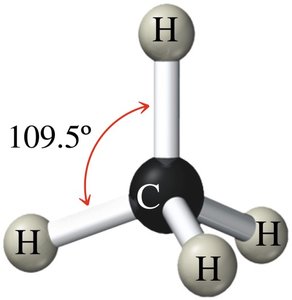
The three-dimensional shape of a molecule is determined by the arrangement of electron pairs around the central atom, described by the Valence Shell Electron Pair Repulsion (VSEPR) theory.
VSEPR Model: Electron pairs (bonding and nonbonding) repel each other and arrange themselves as far apart as possible.
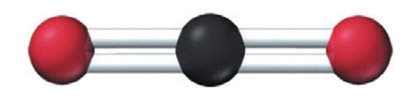
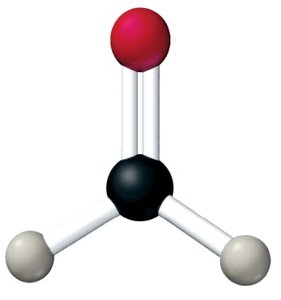
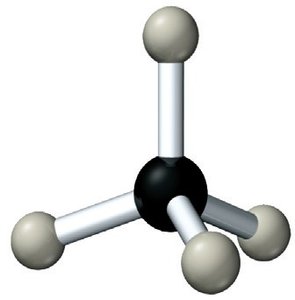
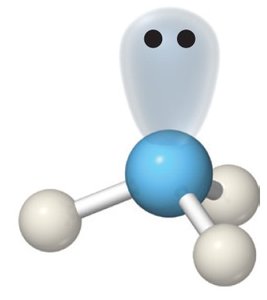
Common Shapes:
Linear: 180° bond angle (e.g., CO)
Trigonal planar: 120° bond angle (e.g., HCO)
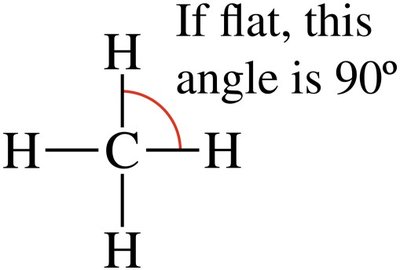
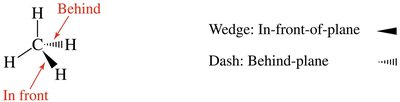
Tetrahedral: 109.5° bond angle (e.g., CH)
Trigonal pyramidal: <109.5° (e.g., NH)
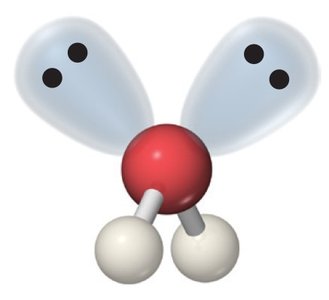
Bent: <109.5° (e.g., HO)
Effect of Lone Pairs: Nonbonding electron pairs occupy more space and compress bond angles.
3.7 Electronegativity and Molecular Polarity
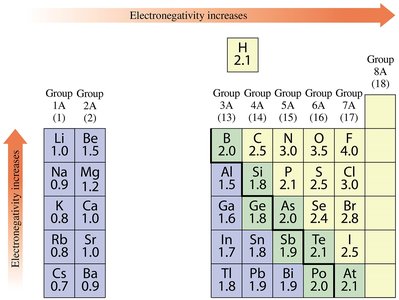
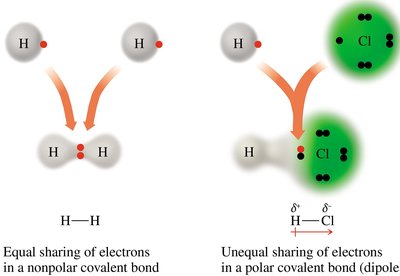
Electronegativity is the ability of an atom to attract shared electrons in a covalent bond. Differences in electronegativity lead to bond polarity and influence molecular properties.
Electronegativity Trend: Increases across a period and decreases down a group; fluorine is the most electronegative element.
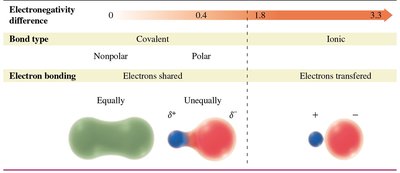
Bond Polarity: If the difference in electronegativity between two atoms is:
0–0.4: Nonpolar covalent bond (electrons shared equally)
0.5–1.7: Polar covalent bond (electrons shared unequally)
≥1.8: Ionic bond (electrons transferred)
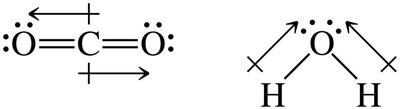
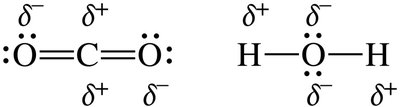
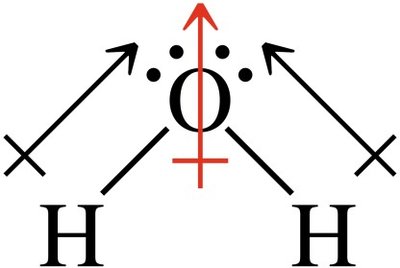
Molecular Polarity: Determined by both the polarity of individual bonds and the shape of the molecule. Symmetrical molecules (e.g., CO) can be nonpolar even if they contain polar bonds, while asymmetrical molecules (e.g., H$_2$O) are polar.
Additional info: These notes cover the core concepts of Chapter 3, including electron arrangements, the octet rule, ion and compound formation, covalent bonding, molecular shapes, and polarity. The included images reinforce key structural and conceptual ideas essential for mastering general chemistry at the college level.
