Indietro

Coordination Compounds: Structure, Nomenclature, and Crystal Field Theory

Guida di studio - Impara con i video

Lezioni curate abbinate al materiale che hai caricato – impara ogni argomento passo dopo passo.

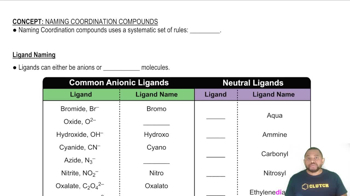
Naming Coordination Compounds

  • Ligand Naming
    02:03
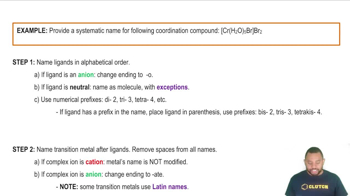
  • Naming Coordination Compounds Example
    04:11
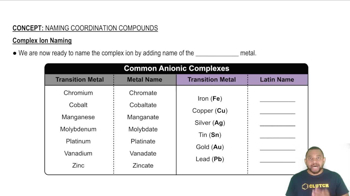
  • Complex Ion Naming
    01:28

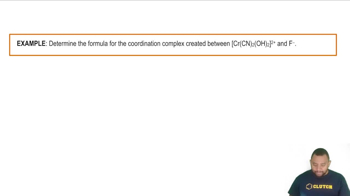
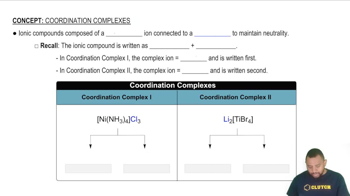
Coordination Complexes

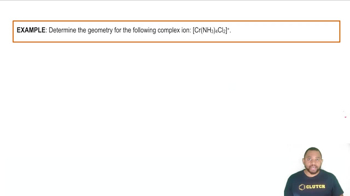
  • Coordination Complexes Example
    00:43
  • Coordination Complexes I and II
    02:28

Coordination Numbers & Geometry

  • Coordination Numbers and Geometry Example
    00:30
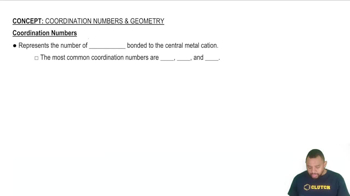
  • Coordination Numbers
    00:27
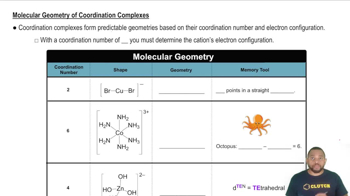
  • Molecular Geometry of Coordination Complexes
    02:40

Intro to Crystal Field Theory

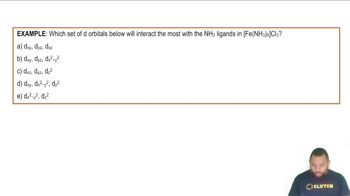
  • Example
    00:59
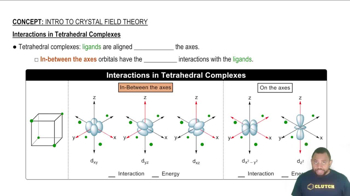
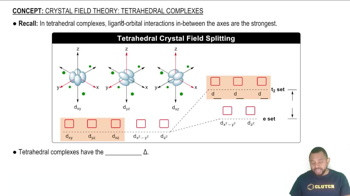
  • For tetrahedral complexes, the greatest ligand-metal interactions occur in between the axes.
    02:37
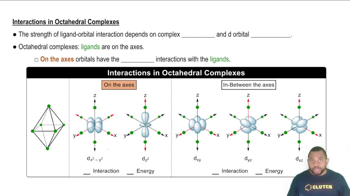
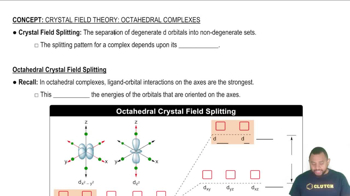
  • For octahedral complexes, the greatest ligand-metal interactions occur on or along the axes.
    02:01

Crystal Field Theory: Octahedral Complexes

  • Example
    00:43
  • The crystal field splitting pattern for octahedral complexes has the d orbitals on or along the axes as having the higher energy.
    03:04

Crystal Field Theory: Tetrahedral Complexes

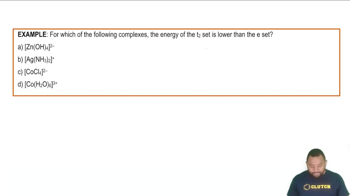
  • The crystal field splitting pattern for tetrahedral complexes has the d orbitals in between the axes as having the higher energy.
    01:38
  • Example
    01:11

Crystal Field Theory: Square Planar Complexes

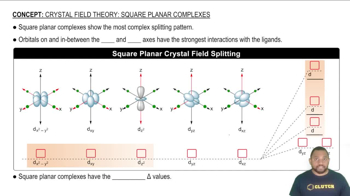
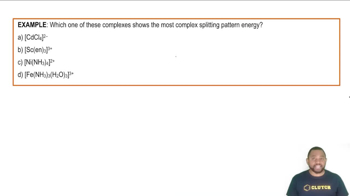
  • Square planar complexes show the most complex splitting pattern.
    02:07
  • Example
    01:17

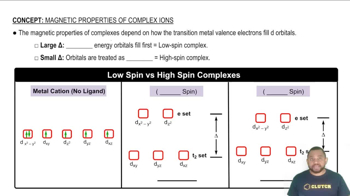
Magnetic Properties of Complex Ions

  • Low-Spin Complexes are associated with large Δ values and High-Spin Complexes are associated with small Δ values.
    04:23
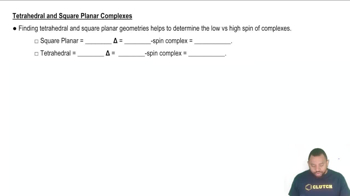
  • Finding tetrahedral and square planar geometries helps to determine the low vs high spin of complexes.
    01:43
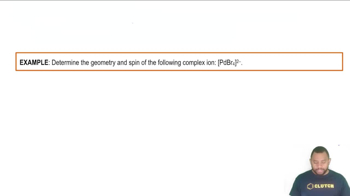
  • Example
    02:14

Magnetic Properties of Complex Ions: Octahedral Complexes

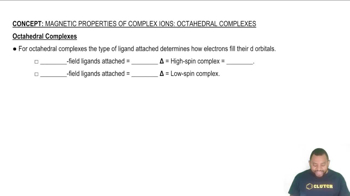
  • For octahedral complexes, Weak-Field Ligands create High-spin complexes and Strong-Field Ligands create Low-spin complexes.
    01:28
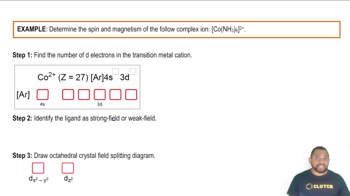
  • Example
    02:52

Ligands

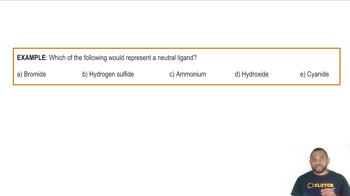
  • Ligands Example
    01:12
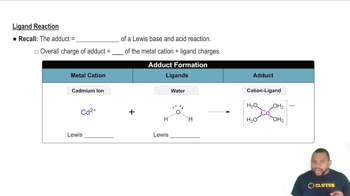
  • Ligand Reaction
    01:53
  • Ligands Example
    00:40