 Indietro
Electronic Structure of Atoms: Wave Nature, Quantization, and Atomic Orbitals
Guida di studio - Note intelligenti
 Appunti personalizzati basati sui tuoi materiali, ampliati con definizioni chiave, esempi e contesto.
6. Electronic Structure of Atoms
6.1. The Wave Nature of Light
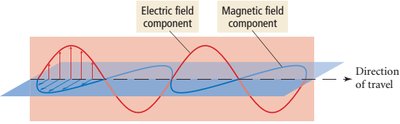
The electronic structure of atoms is fundamentally linked to the properties of light, which is a form of electromagnetic radiation. Light consists of oscillating, perpendicular electric and magnetic fields that propagate through space as waves.
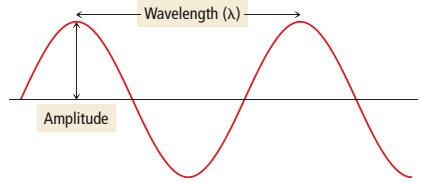
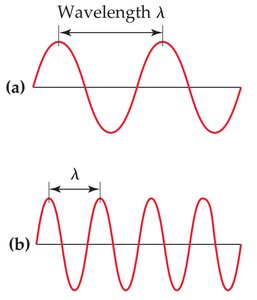
Wavelength (\(\lambda\)): The distance between two consecutive peaks of a wave.
Frequency (\(\nu\)): The number of wave cycles passing a point per unit time, measured in Hertz (Hz).
Amplitude: The height of the wave, related to its energy.
Speed of Light (\(c\)): In a vacuum, \(c = 3.00 \times 10^8\) m/s.
Relationship:
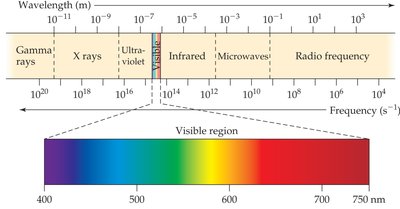
Electromagnetic Spectrum: Includes gamma rays, X-rays, ultraviolet, visible light, infrared, microwaves, and radio waves. Visible light ranges from about 400 nm (violet) to 750 nm (red).
6.2. Quantized Energy and Photons
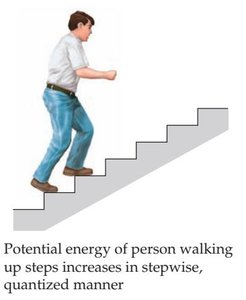
Energy is not continuous, but quantized. Max Planck proposed that energy can be absorbed or emitted only in discrete amounts called quanta. Albert Einstein extended this concept to light, describing it as a stream of particles called photons.
Planck's Equation: where J·s (Planck's constant).
Photon Energy:
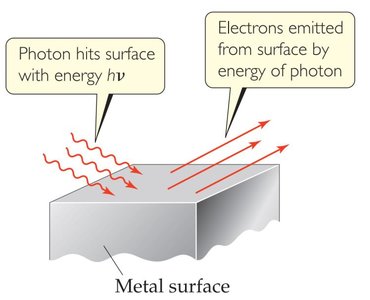
Photoelectric Effect: Photons striking a metal surface can eject electrons if their energy exceeds a threshold.
6.3. Line Spectra and the Bohr Model
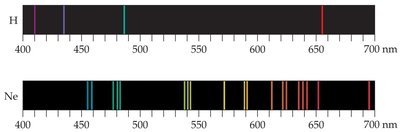
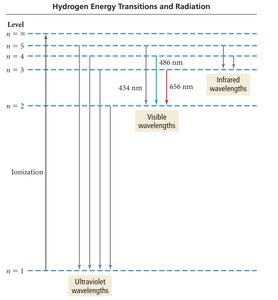
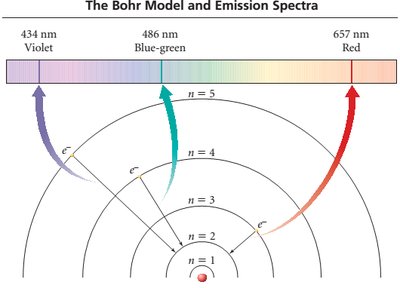
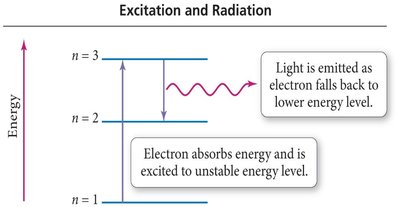
Atoms emit light of specific wavelengths, producing line spectra. Niels Bohr explained this by proposing that electrons occupy quantized orbits and transition between energy levels, emitting or absorbing photons.
Bohr's Postulates:
Electrons occupy only certain allowed orbits with quantized energies.
Electrons in allowed orbits do not lose energy.
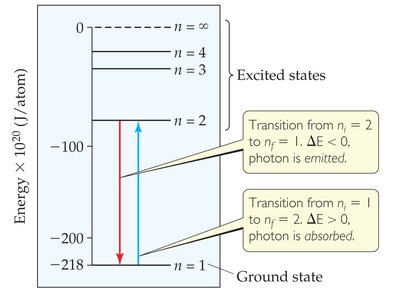
Energy is emitted or absorbed only when electrons jump between orbits.
Energy of Bohr Orbit: J
Energy Change for Transition:
Photon Emission/Absorption:
6.4. The Wave Behavior of Matter
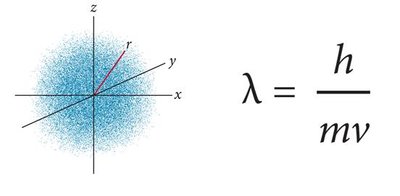
Louis de Broglie proposed that particles such as electrons exhibit wave-like properties. The wavelength associated with a particle is given by the de Broglie relation.
de Broglie Equation:
Wave Nature of Matter: Significant for subatomic particles, negligible for macroscopic objects.
6.5. Quantum Mechanics and Atomic Orbitals
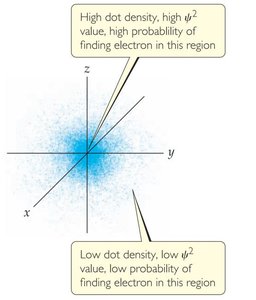
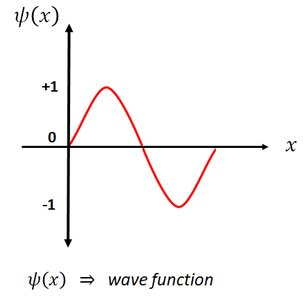
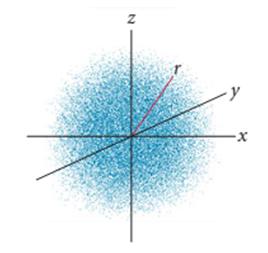
Quantum mechanics describes electrons in terms of probability distributions called orbitals, rather than fixed paths. The Schrödinger equation governs the behavior of these wave functions.
Schrödinger Equation:
Wave Function (\(\psi\)): Describes the probability amplitude of finding an electron.
Probability Density: gives the likelihood of finding an electron at a given location.

6.6. Quantum Numbers and Atomic Orbitals
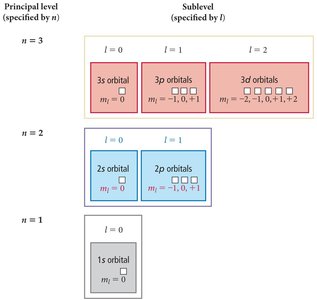
Atomic orbitals are described by quantum numbers, which specify their size, shape, and orientation.
Principal Quantum Number (\(n\)): Specifies the energy level and size of the orbital (\(n = 1, 2, 3, ...\)).
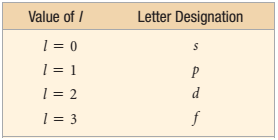
Angular Momentum Quantum Number (\(l\)): Specifies the shape of the orbital (\(l = 0, 1, ..., n-1\)).
Magnetic Quantum Number (\(m_l\)): Specifies the orientation of the orbital (\(m_l = -l, ..., 0, ..., +l\)).
Spin Quantum Number (\(m_s\)): Specifies the spin direction of the electron (\(m_s = +\frac{1}{2}, -\frac{1}{2}\)).
Value of l | Letter Designation |
|---|---|
l = 0 | s |
l = 1 | p |
l = 2 | d |
l = 3 | f |
l | Possible ml Values | Orbital Name(s) |
|---|---|---|
0 | 0 | 4s (1 orbital) |
1 | -1, 0, +1 | 4p (3 orbitals) |
2 | -2, -1, 0, +1, +2 | 4d (5 orbitals) |
3 | -3, ..., +3 | 4f (7 orbitals) |
Total number of orbitals = 42 = 16 | ||
6.7. Representation and Shapes of Orbitals
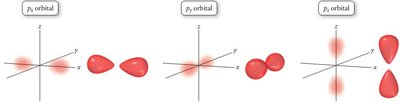
The angular momentum quantum number determines the shape of atomic orbitals:
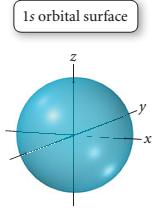
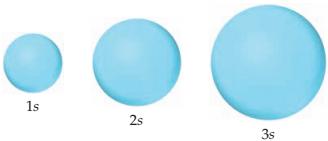
s Orbitals (l = 0): Spherical shape; size increases with n.
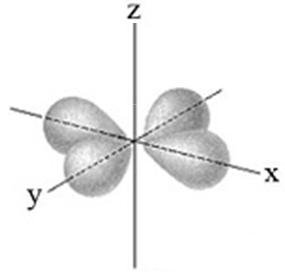
p Orbitals (l = 1): Dumbbell-shaped; three orientations (px, py, pz).
d Orbitals (l = 2): More complex shapes; five orientations.
f Orbitals (l = 3): Even more complex; seven orientations.
6.8. Many-Electron Atoms and Electron Configuration
In atoms with multiple electrons, electron-electron repulsions affect orbital energies. The order of filling is determined by the Aufbau principle, Pauli exclusion principle, and Hund's rule.
Order of Energy: s < p < d < f
Pauli Exclusion Principle: No two electrons in an atom can have the same set of four quantum numbers.
Aufbau Principle: Orbitals are filled in order of increasing energy.
Hund's Rule: Electrons fill degenerate orbitals singly first, with parallel spins.
Electron Configuration: Shows how electrons occupy orbitals in an atom. For example, hydrogen: 1s1; helium: 1s2.
Condensed Electron Configuration: Uses the nearest noble gas to represent core electrons, e.g., [He] 2s1 for lithium.
Valence Electrons: Electrons in the outermost principal level; Core Electrons: Electrons in complete inner levels.
Additional info:
These notes cover the fundamental concepts of Chapters 6 and 7 in General Chemistry, including the wave nature of light, quantization, atomic spectra, quantum mechanics, and atomic orbitals. The included images reinforce key concepts such as electromagnetic waves, line spectra, quantum numbers, and orbital shapes.
