 Indietro
Electronic Structure of Matter: Energy, Electron Configurations, and Atomic Properties
Guida di studio - Note intelligenti
 Appunti personalizzati basati sui tuoi materiali, ampliati con definizioni chiave, esempi e contesto.
Electronic Structure of Matter
Relationship Between Light Color and Energy
The color of visible light corresponds to different amounts of energy, which is determined by the wavelength and frequency of the light. The visible spectrum is often remembered by the acronym ROYGBIV (Red, Orange, Yellow, Green, Blue, Indigo, Violet), with red having the lowest energy and violet the highest.
Red light has the lowest energy and longest wavelength.
Violet light has the highest energy and shortest wavelength.
Energy increases as you move from red to violet across the spectrum.
The energy of a photon is given by , where is Planck's constant, is frequency, is the speed of light, and is wavelength.
Examples:
Red light emits less energy than violet light.
Blue light emits more energy than orange light.
Green light emits less energy than indigo light.
Excited State vs. Ground State in Bohr Models
Atoms can exist in different energy states. The ground state is the lowest energy configuration, while the excited state occurs when electrons absorb energy and move to higher energy levels.
Ground State: All electrons occupy the lowest available energy levels.
Excited State: One or more electrons have absorbed energy and moved to higher energy levels.
When electrons return to the ground state, they release energy as photons (light).
Energy Levels and Sublevels in Atoms
Electrons in atoms occupy energy levels (shells) and sublevels (s, p, d, f). The energy increases as you move further from the nucleus and as you move to higher sublevels within a shell.
Energy levels are labeled by principal quantum number (): 1, 2, 3, ...
Sublevels are labeled as s, p, d, f.
Order of increasing energy for sublevels: 1s, 2p, 4s, 3d, 5p.
Electron filling order (up to 5p): 1s, 2s, 2p, 3s, 3p, 4s, 3d, 4p, 5s, 4d, 5p.
Writing Electron Configurations and Orbital Diagrams
Electron configurations describe the arrangement of electrons in an atom. Orbital diagrams visually represent the distribution of electrons in orbitals, showing their spins.
Full electron configuration: Lists all occupied sublevels and their electron counts.
Abbreviated electron configuration: Uses noble gas notation to simplify the configuration.
Orbital diagram: Uses arrows to represent electrons and their spins in each orbital.
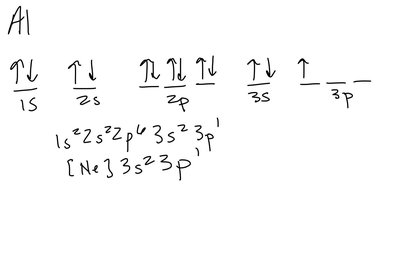
Example: Aluminum (#13)
Full electron configuration: 1s2 2s2 2p6 3s2 3p1
Abbreviated: [Ne] 3s2 3p1
Orbital diagram:
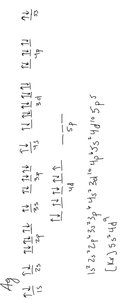
Example: Silver (#47)
Full electron configuration: 1s2 2s2 2p6 3s2 3p6 4s2 3d10 4p6 5s1 4d10
Abbreviated: [Kr] 5s1 4d10
Orbital diagram:
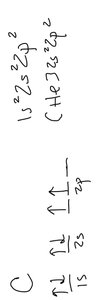
Example: Carbon (#6)
Full electron configuration: 1s2 2s2 2p2
Abbreviated: [He] 2s2 2p2
Orbital diagram:

Rules for Electron Filling Order
Three main rules govern how electrons fill orbitals:
Aufbau Principle: Electrons fill the lowest energy orbitals first.
Pauli Exclusion Principle: Each orbital can hold two electrons with opposite spins.
Hund’s Rule: Electrons fill each orbital singly before pairing up.
Identifying Incorrect Electron Configurations and Orbital Diagrams
Some electron configurations and orbital diagrams are impossible due to violations of the filling rules.
Examples of impossible configurations:
3d11: 3d can hold a maximum of 10 electrons.
2d: There is no 2d sublevel.
1p: There is no 1p sublevel.
Incorrect filling order: Sublevels must be filled in the correct sequence.
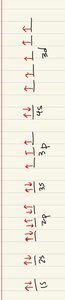
Examples of errors in orbital diagrams:
Violating Pauli Exclusion Principle: More than two electrons in an orbital or same spin in all orbitals.
Violating Aufbau Principle: Skipping lower energy orbitals.
Violating Hund’s Rule: Pairing electrons before all orbitals are singly occupied.
Determining Protons, Neutrons, and Electrons from Mass Number and Electron Configuration
The number of protons, neutrons, and electrons in an atom can be determined using the mass number and electron configuration.
Protons (p+): Equal to the atomic number.
Electrons (e-): Equal to the number of protons in a neutral atom; determined from electron configuration.
Neutrons (n0): Mass number minus atomic number.
Mass Number | Electron Configuration | Protons (p+) | Neutrons (n0) | Electrons (e-) |
|---|---|---|---|---|
66 | 1s2 2s2 2p6 3s2 3p6 4s2 3d10 | 30 | 36 | 30 |
47 | [Ar] 4s2 3d1 | 21 | 26 | 21 |
34 | 1s2 2s2 2p6 3s2 3p5 | 17 | 17 | 17 |
27 | [Ne] 3s2 3p2 | 14 | 13 | 14 |
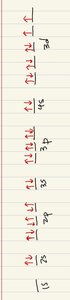
Example: For an atom with mass number 66 and electron configuration 1s2 2s2 2p6 3s2 3p6 4s2 3d10, the number of protons is 30, neutrons is 36, and electrons is 30.
