Indietro
Foundational Topics in Chemistry: Measurement, Units, and Problem Solving
Guida di studio - Note intelligenti
 Appunti personalizzati basati sui tuoi materiali, ampliati con definizioni chiave, esempi e contesto.
Ch. 1: Foundational Topics in Chemistry
Module 1A: Scientific Method & Elements
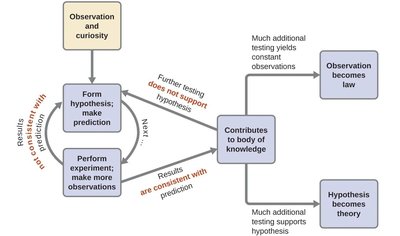
The scientific method is a systematic approach to investigation in chemistry, involving observation, hypothesis formation, experimentation, and conclusion. Understanding the distinction between hypotheses, laws, and theories is essential for scientific reasoning. Additionally, recognizing element symbols and names is foundational for chemical communication.
Hypothesis: A tentative explanation or prediction based on observations.
Scientific Law: A statement describing consistent observations, often expressed mathematically.
Theory: A well-substantiated explanation of phenomena, supported by extensive evidence.
Element Symbols: One or two letters, first capitalized, derived from English or Latin names (e.g., Fe for iron).
Study Tips: Prepare for units, read assigned sections, participate actively, practice problems, and seek help when needed.
Example: Iridium = Ir, Iron = Fe, Iodine = I, Chlorine = Cl, Cobalt = Co, Fluorine = F.
Module 1B: Units & Measurement
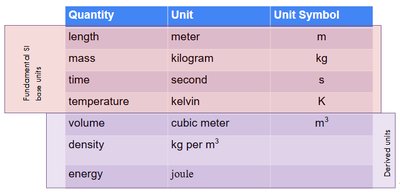
Measurement in chemistry involves quantitative observation, comparison to standards, and reporting with appropriate units. The International System of Units (SI) provides a standardized framework for scientific measurement, including fundamental and derived units, as well as prefixes for scaling values.
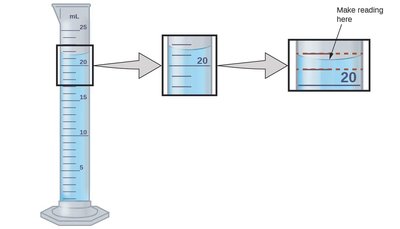
Measurement: Always includes a number and a unit, with one estimated digit indicating uncertainty.
SI Units: Fundamental units include meter (length), kilogram (mass), second (time), and kelvin (temperature).
Derived Units: Created by combining fundamental units (e.g., volume: m3, density: kg/m3).
SI Prefixes: Used to express multiples or fractions of units (e.g., kilo-, milli-, micro-).
Temperature Conversions: Kelvin is the scientific standard; conversion formulas include .
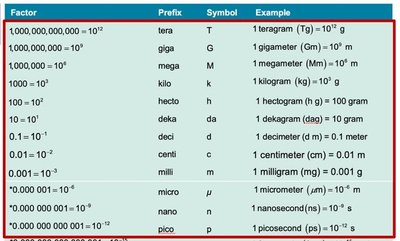
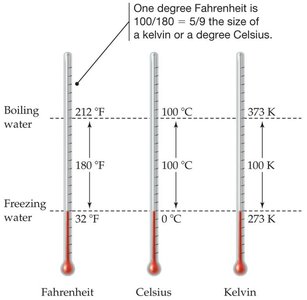
Example: 1 m3 = 1000 dm3 = 1,000,000 cm3; 1 inch = 2.54 cm; 1 pound = 454 g.
Module 1C: Accuracy, Precision & Significant Figures
Accuracy and precision are critical concepts in measurement. Significant figures reflect the certainty of measurements and must be properly used in calculations. Understanding the types of errors and how to report measurements is essential for reliable scientific work.
Accuracy: Closeness of a measurement to the true value.
Precision: Consistency among repeated measurements.
Random Error: Fluctuations that average out over many measurements.
Systematic Error: Consistent deviation due to instrument or technique.
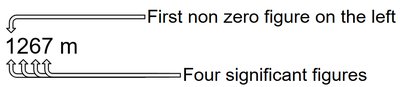
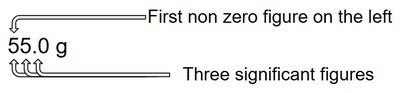
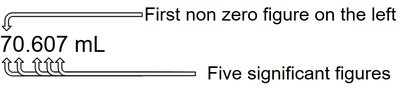
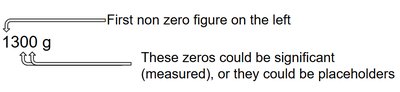
Significant Figures: Digits that convey measurement precision; rules include all nonzero digits, captive zeros, and context for trailing zeros.
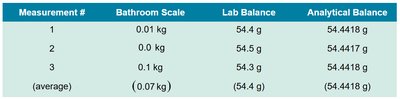
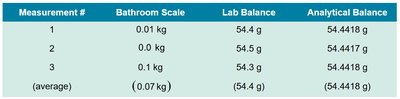
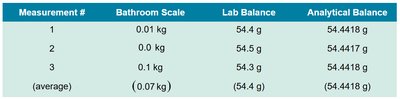
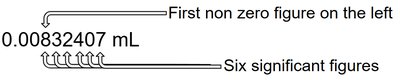
Example: 55.0 g (three significant figures), 0.00832407 mL (six significant figures).
Module 1C: Rules for Significant Figures
Properly identifying significant figures is necessary for reporting and calculating measurements. The placement of zeros and the context of the number determine their significance.
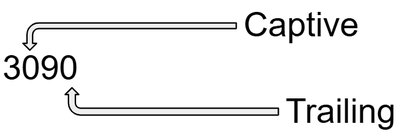
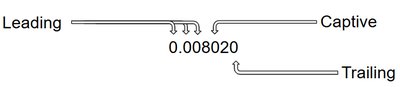
Captive Zeros: Always significant (e.g., 3090).
Leading Zeros: Never significant (e.g., 0.008020).
Trailing Zeros: Significant if after a decimal point or measured.
Exact Numbers: Have infinite significant figures (e.g., 7 days in a week).
Module 1C: Significant Figures in Calculations
When performing calculations, the rules for significant figures differ based on the operation. Addition and subtraction are limited by decimal places, while multiplication and division are limited by the number of significant digits.
Addition/Subtraction: Round to the same number of decimal places as the measurement with the fewest decimal places.
Multiplication/Division: Round to the same number of significant figures as the measurement with the fewest significant figures.
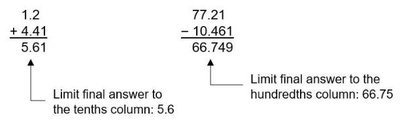
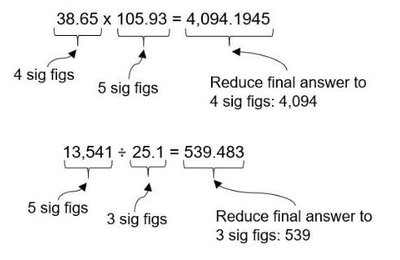
Example: (rounded to two decimal places).
Module 1D: Dimensional Analysis & Problem Solving
Dimensional analysis, or the factor-label method, is a systematic approach to unit conversion and problem solving in chemistry. Conversion factors relate equivalent quantities and allow for the transformation of units in calculations.
Conversion Factor: A ratio of two equivalent quantities with different units (e.g., ).
Dimensional Analysis: Multiply by conversion factors to cancel units and obtain the desired unit.
Derived Units: Used for volume, density, and other properties (e.g., ).
Percentages: Used as conversion factors in mass percent calculations.
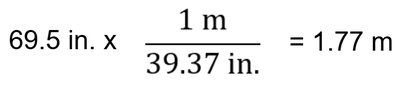

Example:
Module 1D: Applications of Conversion Factors
Conversion factors are applied in various contexts, including density calculations, mass percent, and geometric formulas for volume and area. These skills are essential for laboratory and real-world chemistry problems.
Density: Used to relate mass and volume ().
Percent by Mass: Expressed as grams of component per 100 grams of mixture.
Geometric Formulas: Used for calculating volume or area in unit conversions.
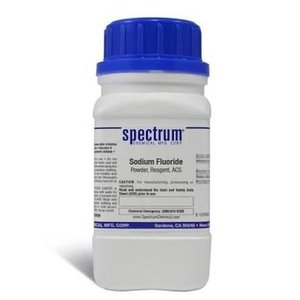
Example: Sodium fluoride is 45.0% fluoride by mass; conversion factor is .
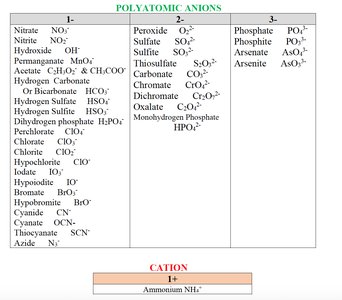
Required Memorization: Common Polyatomic Ions
Memorizing common polyatomic ions is essential for success in general chemistry. These ions are frequently encountered in chemical formulas and reactions.
Charge | Polyatomic Anions |
|---|---|
1- | Nitrate (NO3-), Hydroxide (OH-), Acetate (CH3COO-), etc. |
2- | Sulfate (SO42-), Carbonate (CO32-), Oxalate (C2O42-), etc. |
3- | Phosphate (PO43-), Arsenate (AsO43-), etc. |
1+ | Ammonium (NH4+) |