 Indietro
Foundations of Chemistry: Atoms, Elements, Compounds, and Chemical Reactions
Guida di studio - Note intelligenti
 Appunti personalizzati basati sui tuoi materiali, ampliati con definizioni chiave, esempi e contesto.
Introduction to Chemistry
What is Chemistry?
Chemistry is the branch of science dedicated to the study of matter, its transformations, and the energy changes associated with these transformations. It is a central science that connects and supports fields such as physics, biology, medicine, engineering, and environmental science.
Matter and Its Classification
Definition and States of Matter
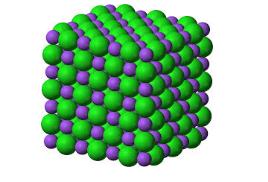
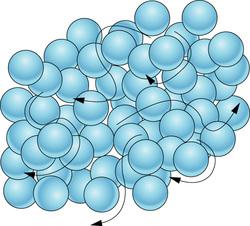
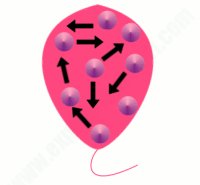
Matter is defined as anything that occupies space and has mass. Matter exists in three primary states: solid, liquid, and gas. Each state is characterized by the arrangement and energy of its particles.
Solid: Definite shape and volume; particles are closely packed in a fixed arrangement.
Liquid: Definite volume but takes the shape of its container; particles are less tightly packed and can move past one another.
Gas: No definite shape or volume; particles are far apart and move freely.
Composition of Matter
Atoms: The simplest unit of matter that retains the properties of a chemical element.
Elements: Pure substances consisting of only one type of atom; cannot be broken down by chemical means.
Molecules: Substances composed of two or more atoms held together by covalent bonds.
Compounds: Substances formed from two or more different elements chemically bonded together; can be molecular or ionic.
Mixtures: Physical combinations of two or more substances where each retains its identity; can be homogeneous (uniform) or heterogeneous (non-uniform).

Atomic Theory and Structure
Historical Development of Atomic Theory
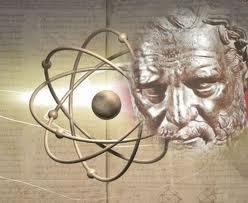
Democritus (5th century B.C.): Proposed that matter is composed of indivisible units called "atomos."
Dalton (1803): Revived the atomic theory, suggesting that atoms are the fundamental building blocks of matter.
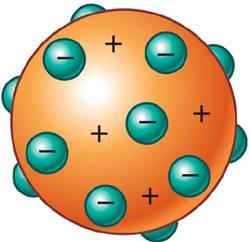
Thomson (1897): Discovered the electron and proposed the "plum pudding" model of the atom.
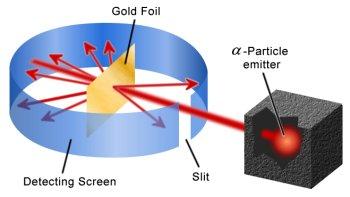
Rutherford (1911): Demonstrated that atoms have a small, dense, positively charged nucleus surrounded by electrons.
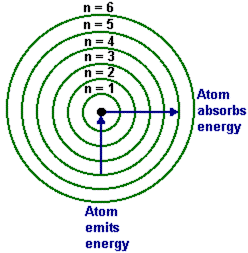
Bohr (1913): Suggested that electrons occupy specific energy levels or orbits around the nucleus.
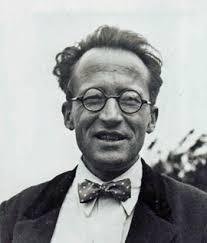
Schrödinger (1923): Introduced the quantum mechanical model, describing electrons as wave-like and existing in probability clouds.
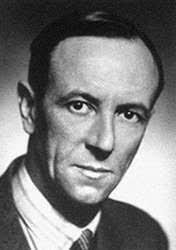
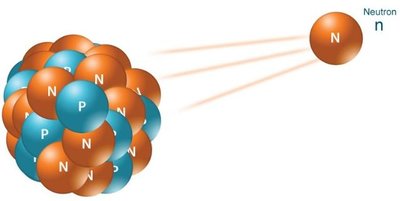
Chadwick (1932): Discovered the neutron, completing the modern picture of atomic structure.
Subatomic Particles
Protons (p+): Positively charged particles in the nucleus; mass ≈ 1.0073 u.
Neutrons (n): Neutral particles in the nucleus; mass ≈ 1.0083 u.
Electrons (e-): Negatively charged particles in energy levels around the nucleus; mass ≈ 0.0005486 u.
1 atomic mass unit (u) = 1/12 the mass of a carbon-12 atom = 1.66057 × 10⁻²⁷ kg.
Isotopes and Ions
Isotopes: Atoms of the same element with different numbers of neutrons, resulting in different masses (e.g., protium, deuterium, tritium for hydrogen).
Ions: Atoms or molecules that have gained or lost electrons, resulting in a net charge. Anions are negatively charged (gain electrons), and cations are positively charged (lose electrons).
The Periodic Table
Organization and Interpretation
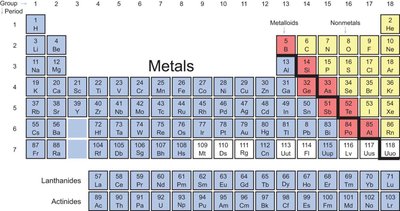
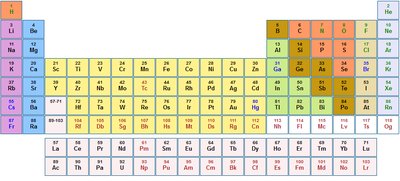
The periodic table arranges elements by increasing atomic number and groups elements with similar chemical properties into columns (families or groups). Key information includes the element symbol, atomic number (number of protons), and atomic mass (average mass of isotopes).
Representative Elements and Families
Group 1: Alkali Metals
Group 2: Alkaline Earth Metals
Group 13: Boron Family
Group 14: Carbon Family
Group 15: Nitrogen Family
Group 16: Chalcogens
Group 17: Halogens
Group 18: Noble Gases
Atomic Number, Mass Number, and Isotopes
Atomic Number (Z): Number of protons in the nucleus; defines the element.
Mass Number (A): Sum of protons and neutrons in the nucleus.
Isotopes: Atoms with the same atomic number but different mass numbers due to varying numbers of neutrons.
Electronic Structure and Quantum Numbers
Quantum Numbers
Quantum numbers describe the properties of atomic orbitals and the electrons in them:
Principal quantum number (n): Energy level (n = 1, 2, 3, ...).
Azimuthal quantum number (l): Sublevel or shape (l = 0 (s), 1 (p), 2 (d), 3 (f)).
Magnetic quantum number (m): Orientation of the orbital (m = -l to +l).
Spin quantum number (s): Electron spin (+1/2 or -1/2).
No two electrons in an atom can have the same set of four quantum numbers (Pauli Exclusion Principle).
Electron Configuration
Electrons fill orbitals in order of increasing energy, following the Aufbau principle, Hund's rule, and the Pauli exclusion principle. The order of filling is determined by the sum n + l (Klechkowsky's rule).
Aufbau Principle: Electrons occupy the lowest energy orbitals first.
Hund's Rule: Electrons fill degenerate orbitals singly before pairing.
Pauli Exclusion Principle: No two electrons can have the same set of quantum numbers.
Valence Electrons
Valence electrons are the outermost electrons and are responsible for chemical bonding and reactivity. The number of valence electrons determines the chemical properties of an element.
Chemical Bonding
Types of Chemical Bonds
Ionic Bond: Formed by the transfer of electrons from a metal to a nonmetal, resulting in oppositely charged ions.
Covalent Bond: Formed by the sharing of electrons between nonmetal atoms to fulfill the octet rule.
The type of bond can often be predicted by the difference in electronegativity between the atoms:
ΔEN = 0: Non-polar covalent
ΔEN < 2: Polar covalent
ΔEN > 2: Ionic
Lewis Structures
Lewis structures represent the arrangement of valence electrons around atoms in a molecule. Dots represent valence electrons, and lines represent bonds. The octet rule is generally followed, with exceptions for some elements.
Formal Charge and Resonance
The most stable Lewis structure is the one with the lowest formal charges. Resonance structures occur when more than one valid Lewis structure can be drawn for a molecule.
Formal charge is calculated as:
VSEPR Theory and Molecular Geometry
Valence Shell Electron Pair Repulsion (VSEPR) theory predicts the three-dimensional shape of molecules based on the repulsion between electron pairs around a central atom. The geometry depends on the number of bonding and non-bonding pairs.
2 pairs: Linear (180°)
3 pairs: Trigonal planar (120°)
4 pairs: Tetrahedral (109.5°)
5 pairs: Trigonal bipyramidal (120°, 90°)
6 pairs: Octahedral (90°)
Chemical Reactions and Stoichiometry
Types of Chemical Reactions
Single Displacement: A + BC → B + AC
Double Displacement: AB + CD → AD + CB
Combination (Synthesis): A + B → AB
Decomposition: AB → A + B
Combustion: Hydrocarbon + O2 → CO2 + H2O
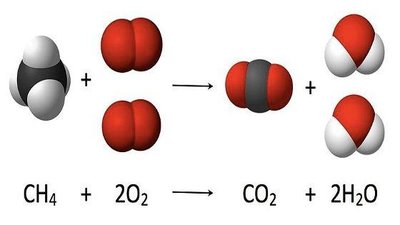
Balancing Chemical Equations
Chemical equations must be balanced to obey the law of conservation of mass. This can be done by the trial and error method or algebraic method. Coefficients are adjusted so that the number of atoms of each element is equal on both sides of the equation.
Limiting Reagent and Yield
Limiting Reagent: The reactant that is completely consumed first, limiting the amount of product formed.
Theoretical Yield: The maximum amount of product that can be formed from the limiting reagent.
Percent Yield:
Intermolecular Forces and States of Matter
Types of Intermolecular Forces
Ion-Ion: Between charged ions.
Ion-Dipole: Between an ion and a polar molecule.
Dipole-Dipole: Between polar molecules.
Hydrogen Bonding: Special case of dipole-dipole, involving H bonded to N, O, or F.
Dipole-Induced Dipole: Between a polar and a nonpolar molecule.
Induced Dipole-Induced Dipole (London Dispersion): Present in all molecules, dominant in nonpolar substances.
Properties of Liquids
Surface Tension: Energy required to increase the surface area of a liquid; decreases with temperature.
Viscosity: Resistance to flow; decreases with temperature and increases with stronger intermolecular forces.
Vapor Pressure: Pressure exerted by a vapor in equilibrium with its liquid; increases with temperature.
Gases and Gas Laws
Kinetic Molecular Theory
Gases consist of particles in constant, random motion. The average kinetic energy is proportional to temperature. Gas particles are assumed to have negligible volume and no intermolecular forces in the ideal gas model.
Ideal Gas Law
The behavior of ideal gases is described by:
P = pressure (atm or Pa)
V = volume (L or m3)
n = moles of gas
R = gas constant (0.0821 L·atm/mol·K or 8.314 J/mol·K)
T = temperature (K)
Real Gases (Van der Waals Equation)
Real gases deviate from ideal behavior at high pressures and low temperatures. The Van der Waals equation corrects for intermolecular forces and molecular volume:
Where a and b are constants specific to each gas.
Conclusion
This guide covers the foundational concepts of general chemistry, including the nature of matter, atomic structure, the periodic table, chemical bonding, reactions, stoichiometry, and the properties of gases and liquids. Mastery of these topics is essential for further study in chemistry and related sciences.
