 Indietro
General Chemistry Exam 1 Study Guidance: Units, Conversions, Atomic Structure, and Calculations
Guida di studio - Note intelligenti
 Appunti personalizzati basati sui tuoi materiali, ampliati con definizioni chiave, esempi e contesto.
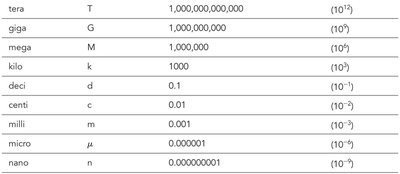
Q1. Use the appropriate prefix to write 7.12 x 10⁻⁶ s without the use of exponents.
Background
Topic: Metric Prefixes and Scientific Notation
This question tests your understanding of metric prefixes and how to convert numbers written in scientific notation to a form using a prefix instead of an exponent.
Key Terms and Formulas:
Metric Prefixes: micro (μ), milli (m), nano (n), kilo (k), etc.
Scientific Notation:
Step-by-Step Guidance
Identify the exponent in the scientific notation: .
Recall the metric prefix that corresponds to , which is micro (μ).
Rewrite the value using the micro prefix: .
Check that the units are correct and that no exponents remain.
Try solving on your own before revealing the answer!
Final Answer: 7.12 μs
7.12 x 10⁻⁶ seconds is equivalent to 7.12 microseconds (μs), since the micro prefix represents .
Q2. The number 0.000539 is which number in scientific notation?
Background
Topic: Scientific Notation
This question tests your ability to convert a decimal number into scientific notation, which is a standard way to express very small or very large numbers in chemistry.
Key Terms and Formulas:
Scientific Notation: , where is a number between 1 and 10, and is an integer.
Step-by-Step Guidance
Count the number of decimal places the decimal point must move to get a number between 1 and 10.
Move the decimal point to the right until you have .
Each move to the right increases the negative exponent by 1.
Set up the scientific notation: .
Try solving on your own before revealing the answer!
Final Answer:
0.000539 in scientific notation is , since the decimal point moves four places to the right.
Q3. What is the density of a piece of magnesium metal measuring 5.30 cm x 3.25 cm x 1 cm and with a mass of 30.0 g?
Background
Topic: Density Calculations
This question tests your ability to calculate density, a fundamental property in chemistry, using mass and volume.
Key Terms and Formulas:
Density ():
Volume of a rectangular solid:
Step-by-Step Guidance
Calculate the volume: .
Multiply the values to find the volume in cm3.
Use the mass given: .
Set up the density formula: .
Try solving on your own before revealing the answer!
Final Answer: 1.74 g/mL
The volume is cm3. Density is g/mL (since 1 cm3 = 1 mL).
Q4. What is the chemical symbol for element X with 54 electrons and a charge of +2?
Background
Topic: Atomic Structure and Chemical Symbols
This question tests your understanding of how to determine the chemical symbol of an element based on its electron count and charge.
Key Terms and Formulas:
Atomic Number: Number of protons in the nucleus
Charge: Positive charge means loss of electrons
Neutral atom: Number of electrons = atomic number
Step-by-Step Guidance
Recall that a +2 charge means the atom has lost 2 electrons.
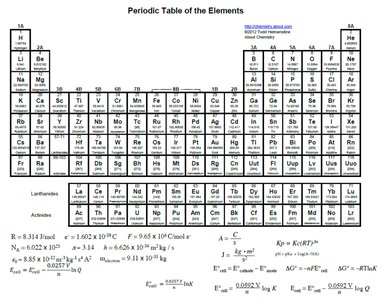
Calculate the atomic number: (since the neutral atom would have 56 electrons).
Find the element with atomic number 56 on the periodic table.
Identify its chemical symbol.
Try solving on your own before revealing the answer!
Final Answer: Ba
Element X is barium (Ba), which has atomic number 56. With a +2 charge, it has 54 electrons.
Q5. The daily recommended limit for sodium is 2,300 mg. How many nanograms of sodium is this limit?
Background
Topic: Unit Conversions (Metric System)
This question tests your ability to convert between different units of mass, specifically from milligrams (mg) to nanograms (ng).
Key Terms and Formulas:
1 mg = g
1 ng = g
Conversion factor:
Step-by-Step Guidance
Start with the value: .
Convert mg to g: .
Convert g to ng: .
Combine the conversion factors to get the value in nanograms.
Try solving on your own before revealing the answer!
Final Answer: ng
2,300 mg is equal to nanograms, using the conversion .
Free Response Example 1: What is the mass to four decimal places for K-41?
Background
Topic: Isotopes and Atomic Mass
This question tests your understanding of isotopic masses and how to use percent abundance to calculate atomic mass.
Key Terms and Formulas:
Isotope: Atoms of the same element with different numbers of neutrons
Percent Abundance: The percentage of each isotope in nature
Atomic Mass Formula:
Step-by-Step Guidance
List the percent abundances for K-39 and K-40.
Subtract their abundances from 100% to find the abundance of K-41.
Set up the atomic mass equation using the given masses and abundances.
Rearrange the equation to solve for the mass of K-41.
Try solving on your own before revealing the answer!
Final Answer: The mass of K-41 is calculated based on the missing abundance and atomic mass equation.
Use the atomic mass formula and solve for the mass of K-41 using the provided data and calculated abundance.
Free Response Example 2: What is the maximum safe content of cadmium in a 45.0 pound child? [Give the value to 3 significant figures, in ng of cadmium.]
Background
Topic: Unit Conversions and Significant Figures
This question tests your ability to convert between units (pounds to kilograms, mL to dL, μg to ng) and apply significant figures.
Key Terms and Formulas:
1 pound = 453.6 g
1 kg = 1,000 g
1 dL = 100 mL
1 μg = 1,000 ng

Step-by-Step Guidance
Convert 45.0 pounds to kilograms.
Calculate the total blood volume: .
Convert mL to dL.
Multiply the blood volume by the maximum safe concentration (μg/dL).
Convert μg to ng.
Try solving on your own before revealing the answer!
Final Answer: The maximum safe content is calculated in ng using the conversion steps above.
Follow the conversion steps to arrive at the value in nanograms, rounded to three significant figures.
Free Response Example 3: The fastest serve ever recorded in tennis is 151 miles per hour. The distance the tennis ball has to travel to the net once served is 11.89 meters. A. What is the tennis ball velocity in meters per second (m/s)? B. How many milliseconds (ms) does it take for the tennis ball to reach the net once served?
Background
Topic: Unit Conversions and Speed Calculations
This question tests your ability to convert units of speed and calculate time using distance and velocity.
Key Terms and Formulas:
Speed:
Unit conversions: miles to kilometers, hours to seconds
Step-by-Step Guidance
Convert 151 miles per hour to meters per second using conversion factors.
Set up the calculation for velocity in m/s.
For part B, use the formula .
Convert the time from seconds to milliseconds.
Try solving on your own before revealing the answer!
Final Answer: The velocity and time are calculated using the conversion steps above.
Complete the conversions and calculations to find the answers for both parts A and B.
Q6. What is the mass of one atom of tungsten (W) in grams?
Background
Topic: Atomic Mass and Avogadro's Number
This question tests your ability to use atomic mass units and Avogadro's number to find the mass of a single atom.
Key Terms and Formulas:
Atomic mass unit (amu):
Atomic mass of tungsten (W): found on the periodic table
Step-by-Step Guidance
Find the atomic mass of tungsten (W) from the periodic table.
Multiply the atomic mass (in amu) by the conversion factor to grams.
Set up the calculation: .
Try solving on your own before revealing the answer!
Final Answer: The mass of one atom of tungsten is calculated using its atomic mass and the amu-to-gram conversion.
Multiply the atomic mass of W by to get the mass in grams.
Q7. One atom of an element has a mass of 4.480 x 10⁻²³ g. What is the element? (1g = 6.022 x 10²³ amu)
Background
Topic: Atomic Mass and Identification
This question tests your ability to convert mass in grams to atomic mass units and identify the element based on its atomic mass.
Key Terms and Formulas:
Avogadro's number: atoms per mole
Atomic mass unit (amu):
Step-by-Step Guidance
Convert the mass of the atom from grams to amu using the given conversion factor.
Set up the calculation: .
Compare the calculated atomic mass to known values on the periodic table.
Try solving on your own before revealing the answer!
Final Answer: The element is identified by its atomic mass calculated from the given mass.
Convert the mass to amu and match it to the element's atomic mass on the periodic table.
Q8. How many cubic cm (cm3) are in a cubic cubit? How many liters? (1 cubit = 18.2 inches)
Background
Topic: Volume Conversions
This question tests your ability to convert between different units of length and volume, including inches, centimeters, and liters.
Key Terms and Formulas:
1 inch = 2.54 cm
Volume of a cube:
1 cm3 = 1 mL; 1,000 cm3 = 1 L
Step-by-Step Guidance
Convert 18.2 inches to centimeters using the conversion factor.
Calculate the volume of a cube with this side length in cm.
Convert the volume from cm3 to liters.
Try solving on your own before revealing the answer!
Final Answer: The volume in cm3 and liters is calculated using the conversion steps above.
Convert the side length to cm, cube it for volume, and then convert cm3 to liters.
Q9. Give the number of protons, neutrons, and electrons in 23Na. If Na forms an ion: what ion? Number of p, n, e?
Background
Topic: Atomic Structure and Ions
This question tests your understanding of atomic structure, including how to determine the number of protons, neutrons, and electrons in an atom and its ion.
Key Terms and Formulas:
Atomic number: Number of protons
Mass number: Number of protons + neutrons
Electrons: Equal to protons in a neutral atom; adjust for ion charge
Step-by-Step Guidance
Find the atomic number of Na (sodium) on the periodic table.
Calculate the number of neutrons: .
For the ion, determine the charge and adjust the electron count accordingly.
Try solving on your own before revealing the answer!
Final Answer: The numbers of protons, neutrons, and electrons for 23Na and its ion are determined as above.
Use the atomic number and mass number to find p, n, e for both the atom and the ion.
Q10. Give the number of protons, neutrons, and electrons found in the 88Sr2+ ion.
Background
Topic: Atomic Structure and Ions
This question tests your ability to determine the number of protons, neutrons, and electrons in a specific ion.
Key Terms and Formulas:
Atomic number of Sr (strontium): Number of protons
Mass number: Number of protons + neutrons
Electrons: Adjust for ion charge
Step-by-Step Guidance
Find the atomic number of Sr on the periodic table.
Calculate the number of neutrons: .
For the 2+ ion, subtract 2 electrons from the neutral atom's electron count.
Try solving on your own before revealing the answer!
Final Answer: The numbers of protons, neutrons, and electrons for 88Sr2+ are determined as above.
Use the atomic number and mass number to find p, n, e for the ion.
Q11. An “average person” weighs 135 lbs. If the “average person” contains 0.008% selenium, what is the amount of selenium in the “person”?
Background
Topic: Percent Composition and Mass Calculations
This question tests your ability to calculate the mass of an element in a sample based on percent composition.
Key Terms and Formulas:
Percent composition:
1 pound = 453.6 g
Step-by-Step Guidance
Convert 135 lbs to grams using the conversion factor.
Multiply the total mass by 0.008% (as a decimal).
Set up the calculation for the mass of selenium.
Try solving on your own before revealing the answer!
Final Answer: The mass of selenium is calculated using the conversion and percent composition.
Convert the weight to grams and multiply by 0.00008 to find the mass of selenium.
