 Indietro
General Chemistry Exam 3 Study Guidance
Guida di studio - Note intelligenti
 Appunti personalizzati basati sui tuoi materiali, ampliati con definizioni chiave, esempi e contesto.
Q12. In the reaction of NH3 and BF3, BF3 is acting as a:
Background
Topic: Acid-Base Theory (Lewis and Brønsted-Lowry)
This question tests your understanding of the different definitions of acids and bases, specifically the Lewis and Brønsted-Lowry concepts. It asks you to identify the role of BF3 in the reaction with NH3.
Key Terms and Formulas:
Lewis Acid: A substance that can accept a pair of electrons.
Lewis Base: A substance that can donate a pair of electrons.
Brønsted-Lowry Acid: A substance that can donate a proton (H+).
Brønsted-Lowry Base: A substance that can accept a proton (H+).
Step-by-Step Guidance
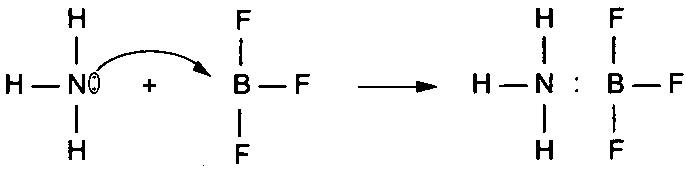
Examine the reaction: NH3 (ammonia) reacts with BF3 (boron trifluoride) to form a complex.
Identify the electron pair donor and acceptor. NH3 has a lone pair of electrons on nitrogen, while BF3 has an empty orbital on boron.
Recall that a Lewis base donates an electron pair, and a Lewis acid accepts an electron pair.
Determine which species is donating and which is accepting the electron pair in this reaction.
Consider the definitions of Brønsted-Lowry acids and bases to see if they apply to this reaction.
Try solving on your own before revealing the answer!
Final Answer: A. Lewis acid
BF3 is acting as a Lewis acid because it accepts a pair of electrons from NH3, which is the Lewis base. This is a classic example of a Lewis acid-base reaction, not a Brønsted-Lowry acid-base reaction.
