 Indietro
General Chemistry I: Chapter 1 – Matter, Energy, and Measurement
Guida di studio - Note intelligenti
 Appunti personalizzati basati sui tuoi materiali, ampliati con definizioni chiave, esempi e contesto.
Chapter 1: Introduction – Matter, Energy, and Measurement
The Study of Chemistry
Chemistry is the scientific study of matter, its properties, composition, and the changes it undergoes. Matter is defined as anything that has mass and occupies space. The fundamental building blocks of matter are atoms, which combine to form elements and molecules.
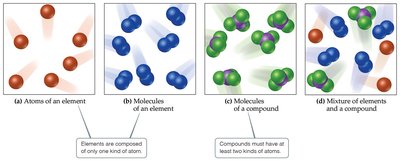
Atoms: Smallest units of matter, unique to each element.
Elements: Substances composed of only one kind of atom.
Molecules: Groups of atoms held together in specific shapes.
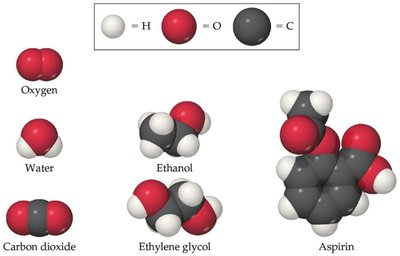
Classifications of Matter
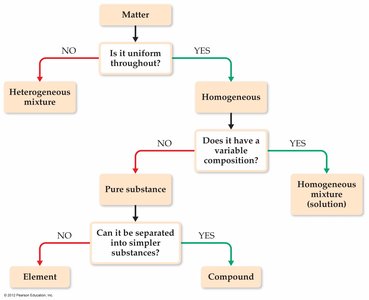
Matter can be classified based on its physical state (solid, liquid, gas) and its composition (pure substances or mixtures).
Pure Substances: Have distinct properties and a constant composition. They are either elements (one kind of atom) or compounds (two or more kinds of atoms chemically combined).
Mixtures: Combinations of two or more substances. They can be homogeneous (uniform throughout, also called solutions) or heterogeneous (not uniform).
Classification Flowchart
The classification of matter can be visualized as a flowchart, helping to distinguish between mixtures, elements, and compounds.
Properties of Matter
Properties of matter are categorized as physical or chemical, and as intensive or extensive.
Physical Properties: Can be observed without changing the substance’s identity (e.g., boiling point, density, color).
Chemical Properties: Can only be observed when a substance changes into another (e.g., flammability, reactivity).
Intensive Properties: Independent of the amount of substance (e.g., density, boiling point).
Extensive Properties: Depend on the amount of substance (e.g., mass, volume).
Types of Changes in Matter
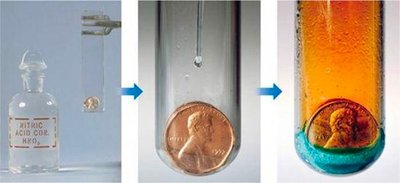
Matter undergoes physical changes (do not alter composition) and chemical changes (result in new substances).
Physical Changes: Changes of state, temperature, or volume.
Chemical Changes: Combustion, oxidation, decomposition.
Numbers and Chemistry
Quantitative measurements are essential in chemistry. Every measurement must include units, and understanding uncertainty and significant figures is crucial for accurate calculations.
Units of Measurement: Metric system and SI units are standard in scientific work.
Quantities: Measured and calculated values must be expressed with appropriate units.
Uncertainty: All measurements have some degree of uncertainty.
Significant Figures: Indicate the precision of a measurement.
Dimensional Analysis: Method for converting between units using conversion factors.
Units of Measurement – Metric System and SI Units
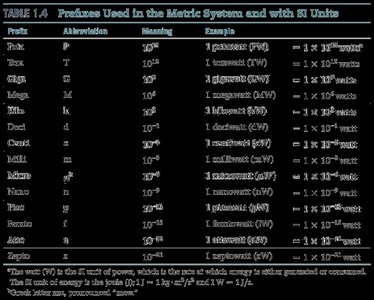
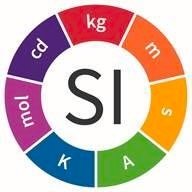
The metric system uses base units for mass, length, time, temperature, amount of substance, and volume. Prefixes are used to represent multiples or fractions of these units.
Mass: kilogram (kg)
Length: meter (m)
Time: second (s)
Temperature: Kelvin (K)
Amount of substance: mole (mol)
Volume: liter (L), cubic decimeter (dm3)
Volume
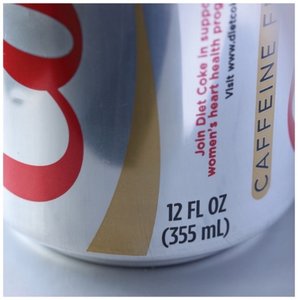
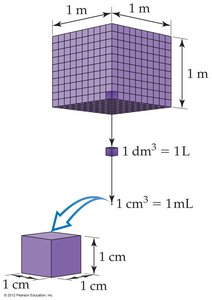
Volume is a derived unit in the SI system, calculated from length. Common units are liter (L) and milliliter (mL).
1 L = 1 dm3
1 mL = 1 cm3
1000 mL = 1 L

Temperature
Temperature measures the average kinetic energy of particles. The Celsius scale is based on water’s properties, while Kelvin is the SI unit for temperature.
Celsius: 0°C = freezing point of water, 100°C = boiling point
Kelvin: Absolute scale, no negative values, 0 K = absolute zero
Conversion:
Density
Density is an intensive physical property, defined as mass per unit volume. It is commonly expressed in g/mL or g/cm3.
Formula:
Density changes with temperature.
Numbers in Science: Exact vs. Inexact
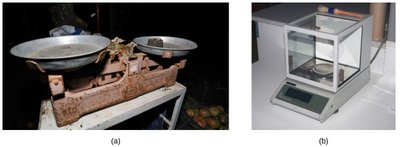
Numbers in science are either exact (counted or defined) or inexact (measured). Measurement uncertainty arises from instrument limitations and human error.
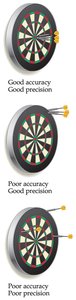
Precision: How closely repeated measurements agree.
Accuracy: How closely measurements agree with the true value.
Significant Figures
Significant figures reflect the precision of a measured quantity. Rules for determining significant figures:
All nonzero digits are significant.
Zeroes between nonzero digits are significant.
Zeroes at the beginning are not significant.
Zeroes at the end are significant if there is a decimal point.
Whole numbers ending in zeroes: ambiguity unless specified.
Significant Figures in Calculations
Addition/Subtraction: Result has the same number of decimal places as the measurement with the fewest decimal places.
Multiplication/Division: Result has the same number of significant figures as the measurement with the fewest significant figures.
Dimensional Analysis
Dimensional analysis is a method for converting between units using conversion factors. The process involves multiplying by ratios that cancel out unwanted units and introduce desired units.
Conversion factors are considered exact.
Always use the number of significant figures given in the question.
Example:
Convert 8.00 m to inches:
1 cm = m
1 in. = 2.54 cm
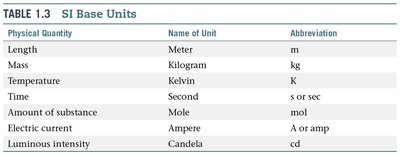
Summary Table: SI Base Units
Physical Quantity | Name of Unit | Abbreviation |
|---|---|---|
Length | Meter | m |
Mass | Kilogram | kg |
Temperature | Kelvin | K |
Time | Second | s or sec |
Amount of substance | Mole | mol |
Electric current | Ampere | A or amp |
Luminous intensity | Candela | cd |
Summary Table: Metric System Prefixes
Prefix | Abbreviation | Meaning | Example |
|---|---|---|---|
Giga | G | 1 gigawatt (GW) = watts | |
Mega | M | 1 megawatt (MW) = watts | |
Kilo | k | 1 kilometer (km) = meters | |
Deci | d | 1 decimeter (dm) = meters | |
Centi | c | 1 centimeter (cm) = meters | |
Milli | m | 1 millimeter (mm) = meters | |
Micro | μ | 1 micrometer (μm) = meters | |
Nano | n | 1 nanometer (nm) = meters |
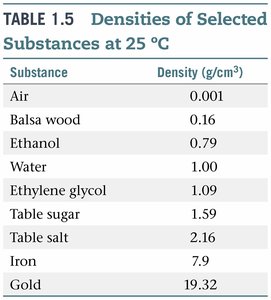
Summary Table: Densities of Selected Substances at 25°C
Substance | Density (g/cm3) |
|---|---|
Air | 0.001 |
Balsa wood | 0.16 |
Ethanol | 0.79 |
Water | 1.00 |
Ethylene glycol | 1.09 |
Table sugar | 1.59 |
Table salt | 2.16 |
Iron | 7.9 |
Gold | 19.32 |
Additional info: Academic context was added to clarify definitions, provide examples, and ensure completeness for exam preparation.
