 Indietro
General Chemistry: Matter, Measurement, and Atomic Theory
Guida di studio - Note intelligenti
 Appunti personalizzati basati sui tuoi materiali, ampliati con definizioni chiave, esempi e contesto.
Introduction to Chemistry
What is Chemistry?
Chemistry is the study of matter, its properties, and the changes it undergoes. It is a foundational science that underpins many other scientific disciplines and is essential for understanding biological, physical, and environmental processes.
Matter: Anything that has mass and occupies space.
Properties of Matter: Characteristics that define and distinguish substances.
Changes in Matter: Can be physical (no new substances formed) or chemical (new substances formed).
Classification of Matter
States of Matter
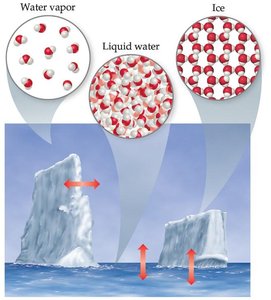
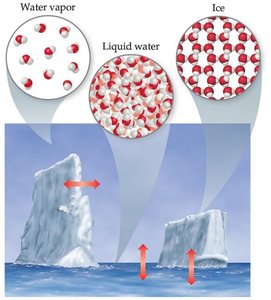
Matter exists in three primary states: solid, liquid, and gas. Each state is characterized by the arrangement and movement of its particles.
Solid: Definite shape and volume; particles are closely packed.
Liquid: Definite volume but no definite shape; particles are less tightly packed than in solids.
Gas: No definite shape or volume; particles are far apart and move freely.
Classification by Composition
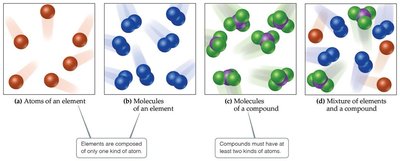
Matter can be classified based on its composition as elements, compounds, or mixtures.
Element: A pure substance made of only one kind of atom.
Compound: A substance composed of two or more different elements chemically combined in fixed proportions.
Mixture: A combination of two or more substances in which each retains its own identity and properties. Mixtures can be homogeneous (uniform composition) or heterogeneous (non-uniform composition).
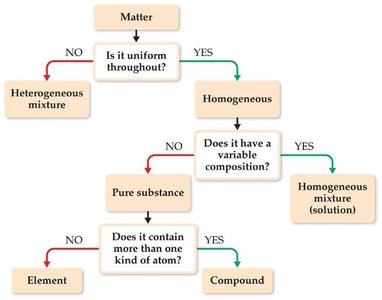
Flowchart for Classifying Matter
A logical scheme can be used to classify any type of matter based on its uniformity and composition.
Properties of Matter
Physical vs. Chemical Properties
Properties of matter are divided into physical and chemical properties.
Physical Properties: Can be observed without changing the substance (e.g., color, density, melting point).
Chemical Properties: Can only be observed when a substance is transformed into another substance (e.g., flammability, reactivity).
Intensive vs. Extensive Properties
Intensive Properties: Independent of the amount of substance (e.g., density, boiling point).
Extensive Properties: Dependent on the amount of substance (e.g., mass, volume).
Physical and Chemical Changes
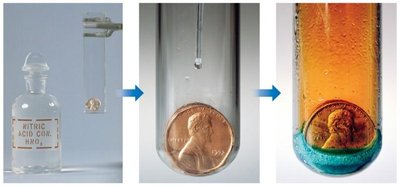
Physical changes do not alter the composition of a substance, while chemical changes result in the formation of new substances.
Physical Change: Changes of state (melting, boiling), temperature, or volume.
Chemical Change: Combustion, oxidation, decomposition.
Separation of Mixtures
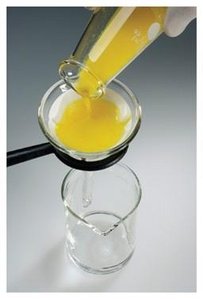
Filtration
Filtration separates solid substances from liquids and solutions based on particle size.
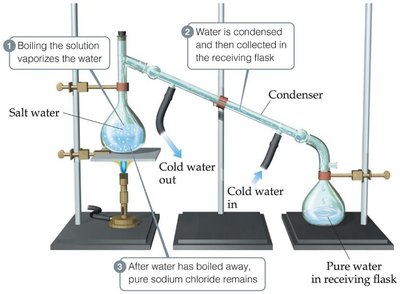
Distillation
Distillation separates components of a mixture based on differences in boiling points.
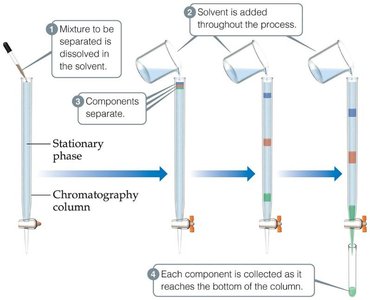
Chromatography
Chromatography separates substances based on their different affinities for a stationary phase and a mobile phase.
Energy and Its Forms
Definition of Energy
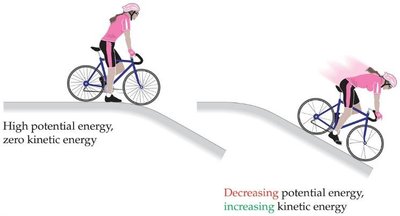
Energy is the capacity to do work or transfer heat. It exists in two fundamental forms:
Kinetic Energy: Energy of motion, calculated as
Potential Energy: Stored energy due to position or arrangement.
Measurement in Chemistry
SI Units and Metric System
The International System of Units (SI) is used for scientific measurements. Common base units include meter (m) for length, kilogram (kg) for mass, second (s) for time, kelvin (K) for temperature, and mole (mol) for amount of substance.
Prefixes are used to indicate multiples or fractions of units (e.g., kilo-, centi-, milli-).
Temperature Scales
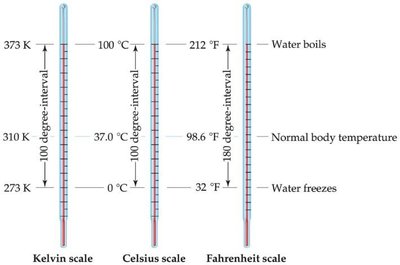
Temperature is measured in Celsius (°C), Kelvin (K), and Fahrenheit (°F). The Kelvin scale is the SI unit and starts at absolute zero.
Conversion formulas:
Volume and Density
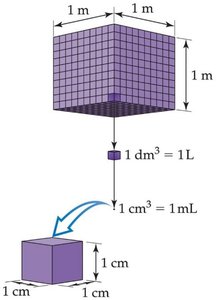
Volume is a derived unit (cubic meter, liter, milliliter). Density is defined as mass per unit volume:
Laboratory Glassware
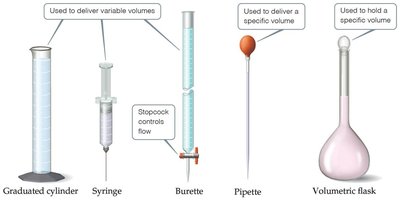
Various types of glassware are used to measure and transfer specific volumes of liquids in the laboratory.
Uncertainty in Measurement
Accuracy and Precision
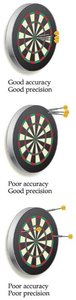
All measurements have some degree of uncertainty. Accuracy refers to how close a measurement is to the true value, while precision refers to how closely repeated measurements agree with each other.
Significant Figures
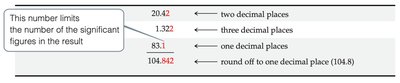
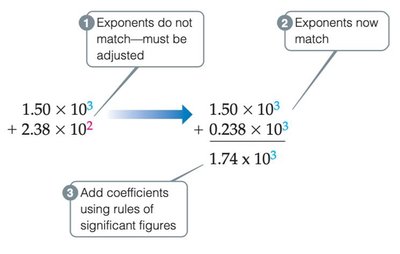
Significant figures reflect the precision of a measured quantity. Rules for determining significant figures include:
All nonzero digits are significant.
Zeros between nonzero digits are significant.
Leading zeros are not significant.
Trailing zeros are significant if there is a decimal point.
Dimensional Analysis
Dimensional analysis is a method for converting between units using conversion factors. It ensures that calculations are consistent with the units involved.

Atomic Theory and Structure
Dalton’s Atomic Theory
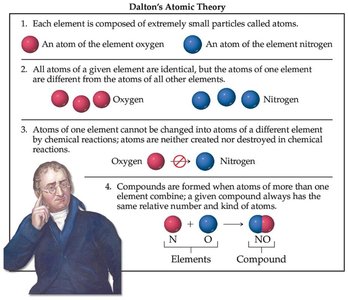
Dalton’s atomic theory laid the foundation for modern chemistry. Its main postulates are:
Elements are composed of extremely small particles called atoms.
All atoms of a given element are identical in mass and properties.
Atoms cannot be created or destroyed in chemical reactions.
Atoms of different elements combine in simple whole-number ratios to form compounds.
Practice and Application
Key Vocabulary and Concepts
Chemical vs. Physical Change: Chemical changes produce new substances; physical changes do not.
Pure Substance vs. Mixture: Pure substances have fixed composition; mixtures do not.
Element vs. Compound vs. Molecule: Elements are single types of atoms; compounds are combinations of elements; molecules are groups of atoms bonded together.
Intensive vs. Extensive Property: Intensive properties do not depend on amount; extensive properties do.
Example Problems
Rounding to significant figures, unit conversions, and classifying matter are essential skills in general chemistry.
Additional info: This guide covers the foundational topics from Chapters 1 and 2 of a standard General Chemistry curriculum, including matter, measurement, atomic theory, and basic laboratory techniques.
