Indietro

General Chemistry Study Guide: Periodic Properties, Molecules & Compounds, and Chemical Bonding (Chapters 3-5)

Guida di studio - Impara con i video

Lezioni curate abbinate al materiale che hai caricato – impara ogni argomento passo dopo passo.

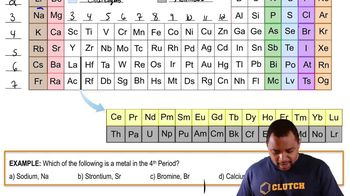
Periodic Table: Classifications

  • Nonmetal Properties
    01:12
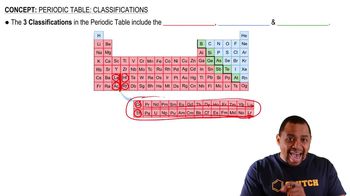
  • Periodic Table Classifications
    02:40
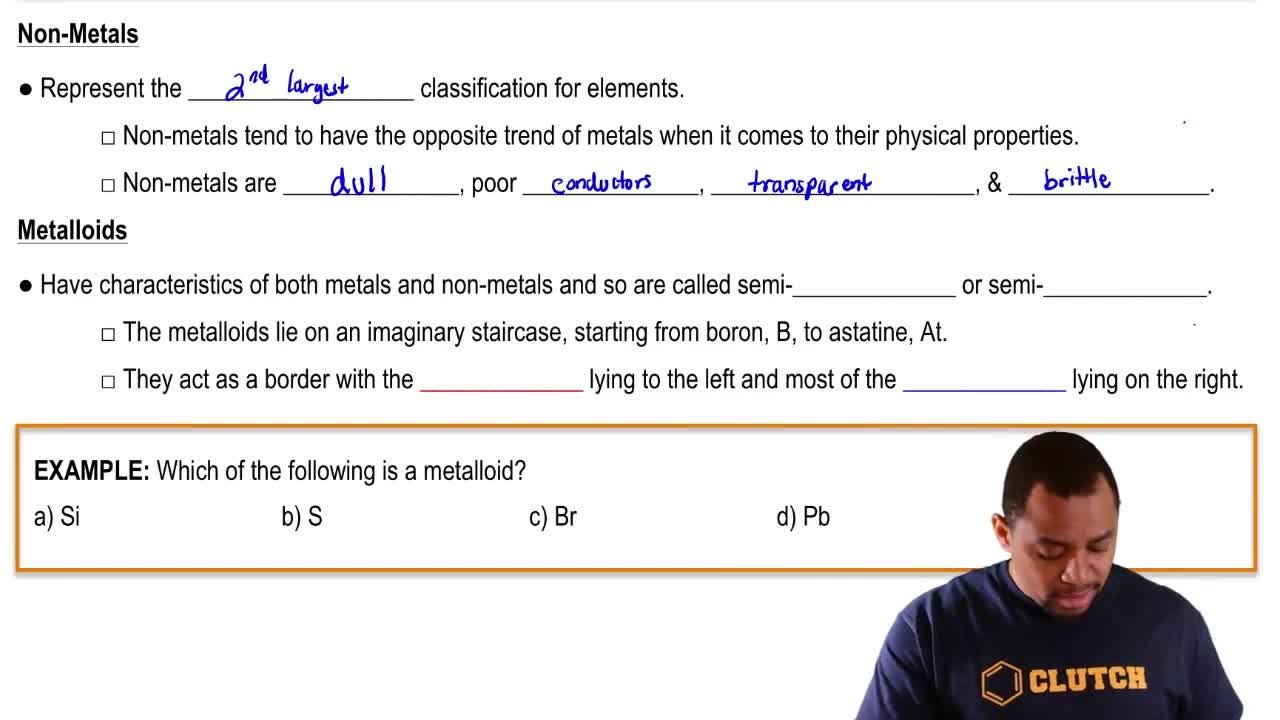
  • Metalloid Properties
    03:37

Periodic Table: Group Names

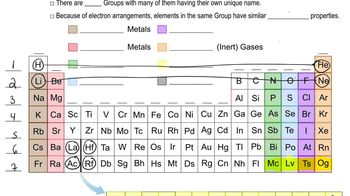
  • Periodic Table: Group Names
    05:33
  • Periodic Table: Group Names Example
    01:17

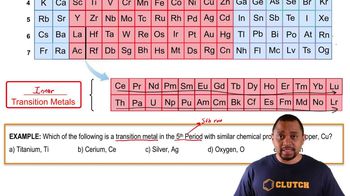
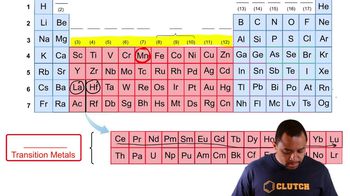
Periodic Table: Representative Elements & Transition Metals

  • Transition Metal Example
    01:23
  • Transition Metals and Representative Elements
    03:30

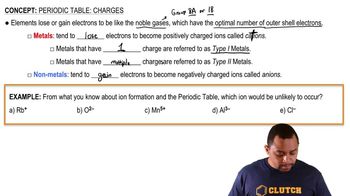
Periodic Table: Charges

  • Unlikely Ion Example
    01:52
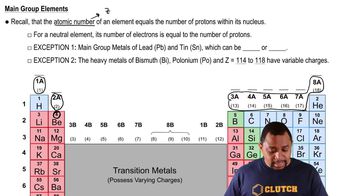
  • Main Group Element Charges
    07:38
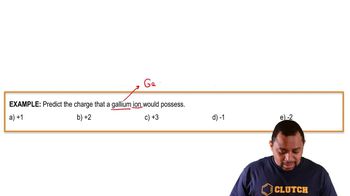
  • Main Group Element Charges Example
    00:48

The Electron Configuration

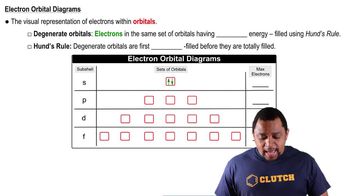
  • Electron Orbital Diagrams
    02:15
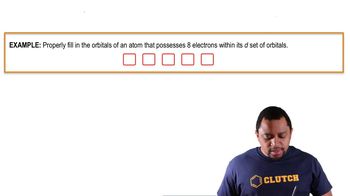
  • Electron Orbital Diagrams Example
    00:50
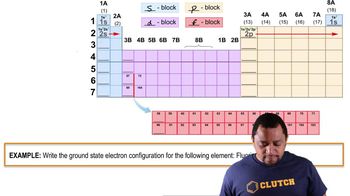
  • Electron Configuration Example
    01:33

The Electron Configuration: Condensed

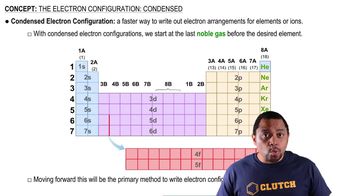
  • Condensed Electron Configuration
    01:08
  • Condensed Electron Configuration Example
    01:28

The Electron Configuration: Ions

  • Cation Electron Configuration Example
    02:03
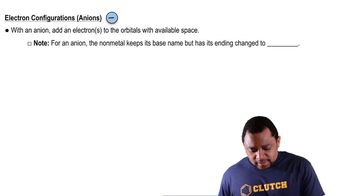
  • Anion Electron Configuration
    00:35
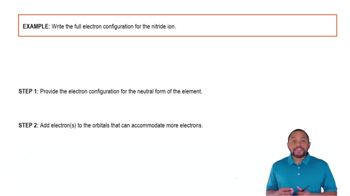
  • Anion Electron Configuration Example
    2:17

Paramagnetism and Diamagnetism

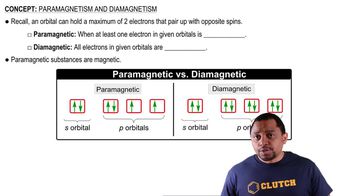
  • Paramagnetism vs Diamagnetism
    01:33
  • Paramagnetism and Diamagnetism Example 1
    1:54

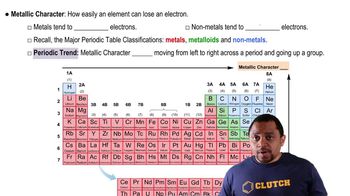
Periodic Trend: Metallic Character

  • Metallic Character Trends
    01:08
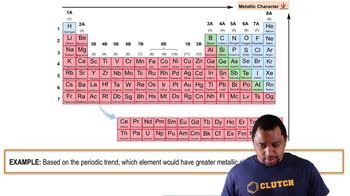
  • Metallic Character Example
    00:56
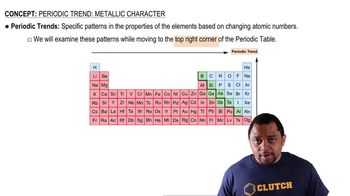
  • Periodic Trends
    00:38

Periodic Trend: Atomic Radius

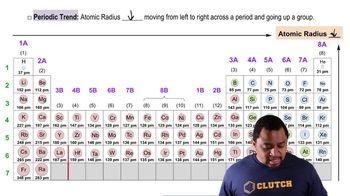
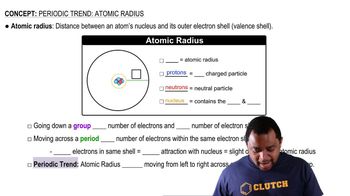
  • Atomic Radius Trends
    01:42
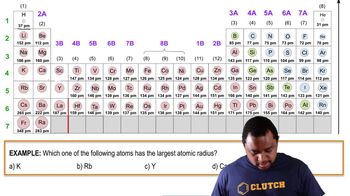
  • Atomic Radius Example
    00:56
  • Atomic Radius
    02:02

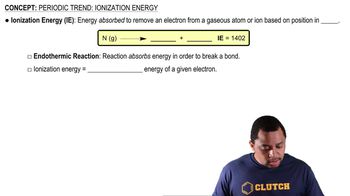
Periodic Trend: Ionization Energy

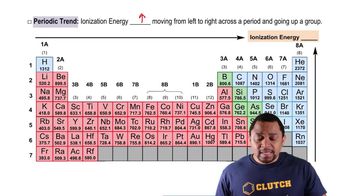
  • Ionization Energy Trends
    01:08
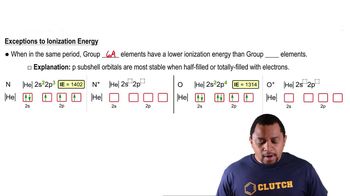
  • Group 6A vs. Group 5A Elements
    01:32
  • Ionization Energy
    01:19

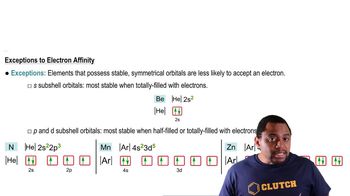
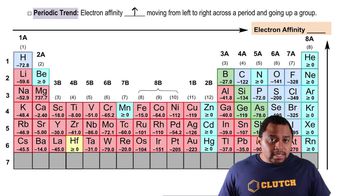
Periodic Trend: Electron Affinity

  • Electron Affinity Exceptions
    01:24
  • Electron Affinity Trends
    01:42
  • Electron Affinity Example
    00:54

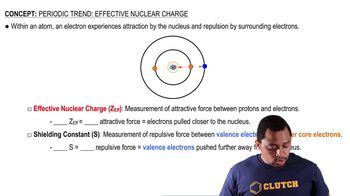
Periodic Trend: Effective Nuclear Charge

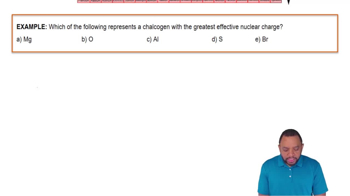
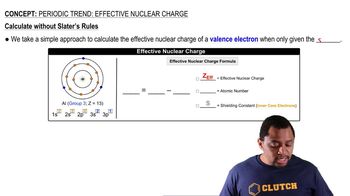
  • Effective Nuclear Charge
    01:51
  • Effective Nuclear Charge Example
    00:44
  • Effective Nuclear Charge Calculation
    00:59

Ions

  • Ion Formation
    06:17
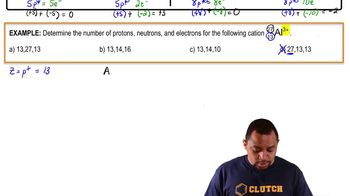
  • Cation Subatomic Particles Example
    02:22
  • Atoms vs. Ions
    01:36

Polyatomic Ions

  • Polyatomic Cations
    01:16
  • Polyatomic Ion Example
    01:08
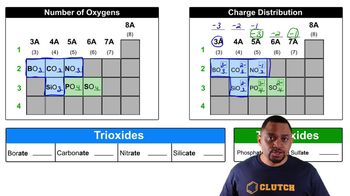
  • Polyatomic Oxyanion Names
    01:26

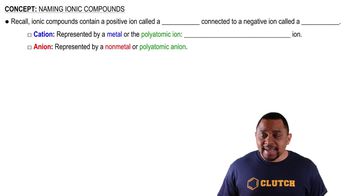
Naming Ionic Compounds

  • Base Names of Nonmetals
    01:52
  • Naming Ionic Compounds Example
    01:01
  • Ionic Compounds Naming
    02:11

Writing Ionic Compounds

  • Writing Ionic Compounds Example
    01:25
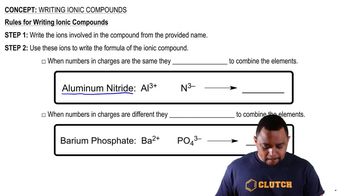
  • Rules for Writing Ionic Compounds
    03:09

Naming Ionic Hydrates

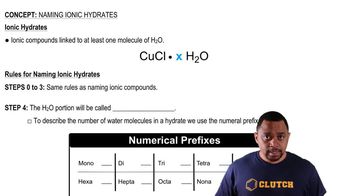
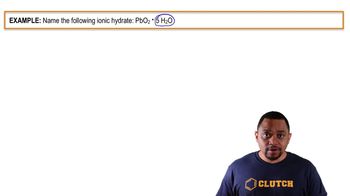
  • Ionic Hydrates Naming
    02:04
  • Ionic Hydrate Naming Example
    02:07

Naming Molecular Compounds

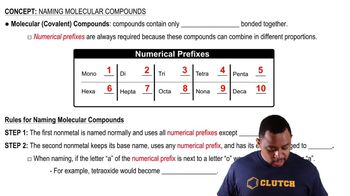
  • Naming Molecular Compounds
    02:06
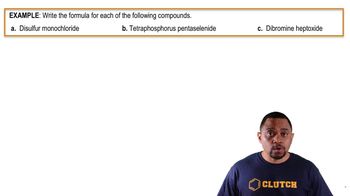
  • Naming Molecular Compounds Example
    01:21

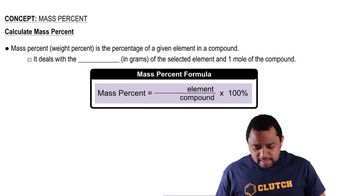
Mass Percent

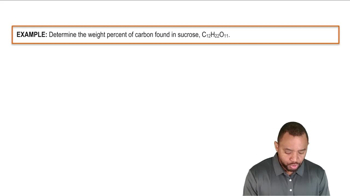
  • Mass Percent Example
    1:22
  • Mass Percent Calculation
    00:38

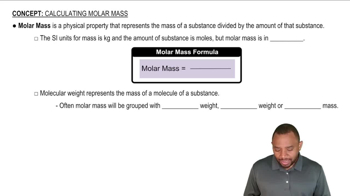
Calculating Molar Mass

  • Molar Mass Concept
    02:11
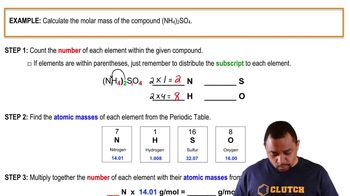
  • Molar Mass Calculation Example
    03:12
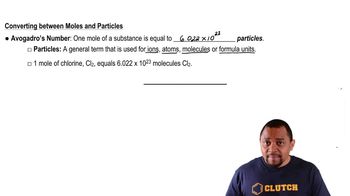
Mole Concept

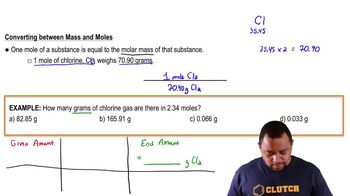
  • Moles and Particles Conversion
    02:41
  • Moles to Molecules Conversion Example
    01:41
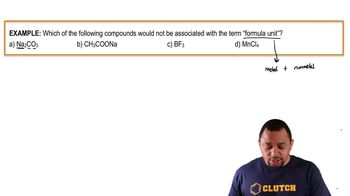
  • Formula Unit Example
    01:28

Empirical Formula

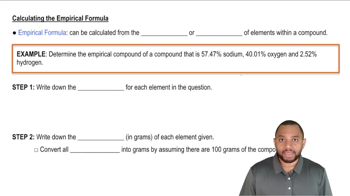
  • Empirical Formula Calculation Example
    5:39
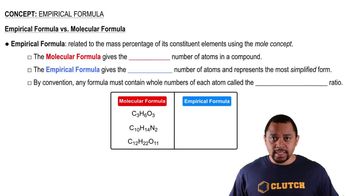
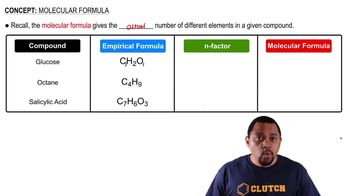
  • Empirical vs Molecular Formula
    02:26

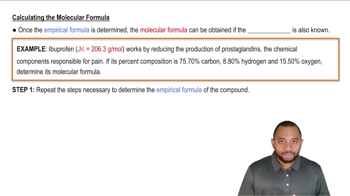
Molecular Formula

  • Molecular Formula Calculation Example
    6:53
  • Determining Molecular Formulas
    02:08

Combustion Analysis

  • Combustion of Non-Hydrocarbons
    01:29
  • Empirical Formula via Combustion
    02:09
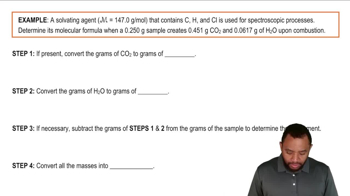
  • Molecular Formula via Combustion Example
    05:47

Lewis Dot Symbols

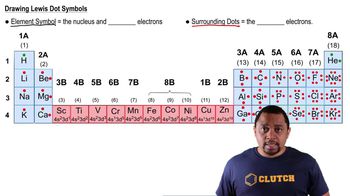
  • Lewis Dot Symbols
    03:17
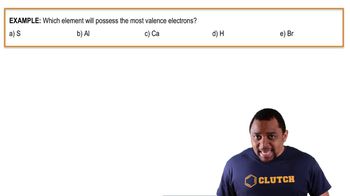
  • Lewis Dot Symbols Example 1
    00:50
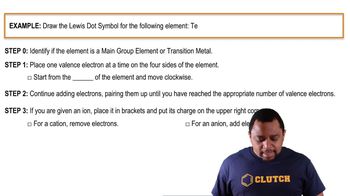
  • Lewis Dot Symbols Example 2
    01:26

Chemical Bonds

  • Chemical Bonds Example 3
    01:04
  • Chemical Bonds
    02:03
  • Chemical Bonds Example 2
    01:18

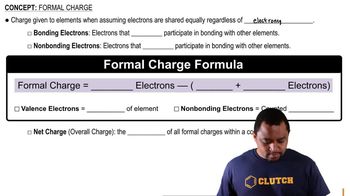
Formal Charge

  • Formal Charge Example 1
    00:56
  • Formal Charge
    01:53

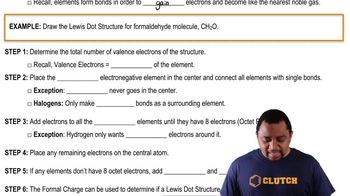
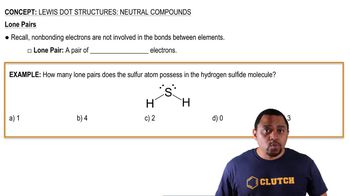
Lewis Dot Structures: Neutral Compounds

  • Lewis Dot Structures: Neutral Compounds
    05:56
  • Lewis Dot Structures: Neutral Compounds Example 1
    00:40

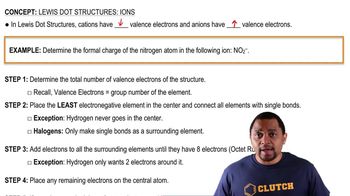
Lewis Dot Structures: Ions

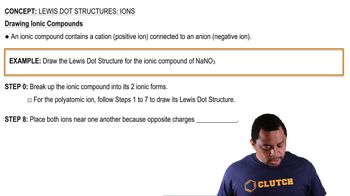
  • Lewis Dot Structures: Ions
    04:28
  • Lewis Dot Structures: Ions Example 1
    02:22

Lewis Dot Structures: Exceptions

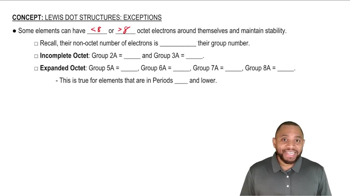
  • Lewis Dot Structures: Exceptions
    02:05
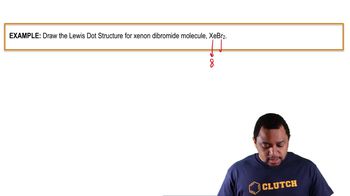
  • Lewis Dot Structures: Exceptions Example 1
    01:46
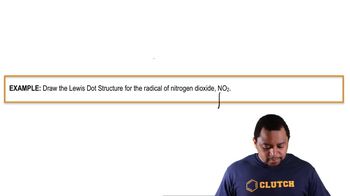
  • Lewis Dot Structures: Exceptions Example 2
    01:39

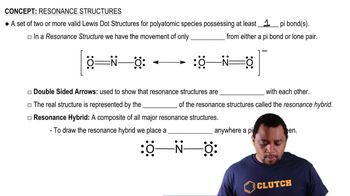
Resonance Structures

  • Resonance Structures
    01:42
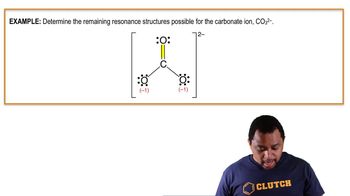
  • Resonance Structures Example 1
    01:54
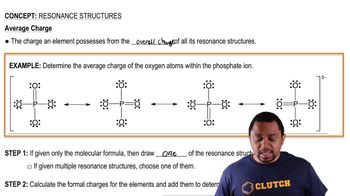
  • Resonance Structures Example 2
    02:19

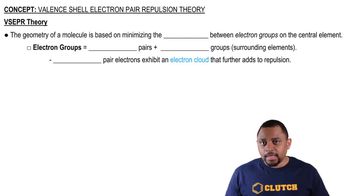
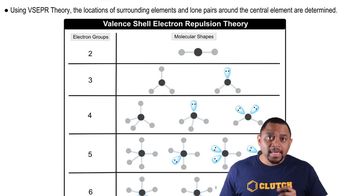
Valence Shell Electron Pair Repulsion Theory

  • Valence Shell Electron Pair Repulsion Theory
    00:47
  • Molecular Shapes and VSEPR
    02:13
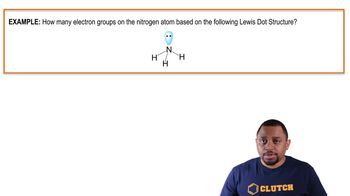
  • Electron Groups Example
    00:51

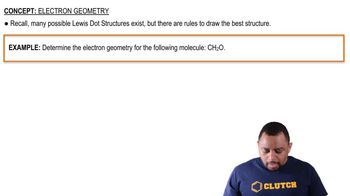
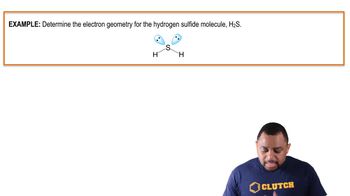
Electron Geometry

  • Drawing Structures and Electron Geometry Example
    01:34
  • Electron Geometry Example
    00:48
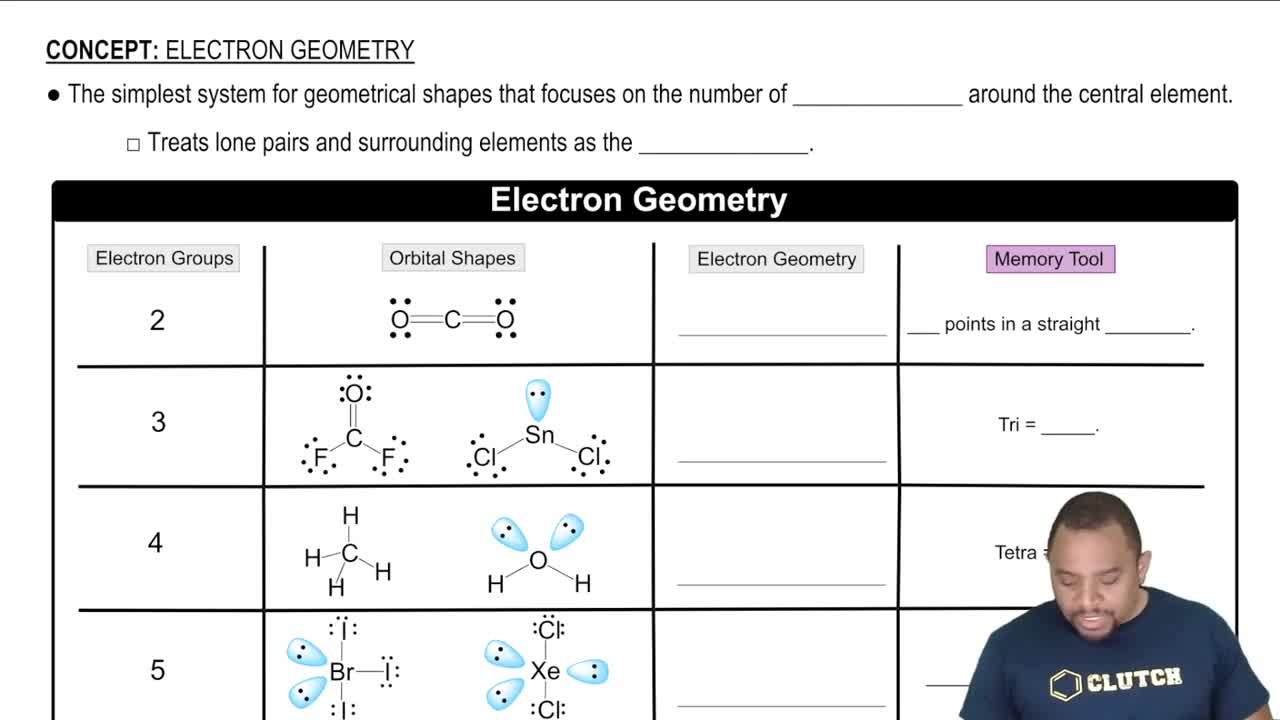
  • Electron Geometry
    04:44

Molecular Geometry

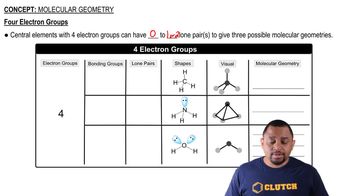
  • Molecular Geometry with Four Electron Groups
    01:57
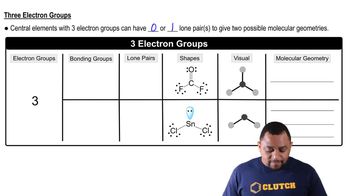
  • Molecular Geometry with Three Electron Groups
    01:43
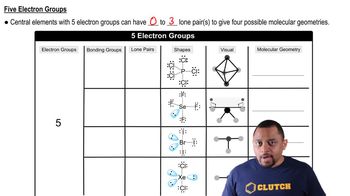
  • Molecular Geometry with Five Electron Groups
    02:09

Bond Angles

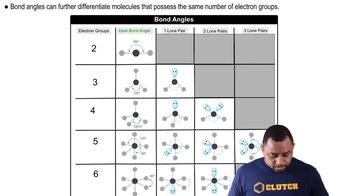
  • Bond Angles and Electron Groups
    03:37
  • Bond Angles and Electron Groups Example
    01:07
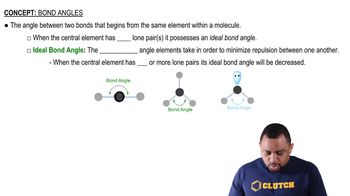
  • Bond Angles
    01:53

Molecular Polarity

  • Carbon Tetrachloride Polarity Example
    01:03
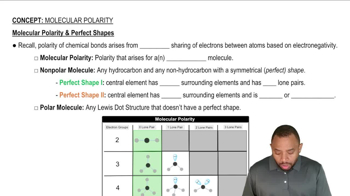
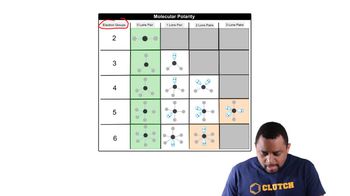
  • Molecular Polarity
    02:38
  • Molecular Polarity Criteria
    01:46