 Indietro
General Chemistry Study Guide: Thermochemistry, Atomic Structure, Periodic Trends, Bonding, and States of Matter
Guida di studio - Note intelligenti
 Appunti personalizzati basati sui tuoi materiali, ampliati con definizioni chiave, esempi e contesto.
Thermochemistry
Energy and Internal Energy
Thermochemistry is the study of heat released or absorbed during chemical reactions. The internal energy of a system, denoted as E, is the sum of all kinetic and potential energies of its components.
Change in Internal Energy:
Heat (q): Energy transferred due to temperature difference between system and surroundings.
Work (w): Energy transferred when a force moves an object.
Relationship:
Types of Energy
Kinetic Energy: Energy of motion (e.g., thermal energy from molecular movement).
Potential Energy: Energy due to position or composition (e.g., chemical energy in bonds).
Exothermic and Endothermic Processes
Exothermic: Heat is released by the system ().
Endothermic: Heat is absorbed by the system ().
Units of Energy
Joule (J): SI unit of energy.
Calorie (cal): Amount of energy required to raise 1 g of water by 1°C.
Nutritional Calorie: 1 Cal = 1000 cal
State Functions
State functions depend only on the current state, not the path taken. Examples: internal energy, enthalpy.
Pathway Independence: The value is the same regardless of the process.
First Law of Thermodynamics
Law: Energy can neither be created nor destroyed; it can only be transferred or transformed.
Equation:
Enthalpy
Enthalpy (H) is the heat content of a substance. The change in enthalpy () is the heat given off or absorbed at constant pressure.
Enthalpy of Reaction:
Exothermic: (heat released)
Endothermic: (heat absorbed)
Calorimetry
Calorimetry measures the heat transferred in a reaction or process.
Heat Capacity (C): Amount of heat required to raise the temperature of a substance by 1°C.
Specific Heat (c): Amount of heat required to raise 1 g of a substance by 1°C.
Formula:
Example: To heat 35.0 g of Al from 55.0°C to 75.0°C with :
Hess's Law
Hess's Law states that the total enthalpy change for a reaction is the sum of the enthalpy changes for individual steps.
Equation:
Manipulation: Reactions can be added, multiplied, or reversed to find overall .
Standard Enthalpy of Formation
Definition: Enthalpy change for forming 1 mole of a compound from its elements in their standard states.
Formula:
Atomic Structure and Periodic Properties
Electron Configuration and Orbital Diagrams
Electron configuration describes the arrangement of electrons in an atom. Orbital diagrams visually represent electron placement in orbitals.
Subshells: s, p, d, f
Energy Levels: 7 principal energy levels
Valence Electrons: Electrons in the outermost shell, involved in bonding.
Sublevel Energy Splitting and Shielding
Shielding: Inner electrons reduce the effective nuclear charge felt by valence electrons.
Effective Nuclear Charge (): The net positive charge experienced by valence electrons.
Periodic Trends
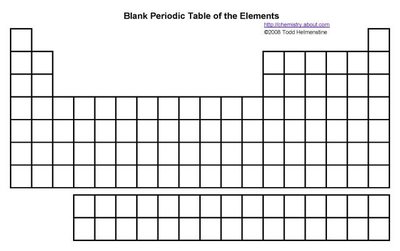
Atomic Radius: Increases down a group, decreases across a period.
Ion Size: Cations are smaller, anions are larger than their parent atoms.
Ionization Energy: Energy required to remove an electron. Increases across a period, decreases down a group.
Electron Affinity: Energy change when an electron is added. Increases across a period, decreases down a group.
Metallic Character: Increases down a group, decreases across a period.
Isoelectronic Particles
Definition: Species with the same number of electrons.
Example: Ne, Na+, Mg2+ are isoelectronic.
Chemical Bonding
Types of Bonds
Ionic Bond: Attraction between cations and anions via electrostatic force.
Covalent Bond: Sharing of electron pairs between atoms.
Metallic Bond: "Sea" of electrons shared among metal atoms.
Macromolecular Crystals: Large networks of covalently bonded atoms.
Valence Electrons and Lewis Structures
Valence Electrons: Outermost electrons involved in bonding.
Lewis Structures: Electron dot diagrams showing bonding and lone pairs.
Steps: Count valence electrons, choose central atom, arrange atoms, assign bonds and lone pairs, check octet rule.
Exceptions to the Octet Rule
Electron Deficient: Central atom has less than 8 electrons (e.g., BCl3).
Expanded Octet: Central atom has more than 8 electrons (period 3 or higher, e.g., SF6).
Odd Number of Electrons: Molecules with unpaired electrons (e.g., NO2).
Electronegativity and Bond Polarity
Electronegativity: Atom's ability to attract shared electrons. Increases left to right, bottom to top.
Bond Polarity: Difference in electronegativity determines bond type:
Nonpolar Covalent:
Polar Covalent:
Ionic:
States of Matter and Intermolecular Forces
Properties of Gases, Liquids, and Solids
Gases: Far apart particles, low density, compressible, indefinite shape.
Liquids: Close particles, high density, not compressible, indefinite shape.
Solids: Very close particles, high density, not compressible, definite shape.
Intermolecular Forces
Dispersion (London) Forces: Weak attractions between nonpolar molecules.
Dipole-Dipole: Attractions between polar molecules.
Hydrogen Bonds: Strong dipole-dipole between H and F, O, or N.
Ion-Dipole: Attraction between ions and polar molecules (e.g., salt in water).
Surface Tension, Viscosity, and Capillary Action
Surface Tension: Intermolecular forces at the surface create tension.
Viscosity: Resistance to flow; increases with stronger intermolecular forces.
Capillary Action: Movement of liquid in narrow spaces due to adhesion and cohesion.
Evaporation and Vapor Pressure
Evaporation: Liquid to gas; rate increases with temperature and surface area.
Vapor Pressure: Pressure exerted by vapor above a liquid at equilibrium.
Boiling Point: Temperature at which vapor pressure equals atmospheric pressure.
Changes of State
Specific Heat Capacity (c): Heat required to raise 1 g of substance by 1°C.
Heat of Fusion (): Heat needed to convert solid to liquid.
Heat of Vaporization (): Heat needed to convert liquid to gas.
Formula:
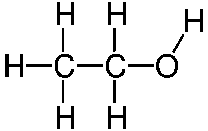
Heating Curve and Phase Changes
Heating Curve: Shows temperature changes and phase transitions as heat is added.
Phase Changes: Melting, freezing, vaporization, condensation, sublimation, deposition.
Phase Diagrams
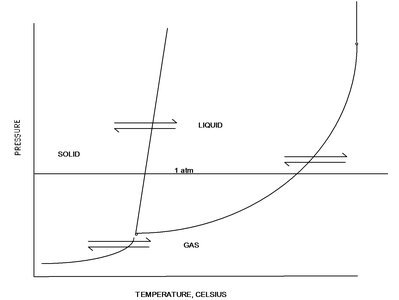
A phase diagram plots pressure vs. temperature, showing regions of stability for solid, liquid, and gas.
Vapor Pressure Curve: Separates gas and liquid.
Fusion Curve: Separates solid and liquid.
Sublimation Curve: Separates solid and gas.
Triple Point: All three phases coexist.
Critical Point: Above this, only supercritical fluid exists.
Appendix: Periodic Table
Periodic Table: Fundamental tool for organizing elements by atomic number, electron configuration, and recurring chemical properties.
*Additional info: The periodic table image is included for reference and practice in identifying element positions and periodic trends.*
