 Indietro
General Chemistry Study Notes: Atomic Structure, Matter Classification, and Energy
Guida di studio - Note intelligenti
 Appunti personalizzati basati sui tuoi materiali, ampliati con definizioni chiave, esempi e contesto.
Chap. 1: What is Chemistry?
Introduction to Chemistry
Chemistry is the scientific study of matter, its properties, composition, and the changes it undergoes. Chemists investigate how substances interact, react, and transform, often at the atomic and molecular scale. The discipline is rooted in experimental science, relying on observation, measurement, and modeling to understand cause-and-effect relationships.
Key Practices: Analysis, modeling, synthesis, and transformation.
Core Concepts: Forces govern organization, structure governs properties, energy governs stability.
Example: Carbon exists as different allotropes (diamond, graphite), each with unique properties due to structural differences.
Classification of Matter
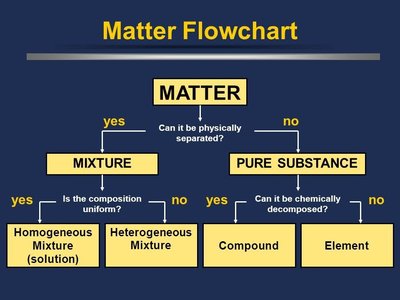
Matter is anything that has mass and occupies space. It can be classified based on its physical and chemical properties, and whether it can be separated or decomposed.
Mixtures: Can be physically separated; classified as homogeneous (uniform composition) or heterogeneous (non-uniform composition).
Pure Substances: Cannot be physically separated; classified as elements (cannot be chemically decomposed) or compounds (can be chemically decomposed).
Chap. 1: Atomic Structure and Properties
Atomic Structure
Atoms are the fundamental units of elements. They consist of a dense nucleus containing protons and neutrons, surrounded by electrons in orbitals. Most of the atom's mass is in the nucleus, while most of its volume is empty space.
Protons: Positively charged, found in the nucleus, define the atomic number (Z).
Neutrons: Neutral, found in the nucleus, similar mass to protons.
Electrons: Negatively charged, much less massive, occupy orbitals around the nucleus.
Properties of Electrical Charge
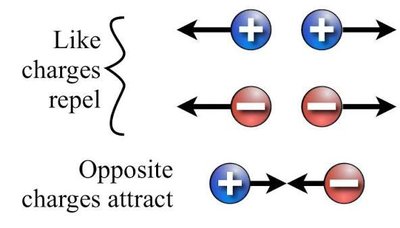
Electrical charge is a fundamental property of subatomic particles. The area around a charged particle where electrostatic forces act is called an electric field. Like charges repel, and opposite charges attract, as described by Coulomb's law.
Protons: Positive charge
Electrons: Negative charge
Neutrons: No charge
Isotopes
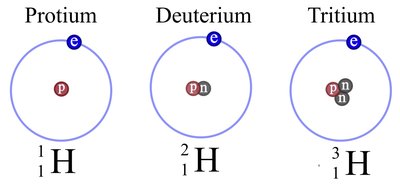
Isotopes are atoms of the same element (same number of protons) but different numbers of neutrons. This results in different mass numbers for each isotope.
Example: Hydrogen has three isotopes: Protium (1 proton), Deuterium (1 proton, 1 neutron), Tritium (1 proton, 2 neutrons).
Chap. 2: Atomic Numbers, Significant Figures, & Unit Conversion
Atomic Numbers and Mass Numbers
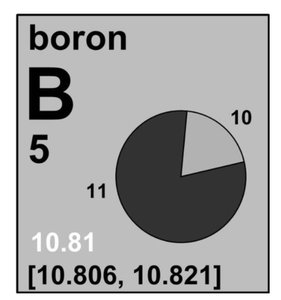
The atomic number (Z) is the number of protons in an atom and defines the element. The mass number (A) is the sum of protons and neutrons. Atomic masses listed on the periodic table are average values based on natural isotopic abundance.
Notation: where X is the chemical symbol, A is mass number, Z is atomic number.
Dalton (Da): Mass unit equivalent to kg, approximately the mass of one proton or neutron.
Significant Figures
Significant figures are used to express the precision of measurements and calculations in chemistry. The number of significant digits reflects the certainty of the data.
Rules: All nonzero digits are significant; zeros between significant digits are significant; trailing zeros in a decimal are significant.
Calculations: The result should reflect the least number of significant figures in the input values.
Average Atomic Weight
The average atomic weight of an element depends on its isotopic composition. The periodic table lists a single average atomic mass, but actual values may vary depending on the sample source.
Chap. 3: Nuclear Chemistry & Moles
Nuclear Stability and Forces
The nucleus is held together by the strong nuclear force, which attracts nucleons (protons and neutrons) at short distances. Electrostatic repulsion between protons is balanced by the presence of neutrons, which contribute to stability without causing repulsion.
Stable Nucleus: Balance of strong force and electrostatic repulsion.
Unstable Nucleus: High energy, releases energy via nuclear reactions (e.g., beta decay, alpha decay).
Moles and Atomic Mass
The mole is a fundamental unit for counting atoms and molecules. Atomic mass can be expressed in grams per mole, allowing chemists to relate microscopic and macroscopic quantities.
Atomic Mass Unit (amu): Used interchangeably with Dalton (Da).
Example: Molecular mass of is g/mol.
Chap. 4: Atoms and Energy
Monoatomic Substances and Molecules
Monoatomic substances consist of only one element, while molecules are composed of defined sets of atoms in fixed proportions. The arrangement of atoms and bonds determines the properties of the substance.
Example: Diamond and graphite are both forms of carbon but differ in structure and properties.
Law of Definite Proportions: Compounds have consistent ratios of constituent elements.
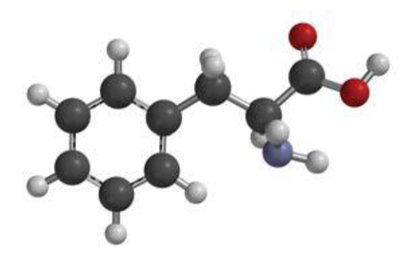
Atoms and Ions
Atoms are neutral, with equal numbers of protons and electrons. Ions are formed when atoms gain or lose electrons, resulting in a net charge.
Cation: Atom loses an electron (positive charge).
Anion: Atom gains an electron (negative charge).
Energy: Kinetic and Potential
Energy is the capacity to do work or transfer heat. It exists as kinetic energy (motion) and potential energy (position). The total energy of an object is the sum of its kinetic and potential energies.
Kinetic Energy:
Potential Energy: Includes chemical energy (stored in bonds) and electrostatic energy (from charged particle interactions).
Law of Conservation of Energy: Energy cannot be created or destroyed, only transformed.
SI Unit: Joule (J), defined as
Chap. 6: The Quantized Model of the Atom II
Electronic Structure and Quantization
The electronic structure of atoms is quantized, meaning electrons occupy specific energy levels and atoms emit only certain frequencies of light. The photoelectric effect demonstrates that light behaves as both a wave and a particle (wave-particle duality).
Quantum: A packet of energy; plural is quanta.
Planck-Einstein Relationship: where is Planck's constant and is frequency.
Photoelectric Effect: One photon interacts with one electron, transferring all its energy.
Glossary
Allotrope: Different physical forms in which an element can exist (e.g., graphite, diamond).
Isotope: Atoms of the same element with different numbers of neutrons.
Intramolecular: Forces/interactions within a molecule or atom.
