 Indietro
General Chemistry Study Notes: Essential Ideas, Atomic Theory, Measurement, and Chemical Structure
Guida di studio - Note intelligenti
 Appunti personalizzati basati sui tuoi materiali, ampliati con definizioni chiave, esempi e contesto.
Essential Ideas in Chemistry
Introduction to Chemistry
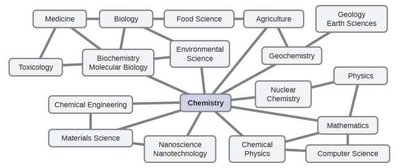
Chemistry is the study of matter, its properties, and the changes it undergoes. It connects to many scientific disciplines, including biology, physics, environmental science, and engineering.
Matter: Anything that has mass and occupies space.
Chemistry's Scope: Includes medicine, biology, food science, environmental science, geochemistry, nuclear chemistry, materials science, nanoscience, chemical engineering, and more.
Applications: Chemistry is foundational for understanding processes in nature and technology.
Measurements in Chemistry
Qualitative vs. Quantitative Observations
Observations in chemistry can be qualitative (descriptive) or quantitative (numerical). Quantitative measurements require units for meaning and accuracy.
Qualitative: Describes qualities (e.g., color, texture).
Quantitative: Involves numbers and units (e.g., mass, volume).
Importance of Units: Measurements are meaningless without units.
SI Units and Unit Prefixes
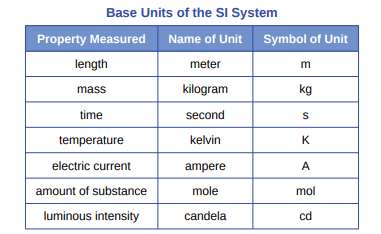
The International System of Units (SI) is used for scientific measurements. It includes seven base units and a set of prefixes for multiples and submultiples.
Base Units: Meter (m), kilogram (kg), second (s), kelvin (K), ampere (A), mole (mol), candela (cd).
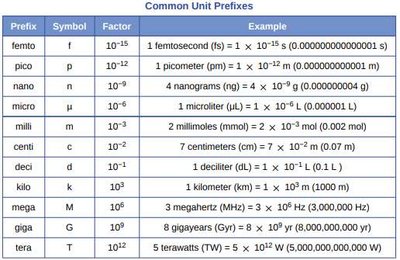
Prefixes: Used to express multiples or fractions of units (e.g., kilo-, milli-, micro-).
Property Measured | Name of Unit | Symbol of Unit |
|---|---|---|
length | meter | m |
mass | kilogram | kg |
time | second | s |
temperature | kelvin | K |
electric current | ampere | A |
amount of substance | mole | mol |
luminous intensity | candela | cd |
Prefix | Symbol | Factor | Example |
|---|---|---|---|
femto | f | 10-15 | 1 femtosecond (fs) = 1 x 10-15 s |
pico | p | 10-12 | 1 picometer (pm) = 1 x 10-12 m |
nano | n | 10-9 | 4 nanograms (ng) = 4 x 10⁻⁹ g |
micro | μ | 10-6 | 1 microliter (μL) = 1 x 10⁻⁶ L |
milli | m | 10-3 | 2 millimoles (mmol) = 2 x 10⁻³ mol |
centi | c | 10-2 | 7 centimeters (cm) = 7 x 10⁻² m |
deci | d | 10-1 | 1 deciliter (dL) = 1 x 10⁻¹ L |
kilo | k | 103 | 1 kilometer (km) = 1 x 10³ m |
mega | M | 106 | 3 megahertz (MHz) = 3 x 10⁶ Hz |
giga | G | 109 | 8 gigayears (Gyr) = 8 x 10⁹ yr |
tera | T | 1012 | 5 terawatts (TW) = 5 x 10¹² W |
Derived Units and Volume Relationships
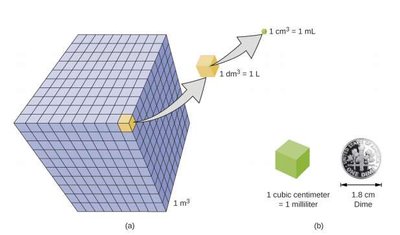
Derived units are combinations of base units, such as newton (N) for force and liter (L) for volume. Volume relationships are important for laboratory measurements.
1 cm3 = 1 mL
1 dm3 = 1 L
Measurement Uncertainty, Accuracy, and Precision
All measurements have uncertainty. Accuracy refers to how close a measurement is to the true value, while precision refers to how reproducible measurements are.
Significant Figures: Indicate the certainty in a measurement.
Random Error: Fluctuations that affect precision.
Systematic Error: Consistent bias that affects accuracy.
Counting Significant Figures
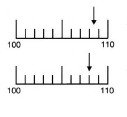
Significant figures are the digits in a measurement that are known with certainty plus one estimated digit. Rules for counting significant figures:
Nonzero digits are always significant.
Zeros between nonzero digits are significant.
Leading zeros are not significant.
Trailing zeros in a decimal number are significant.
Significant Figures in Calculations
Addition/Subtraction: Result should have the same number of decimal places as the measurement with the fewest decimal places.
Multiplication/Division: Result should have the same number of significant figures as the measurement with the fewest significant figures.
Dimensional Analysis
Dimensional analysis is used to convert units and solve problems involving measurements.
Set up conversion factors so units cancel appropriately.
Example: Converting speed from km/h to m/s.
Atoms, Molecules, and Ions
Early Ideas in Atomic Theory
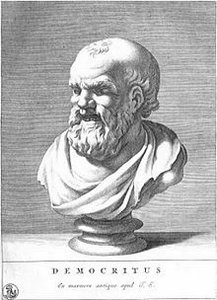
The concept of the atom originated with ancient Greek philosophers, who described matter as composed of indivisible particles called atoms.
Democritus: Proposed the idea of the atom as "uncuttable".
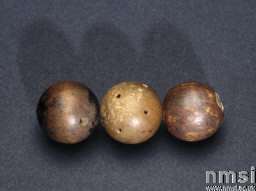
Dalton's Indivisible Sphere Model (1803): Atoms are solid, indivisible spheres.
Evolution of Atomic Theory
Atomic theory evolved through experimental discoveries:
Plum Pudding Model (1897): Atoms are composed of electrons embedded in a positively charged matrix.
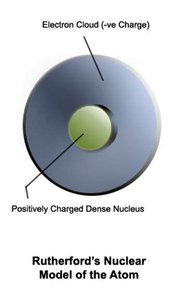
Nuclear Model (1909): Atoms have a dense, positively charged nucleus surrounded by electrons.

Subatomic Particles
Atoms are composed of three main subatomic particles: electrons, protons, and neutrons.
Name | Location | Charge (C) | Unit Charge | Mass (amu) | Mass (g) |
|---|---|---|---|---|---|
electron | outside nucleus | -1.602 x 10⁻¹⁹ | 1- | 0.00055 | 0.00091 x 10⁻²⁴ |
proton | nucleus | 1.602 x 10⁻¹⁹ | 1+ | 1.00727 | 1.67262 x 10⁻²⁴ |
neutron | nucleus | 0 | 0 | 1.00866 | 1.67493 x 10⁻²⁴ |
Atomic Structure and Symbolism
Atoms are identified by their atomic number (Z), mass number (A), and symbol. Isotopes are atoms of the same element with different numbers of neutrons.
Atomic Number (Z): Number of protons.
Mass Number (A): Number of protons plus neutrons.
Isotopes: Atoms with the same Z but different A.
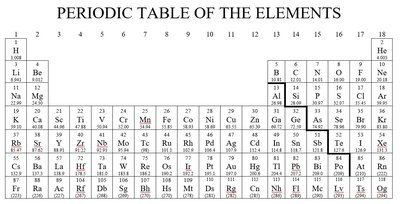
The Periodic Table
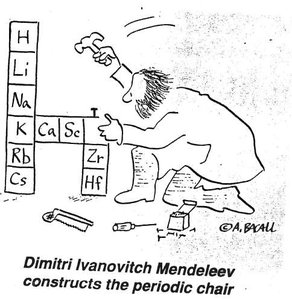
The periodic table organizes elements by increasing atomic number and groups elements with similar properties.
Groups: Vertical columns with similar chemical properties.
Periods: Horizontal rows.
Chemical Compounds and Nomenclature
Molecular and Ionic Compounds
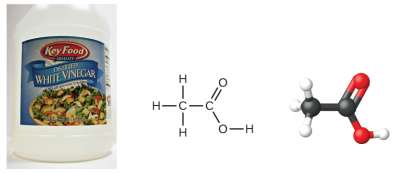
Chemical compounds are classified as molecular (covalent) or ionic. Molecular compounds consist of atoms held together by covalent bonds, while ionic compounds consist of ions held together by electrostatic forces.
Covalent Compound: Atoms share electrons (e.g., C2H4O2).
Ionic Compound: Ions are held together by ionic bonds (e.g., NaCl).
Chemical Nomenclature
Naming compounds follows systematic rules:
Ionic Compounds: Name cation first, then anion (anion ends in "-ide").
Covalent Compounds: Use prefixes to indicate number of atoms (e.g., CO2 is carbon dioxide).
Acids: Named based on the presence of oxygen in the anion (e.g., hydrochloric acid, sulfuric acid).
Composition of Substances and Solutions
The Mole Concept
The mole is a fundamental unit for counting particles in chemistry. One mole contains Avogadro's number of entities (6.022 x 10²³).
Molar Mass: Mass of one mole of a substance, expressed in g/mol.
Formula Mass: Sum of atomic masses in a chemical formula.
Percent Composition and Empirical/Molecular Formulas
Percent composition is the mass percent of each element in a compound. Empirical formula is the simplest whole-number ratio of elements; molecular formula gives the actual number of atoms.
Empirical Formula: Simplest ratio.
Molecular Formula: Actual composition.
Molarity
Molarity (C) is a measure of concentration, defined as moles of solute per liter of solution.
Formula: $C = \frac{n}{V}$
n: Moles of solute
V: Volume of solution in liters
Stoichiometry of Chemical Reactions
Writing and Balancing Chemical Equations
Chemical equations represent reactions, showing reactants and products. Balancing equations ensures conservation of mass.
Stoichiometry: Relates amounts of reactants and products using mole ratios.
Types of Reactions: Precipitation, acid-base, oxidation-reduction.
Electronic Structure and Periodic Properties
Electromagnetic Energy and Atomic Spectra
Atoms absorb and emit energy in discrete packets (quanta). The Bohr model and quantum theory describe electronic structure.
Photon Energy: $E = h\nu$
Wave-Particle Duality: $\lambda = \frac{h}{mv}$
Quantum Numbers and Electron Configuration
Quantum numbers describe the arrangement of electrons in atoms. Electron configuration follows the aufbau principle, Pauli exclusion principle, and Hund's rule.
n: Principal quantum number
l: Orbital angular momentum quantum number
ml: Magnetic quantum number
ms: Electron spin quantum number
Chemical Bonding and Molecular Geometry
Ionic and Covalent Bonding
Ionic bonds are electrostatic attractions between oppositely charged ions. Covalent bonds involve sharing electrons between atoms.
Electronegativity: Determines bond type (nonpolar, polar, ionic).
Bonding Continuum: Increasing difference in electronegativity increases ionic character.
Lewis Structures and the Octet Rule
Lewis structures represent the arrangement of electrons in molecules. The octet rule states that atoms tend to have eight electrons in their valence shell.
Steps for Drawing Lewis Structures: Count valence electrons, draw skeleton, distribute electrons, form double/triple bonds as needed.
Exceptions: Some atoms have fewer or more than eight electrons.
Formal Charges and Resonance
Formal charge helps identify the most stable Lewis structure. Resonance occurs when more than one valid structure exists for a molecule.
Resonance Hybrid: True structure is a blend of all resonance forms.
Molecular Structure and Polarity
VSEPR theory predicts molecular shapes based on electron pair repulsion. Molecular polarity depends on bond polarity and shape.
Polar Molecule: Contains polar bonds arranged so dipoles do not cancel.
Bond Order and Length: Higher bond order means shorter, stronger bonds.
Liquids, Solids, and Intermolecular Forces
Intermolecular Forces (IMFs)
IMFs determine physical properties of substances. Types include ion-ion, ion-dipole, dipole-dipole, hydrogen bonding, dipole-induced dipole, and dispersion forces.
Ion-Ion: Strongest, found in ionic compounds.
Ion-Dipole: Between ions and polar molecules.
Dipole-Dipole: Between polar molecules.
Hydrogen Bonding: Special dipole-dipole interaction involving H bonded to N, O, or F.
Dispersion Forces: Weak, present in all molecules, dominant in nonpolar substances.
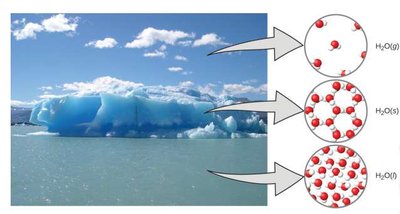
Example: Water's unusual properties are due to extensive hydrogen bonding.
Summary Table: Properties of Subatomic Particles
Name | Location | Charge (C) | Unit Charge | Mass (amu) | Mass (g) |
|---|---|---|---|---|---|
electron | outside nucleus | -1.602 x 10⁻¹⁹ | 1- | 0.00055 | 0.00091 x 10⁻²⁴ |
proton | nucleus | 1.602 x 10⁻¹⁹ | 1+ | 1.00727 | 1.67262 x 10⁻²⁴ |
neutron | nucleus | 0 | 0 | 1.00866 | 1.67493 x 10⁻²⁴ |
Additional info: These notes cover foundational concepts in general chemistry, including measurement, atomic theory, chemical structure, and intermolecular forces. They are suitable for exam preparation and self-study for college-level General Chemistry students.
