 Indietro
Intermolecular Forces and Properties of Liquids and Solids
Guida di studio - Note intelligenti
 Appunti personalizzati basati sui tuoi materiali, ampliati con definizioni chiave, esempi e contesto.
Phase Changes and States of Matter
The Three States of Water
Water can exist in three distinct states: solid, liquid, and gas. The transition between these states is governed by temperature and pressure, and involves the breaking or forming of intermolecular forces.
Solid: Molecules are closely packed in a fixed structure.
Liquid: Molecules are close but can move past each other.
Gas: Molecules are far apart and move freely.
Phase changes: Heating or cooling causes transitions between these states.
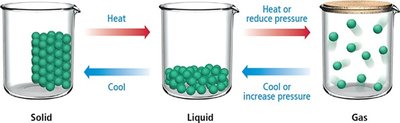
Molecular View of Water in Different States
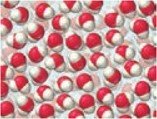
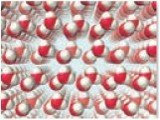
The arrangement of water molecules differs in each state, affecting density and molar volume.
Solid (Ice): Molecules are arranged in a regular lattice, maximizing hydrogen bonding.
Liquid (Water): Molecules are less ordered, allowing for movement and flow.
Gas (Steam): Molecules are widely separated, with minimal intermolecular interaction.
Intermolecular Forces (IMF)
Overview of Intermolecular Forces
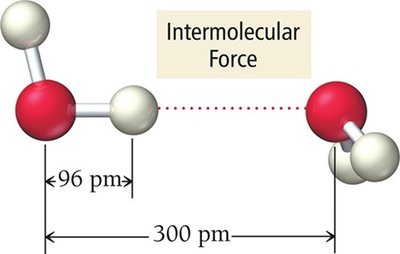
Intermolecular forces are the attractions between molecules that determine the physical properties of substances, such as boiling and melting points, solubility, and phase behavior.
Electrostatic forces: Attractions between opposite charges.
Strength: Stronger forces lead to higher boiling and melting points.
Types: Dispersion forces, dipole-dipole forces, hydrogen bonding, ion-dipole forces.
Dispersion Forces (London Forces)
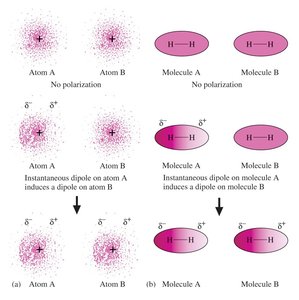
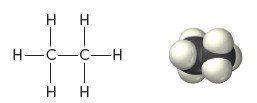
Dispersion forces arise from temporary fluctuations in electron distribution, creating instantaneous dipoles that induce dipoles in neighboring molecules. These forces are present in all molecules and atoms.
Polarizability: Larger electron clouds and higher molar mass increase dispersion forces.
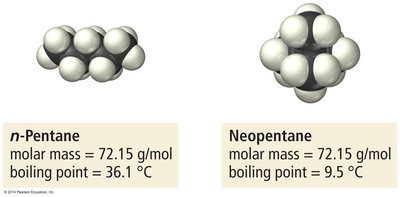
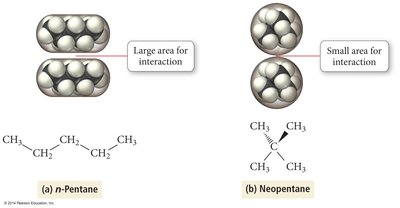
Molecular shape: Greater surface area increases the strength of dispersion forces.
Dipole–Dipole Interactions
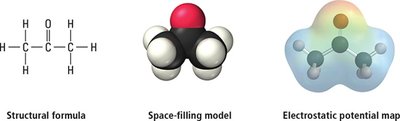
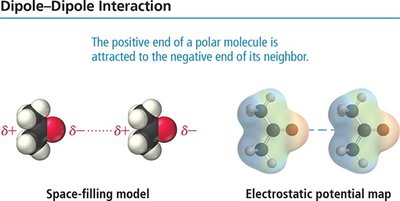
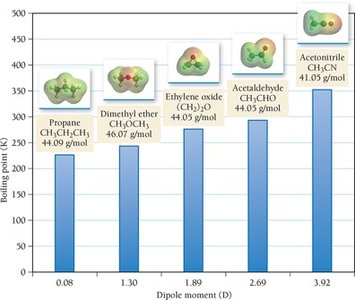
Dipole–dipole forces occur between polar molecules with permanent dipoles. The positive end of one molecule is attracted to the negative end of another, increasing boiling and melting points relative to nonpolar molecules.
Permanent dipole: Results from bond polarity and molecular shape.
Dipole moment: Quantifies the separation of charge in a molecule.
Hydrogen Bonding
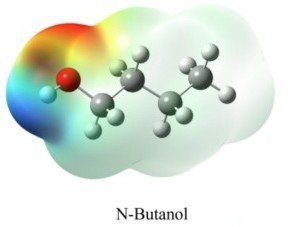
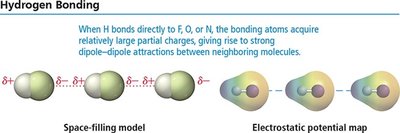
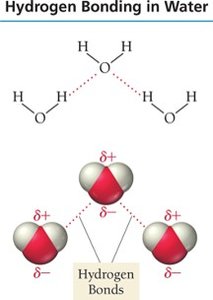
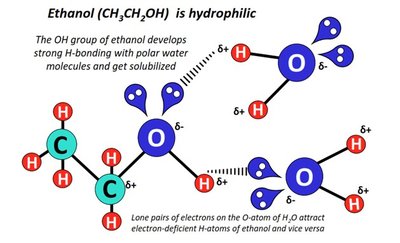
Hydrogen bonding is a special type of dipole–dipole interaction that occurs when hydrogen is bonded to highly electronegative atoms (F, O, or N). This results in strong attractions and significantly affects physical properties.
Hydrogen bonds: Strongest among intermolecular forces (except ion-dipole).
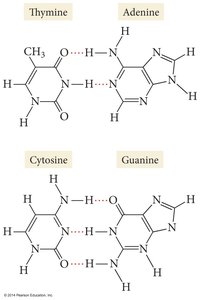
Examples: Water, ethanol, DNA base pairing.
Ion–Dipole Forces
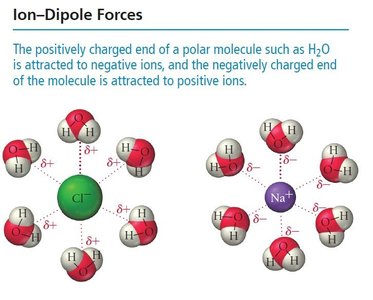
Ion–dipole forces occur in mixtures of ionic compounds and polar molecules. The strength of these interactions is a key factor in the solubility of ionic compounds in water.
Ion–dipole attraction: Positive ions attract the negative end of polar molecules, and vice versa.
Solubility: Determines how well ionic compounds dissolve in polar solvents.
Relative Strengths of Intermolecular Forces
The strength of intermolecular forces varies depending on the type of interaction.
Type | Present In | Strength (kJ/mol) |
|---|---|---|
Dispersion | All molecules and atoms | 0.05–20+ |
Dipole–Dipole | Polar molecules | 3–20+ |
Hydrogen Bonding | Molecules with H bonded to F, O, or N | 10–40 |
Ion–Dipole | Mixtures of ionic compounds and polar compounds | 30–100+ |
Physical Properties Influenced by Intermolecular Forces
Surface Tension
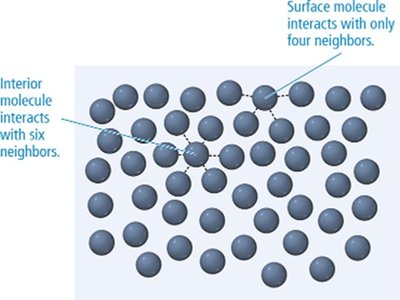
Surface tension is the tendency of liquids to minimize their surface area due to intermolecular attractions. It is measured as the energy required to increase the surface area of a liquid.
Stronger IMFs: Higher surface tension.
Examples: Water has high surface tension due to hydrogen bonding.


Viscosity
Viscosity is the resistance of a liquid to flow. It increases with stronger intermolecular forces and decreases with higher temperature.
Stronger IMFs: Higher viscosity.
Temperature: Higher temperature lowers viscosity.

Capillary Action and Meniscus
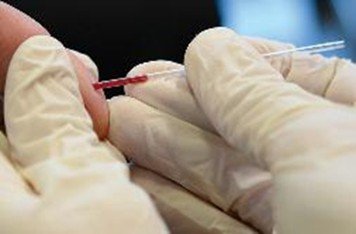
Capillary action is the ability of a liquid to flow up a narrow tube against gravity, due to cohesive and adhesive forces. The meniscus is the curved surface of a liquid in a tube, determined by the balance of these forces.
Cohesive forces: Attraction between like molecules.
Adhesive forces: Attraction between liquid and tube surface.
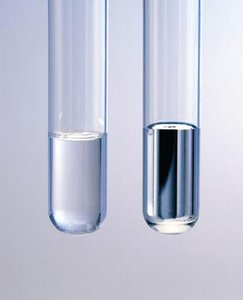
Meniscus: Water forms a concave meniscus; mercury forms a convex meniscus.

Vaporization and Vapor Pressure
Vaporization is the process by which molecules escape from the liquid phase to the gas phase. Vapor pressure is the pressure exerted by a vapor in equilibrium with its liquid.
Higher IMFs: Lower vapor pressure.
Volatility: Liquids with high vapor pressure are more volatile.
Summary Table: Types and Strengths of Intermolecular Forces
Type | Present In | Molecular Perspective | Strength (kJ/mol) |
|---|---|---|---|
Dispersion | All molecules and atoms | Temporary dipoles | 0.05–20+ |
Dipole–Dipole | Polar molecules | Permanent dipoles | 3–20+ |
Hydrogen Bonding | H bonded to F, O, or N | Strong dipole-dipole | 10–40 |
Ion–Dipole | Ions and polar molecules | Ion and dipole interaction | 30–100+ |
Applications and Examples
Biological Importance of Hydrogen Bonding
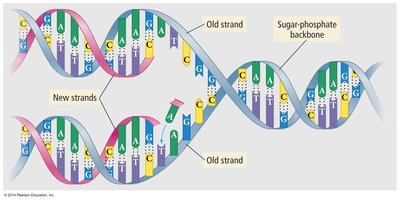
Hydrogen bonding is crucial in biological systems, such as the structure of DNA, where it stabilizes the double helix by connecting complementary base pairs.
Solubility and Miscibility
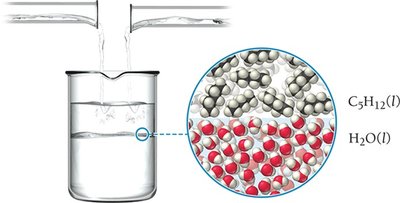
Solubility depends on the nature of intermolecular forces. Polar substances dissolve in polar solvents, and nonpolar substances dissolve in nonpolar solvents. "Like dissolves like" is a useful rule of thumb.
Effect of Molecular Shape on Physical Properties
Molecular shape affects the strength of intermolecular forces and thus boiling points. For example, n-pentane and neopentane have the same molar mass but different boiling points due to their shapes.
Summary
Understanding intermolecular forces is essential for predicting and explaining the physical properties of substances, including their phase behavior, solubility, and biological functions.
