 Indietro
Intermolecular Forces and Solution Formation: A Comprehensive Review
Guida di studio - Note intelligenti
 Appunti personalizzati basati sui tuoi materiali, ampliati con definizioni chiave, esempi e contesto.
Intermolecular Forces
Overview of Intermolecular Forces
Intermolecular forces (IMFs) are the attractive forces that exist between molecules. These forces are responsible for many physical properties of substances, such as boiling points, melting points, and solubility. Understanding IMFs is essential for predicting the behavior of substances in different phases and mixtures.
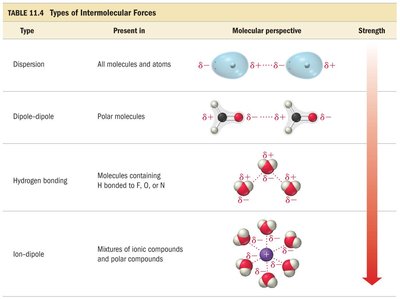
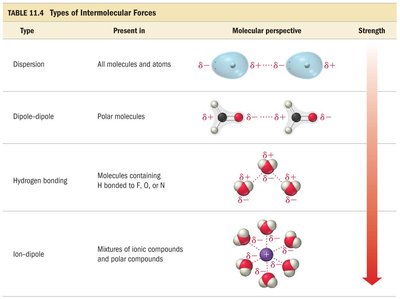
Dispersion Forces (London Forces): Present in all molecules and atoms due to instantaneous dipoles.
Dipole-Dipole Forces: Occur between polar molecules with permanent dipoles.
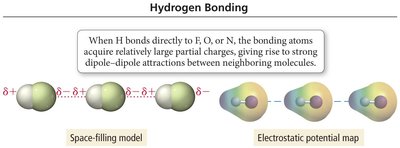
Hydrogen Bonding: A special, strong type of dipole-dipole interaction found when hydrogen is bonded to F, O, or N.
Ion-Dipole Forces: Occur between ions and polar molecules, especially important in solutions of ionic compounds in polar solvents.
Dispersion Forces
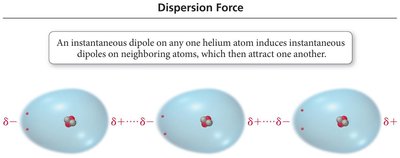
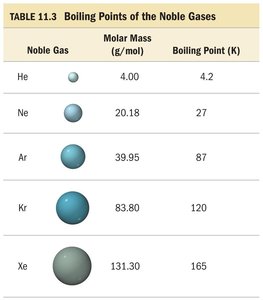
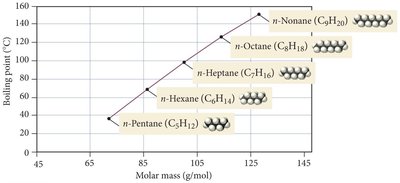
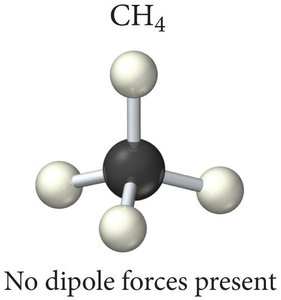
Dispersion forces arise from temporary fluctuations in electron distribution, creating instantaneous dipoles that induce dipoles in neighboring atoms or molecules. These are the only IMFs present in nonpolar substances and noble gases.
Strength increases with molar mass and number of electrons.
Responsible for the condensation of noble gases and nonpolar molecules.
Dipole-Dipole Forces
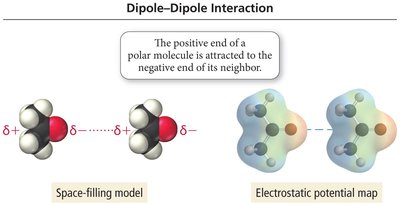
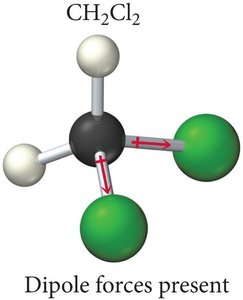
Dipole-dipole forces occur between molecules that have permanent dipoles. The positive end of one molecule is attracted to the negative end of another, leading to higher boiling and melting points compared to nonpolar molecules of similar size.
Only present in polar molecules.
Strength depends on the magnitude of the dipole moment.
Hydrogen Bonding
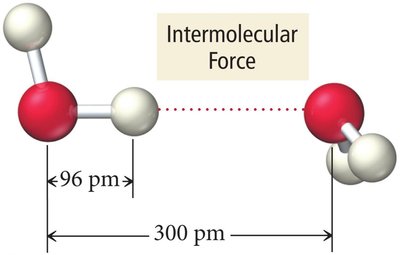
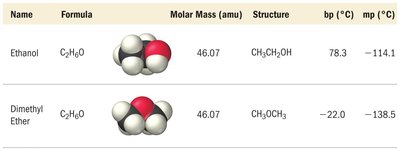
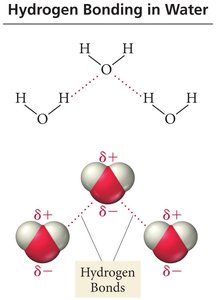
Hydrogen bonding is a particularly strong type of dipole-dipole interaction. It occurs when hydrogen is covalently bonded to a highly electronegative atom (F, O, or N), and is attracted to a lone pair on another electronegative atom in a neighboring molecule.
Responsible for the unique properties of water, such as its high boiling point and surface tension.
Significantly stronger than regular dipole-dipole interactions.
Ion-Dipole Forces
Ion-dipole forces are the strongest type of intermolecular force and occur when ionic compounds are mixed with polar solvents. The positive or negative end of the polar molecule is attracted to the oppositely charged ion.
Critical in the dissolution of salts in water.
Strength increases with the charge and polarity of the interacting species.
Comparing Intermolecular Forces
The relative strength of IMFs determines many physical properties. The general order of increasing strength is: Dispersion < Dipole-Dipole < Hydrogen Bonding < Ion-Dipole.
Solution Formation and Solubility
Mechanisms of Solution Formation
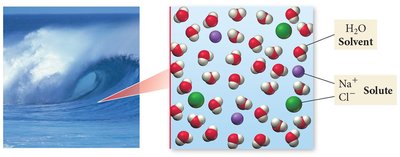
Solutions are homogeneous mixtures where the solute is dispersed at the molecular or ionic level within the solvent. The process of solution formation involves breaking solute-solute and solvent-solvent interactions and forming solute-solvent interactions.
"Like dissolves like": Polar solvents dissolve polar/ionic solutes; nonpolar solvents dissolve nonpolar solutes.
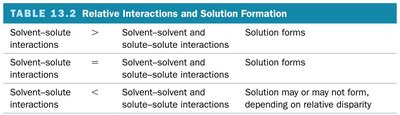
Solution formation is favored when solute-solvent interactions are comparable to or stronger than the original interactions.
Role of Entropy in Solution Formation
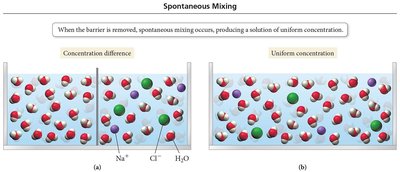
Entropy is a measure of the dispersal of matter and energy. The mixing of substances increases entropy, which favors solution formation. However, if the process is too endothermic, the solution may not form despite the entropy increase.
Processes that increase entropy are generally favored.
Enthalpy and entropy changes together determine spontaneity.
Energetics of Solution Formation
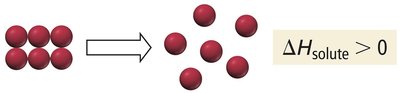
The enthalpy change of solution formation () is the sum of three steps:
Separating solute particles ()
Separating solvent particles ()
Mixing solute and solvent ()
The overall enthalpy change is:
Concentration Units in Solutions
Common Units of Concentration
Concentration expresses the amount of solute present in a given quantity of solvent or solution. Common units include:
Molarity (M): Moles of solute per liter of solution.
Molality (m): Moles of solute per kilogram of solvent.
Percent by Mass (%): (Mass of solute / Mass of solution) × 100%
Mole Fraction (X): Moles of solute / Total moles in solution.
These units are essential for preparing solutions and performing quantitative chemical calculations.
Colligative Properties
Definition and Types
Colligative properties are physical properties of solutions that depend on the number of solute particles, not their identity. These include:
Vapor Pressure Reduction
Boiling Point Elevation
Freezing Point Depression
Osmotic Pressure (not covered here)
Raoult’s Law
Raoult’s Law describes the vapor pressure of a solution containing a volatile component:
= partial pressure of component A above the solution
= mole fraction of component A in the solution
= vapor pressure of pure component A
Boiling Point Elevation and Freezing Point Depression
Adding a non-volatile solute to a solvent raises the boiling point and lowers the freezing point of the solution. The changes are given by:
= van’t Hoff factor (number of particles the solute dissociates into)
= molality of the solution
, = boiling point and freezing point elevation constants, respectively
Boiling point always increases, and freezing point always decreases upon addition of a solute.
Practice Problems and Applications
Identifying Intermolecular Forces
Determine the types of IMFs present in various molecules (e.g., N2: dispersion only; NH3: dispersion, dipole-dipole, hydrogen bonding).
Predicting Solubility
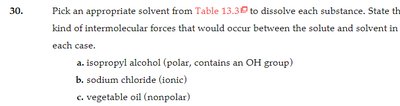
Use "like dissolves like" and knowledge of IMFs to predict which solvents will dissolve which solutes.
For example, water (polar) dissolves ionic and polar solutes; hexane (nonpolar) dissolves nonpolar solutes.
Calculating Colligative Properties
Apply Raoult’s Law and the equations for boiling point elevation and freezing point depression to solve quantitative problems.
Summary Table: Types of Intermolecular Forces
Type | Present in | Molecular Perspective | Relative Strength |
|---|---|---|---|
Dispersion | All molecules and atoms | Instantaneous dipoles | Weakest |
Dipole-dipole | Polar molecules | Permanent dipoles | Intermediate |
Hydrogen bonding | Molecules with H bonded to F, O, or N | Strong dipole-dipole | Strong |
Ion-dipole | Ions and polar molecules | Ions interacting with dipoles | Strongest |
