 Indietro
Intermolecular Forces and Their Effects on Physical Properties
Guida di studio - Note intelligenti
 Appunti personalizzati basati sui tuoi materiali, ampliati con definizioni chiave, esempi e contesto.
Intermolecular Forces (IMFs)
Types of Intermolecular Forces
Intermolecular forces are the attractive forces between molecules, ions, or atoms that determine many physical properties of substances. The main types include dispersion forces, dipole-dipole interactions, hydrogen bonding, and ion-dipole forces.
Dispersion Forces (London Forces): Present in all molecules and atoms, these arise from temporary fluctuations in electron distribution, creating instantaneous dipoles.
Dipole-Dipole Interactions: Occur between polar molecules due to the attraction of partial positive and negative charges.
Hydrogen Bonding: A special, stronger type of dipole-dipole interaction occurring when hydrogen is bonded to highly electronegative atoms (N, O, or F).
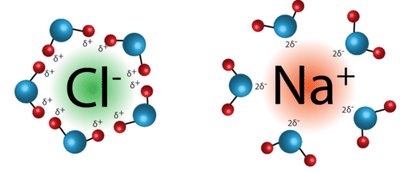
Ion-Dipole Forces: Occur between ions and polar molecules, especially important in solutions of ionic compounds in polar solvents like water.
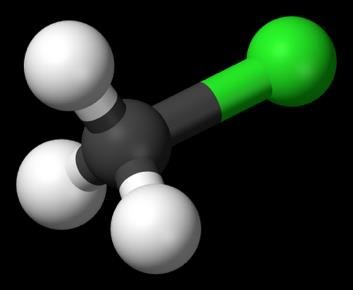
Example: CH3OH (methanol) can form hydrogen bonds with water, while CH3F cannot, despite being polar, because fluorine is not directly bonded to hydrogen.
Ranking Intermolecular Forces
The strength of IMFs increases in the following order: dispersion < dipole-dipole < hydrogen bonding < ion-dipole < ionic bonds. This order affects physical properties such as boiling and melting points.
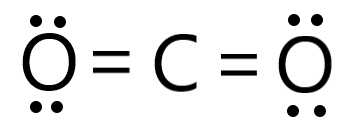
Example: Arrange HF, CO2, and PH3 in order of increasing IMF strength: CO2 (dispersion only) < PH3 (dipole-dipole) < HF (hydrogen bonding).
Physical Properties Influenced by IMFs
Boiling and Melting Points
The dominant force of attraction determines the boiling and melting points of substances. Ionic compounds have the highest boiling and melting points due to strong ionic bonds, while covalent compounds' boiling/melting points depend on the strength of their IMFs.
Order of Increasing Boiling Points: H2 < Ne < CO < HF < BaCl2
Explanation: H2 and Ne (dispersion), CO (dipole-dipole), HF (hydrogen bonding), BaCl2 (ionic).
Table: Types of Forces and Boiling Points
Species | Type | Dominant Force |
|---|---|---|
H2 | Covalent | Dispersion |
Ne | Atom | Dispersion |
CO | Covalent | Dipole-dipole |
HF | Covalent | Hydrogen bonding |
BaCl2 | Ionic | Ionic |
Consequences for Phase Changes
Phase changes (melting, boiling, etc.) require energy to overcome IMFs. The stronger the IMFs, the more energy is needed, resulting in higher melting and boiling points.
Ionic compounds have the highest melting/boiling points due to strong ionic bonds.
Polar molecules with large dipole moments have higher melting/boiling points due to strong dipole-dipole forces.
Highly polarizable atoms/molecules (large, with many electrons) have stronger dispersion forces and higher melting/boiling points.
Predicting Boiling and Melting Points
To predict boiling and melting points, consider all IMFs present. The overall strength of these forces determines the energy required to separate molecules.
Viscosity
Definition and Factors Affecting Viscosity
Viscosity is a measure of a liquid's resistance to flow. The stronger the IMFs, the higher the viscosity. Viscosity also depends on molecular size, shape, and temperature.
As IMF strength increases, viscosity increases.
As temperature increases, viscosity decreases (and vice versa).
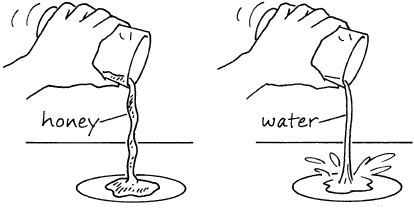
Example: CH3CH2OH (ethanol) has higher viscosity than CH3COCH3 (acetone) because ethanol can hydrogen bond, while acetone cannot.
Surface Tension
Definition and Relationship to IMFs
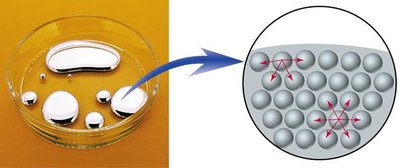
Surface tension is the energy required to increase the surface area of a liquid. It results from cohesive forces pulling surface molecules inward. As IMF strength increases, surface tension increases.
Capillary Action
Definition and Mechanism
Capillary action is the movement of a liquid through a narrow space due to the combined effects of cohesion (attraction between like molecules), adhesion (attraction between unlike molecules), and surface tension.
Adhesive forces cause the liquid to climb the walls of a container.
Cohesive forces pull the rest of the liquid along.
Meniscus Shapes:
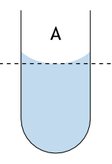
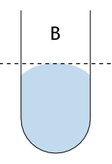
Concave meniscus: Adhesive forces > cohesive forces (e.g., water in glass).
Convex meniscus: Cohesive forces > adhesive forces (e.g., mercury in glass).
Summary Table: Effects of Increasing IMF Strength
Property | Effect of Increasing IMF Strength |
|---|---|
Boiling/Melting Point | Increases |
Viscosity | Increases |
Surface Tension | Increases |
Capillary Action | Varies (depends on balance of cohesion and adhesion) |
Practice Problems
Which will have the higher viscosity: CH3COCH3 or CH3CH2OH? CH3CH2OH, due to hydrogen bonding.
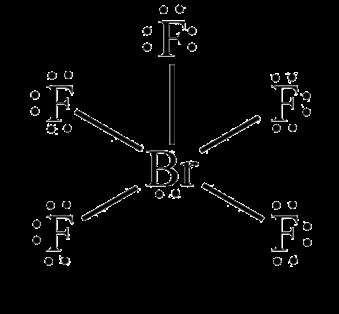
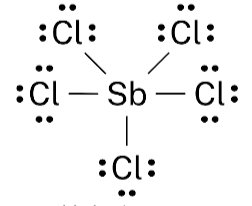
Which will have the higher surface tension: BrF5 or SbCl5? BrF5, due to stronger dipole-dipole forces.
Key Takeaways
The strength of IMFs determines melting/boiling points, viscosity, and surface tension.
As IMF strength increases, these properties generally increase.
Capillary action results from the interplay of cohesive and adhesive forces and surface tension.
