 Indietro
Introduction to Chemistry: Matter, Classification, and Laboratory Foundations
Guida di studio - Note intelligenti
 Appunti personalizzati basati sui tuoi materiali, ampliati con definizioni chiave, esempi e contesto.
Introduction to Chemistry
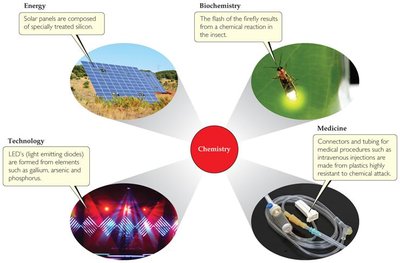
The Central Science and Its Importance
Chemistry is the science that seeks to understand the behavior of matter by studying the properties and interactions of atoms and molecules. It is often called the "central science" because it connects and underpins fields such as biology, physics, medicine, environmental science, and materials science.
Applications: Chemistry explains everyday phenomena (e.g., how soap cleans, how cheese is made), informs safety (e.g., understanding product labels and chemical hazards), and is essential for technological and medical advances.
Skills Developed: Studying chemistry fosters objective reasoning, problem-solving, and scientific literacy.
Major Fields of Chemistry
Classification of Chemistry Disciplines
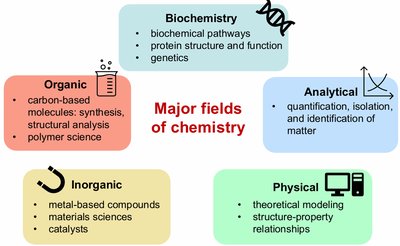
The study of chemistry is divided into several major fields, each focusing on different aspects of matter and its transformations:
Organic Chemistry: Study of carbon-based molecules, including synthesis and structural analysis.
Inorganic Chemistry: Focuses on metal-based compounds, materials science, and catalysts.
Analytical Chemistry: Involves quantification, isolation, and identification of matter.
Physical Chemistry: Theoretical modeling and structure-property relationships.
Biochemistry: Chemical processes in living organisms, including genetics and protein function.
Matter and Its Classification
Definition and States of Matter
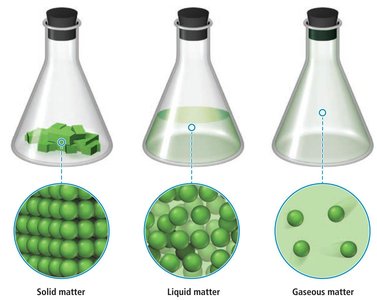
Matter is anything that has mass and occupies space. All matter is composed of atoms, which are the fundamental building blocks. Matter exists in three primary states: solid, liquid, and gas, each with distinct structural arrangements and properties.
Solids: Atoms or molecules are closely packed in fixed positions, giving solids a definite shape and volume.
Liquids: Atoms or molecules are close but can move past one another, giving liquids a definite volume but no fixed shape.
Gases: Atoms or molecules are far apart and move freely, resulting in no definite shape or volume.
Structure Determines Properties
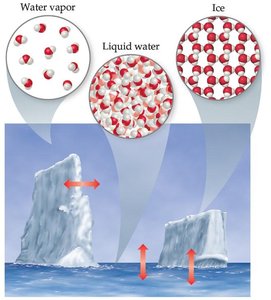
The arrangement of atoms or molecules in a substance determines its physical properties. For example, water can exist as ice (solid), liquid water, or water vapor (gas), with each state exhibiting different properties due to molecular arrangement.
Classification of Matter by Composition
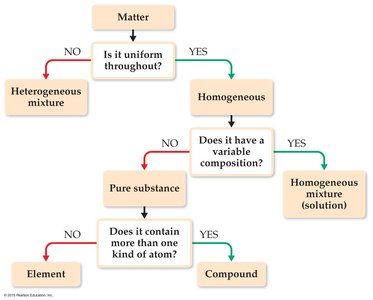
Matter can be classified based on its uniformity and composition:
Pure Substances: Have a fixed composition and distinct properties. Subdivided into:
Elements: Cannot be decomposed into simpler substances (e.g., oxygen, gold).
Compounds: Composed of two or more elements in fixed proportions (e.g., water, H2O).
Mixtures: Combinations of two or more substances where each retains its own properties. Subdivided into:
Homogeneous Mixtures (Solutions): Uniform composition throughout (e.g., saltwater, sweetened tea).
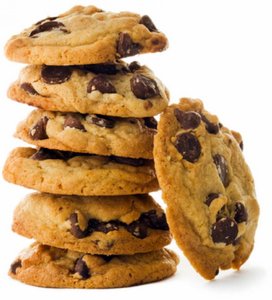
Heterogeneous Mixtures: Composition varies from one region to another (e.g., chocolate chip cookies).
Examples of Mixtures
Heterogeneous Mixture: A chocolate chip cookie is a classic example, where the composition is not uniform throughout.
Homogeneous Mixture: Sweetened tea is an example, where sugar is uniformly dissolved in water.

Separation of Mixtures
Physical Methods of Separation
Mixtures can be separated into their components by exploiting differences in physical properties:
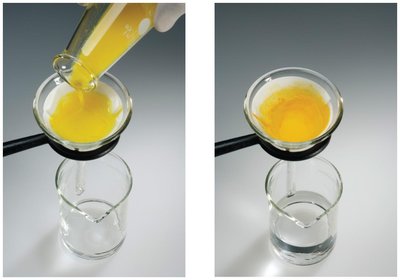
Filtration: Separates solids from liquids using a porous barrier based on particle size.
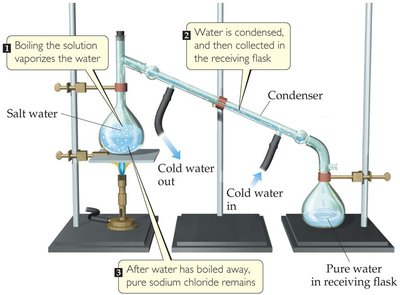
Distillation: Separates components based on differences in boiling points.
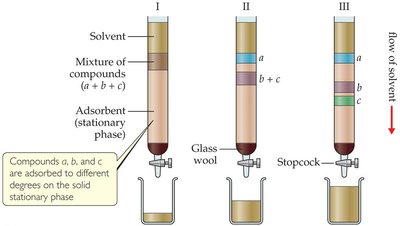
Chromatography: Separates substances based on their ability to adhere to a solid surface (adsorption).
Physical and Chemical Properties and Changes
Types of Properties
Physical Properties: Can be observed without changing the substance's identity (e.g., color, melting point, density).
Chemical Properties: Can only be observed when a substance is transformed into another substance (e.g., flammability, reactivity).
Types of Changes
Physical Changes: Do not alter the composition of a substance (e.g., changes of state, dissolving, breaking).
Chemical Changes: Result in the formation of new substances (e.g., combustion, rusting, decomposition).
Elements, Compounds, and the Law of Constant Composition
Elements and Compounds
Elements are substances that cannot be broken down into simpler substances by chemical means. Compounds are substances composed of two or more elements in fixed, definite proportions.
Chemical Symbols: Each element is represented by a unique one- or two-letter symbol (e.g., H for hydrogen, O for oxygen, Na for sodium).
The Law of Constant Composition (Law of Definite Proportions)
This law states that all samples of a given compound have the same proportions of their constituent elements. For example, water (H2O) always contains two hydrogen atoms for every one oxygen atom.
Chemical Reactions
Chemical Change and Reaction
During a chemical reaction, substances (reactants) are transformed into new substances (products) with different properties and compositions. The relative number of atoms of each element in a compound remains constant, in accordance with the Law of Constant Composition.
Energy in Chemistry
Forms of Energy
Energy: The capacity to do work.
Work: The action of a force through a distance.
Kinetic Energy: Energy of motion.
Potential Energy: Energy due to position or composition.
Thermal Energy: A form of kinetic energy associated with the temperature of an object, arising from the motion of atoms or molecules.
Law of Conservation of Energy
Energy is always conserved in physical and chemical changes; it cannot be created or destroyed, only transformed from one form to another.
Laboratory Safety and Required Materials
Personal Protective Equipment (PPE)
Proper attire and safety equipment are essential in the chemistry laboratory to prevent accidents and injuries:
Lab Coats: Protect skin and clothing from chemical spills.

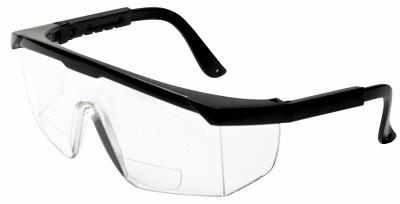
Safety Glasses with Side Shields: Protect eyes from splashes and debris.
Long Pants and Closed-Toe Shoes: Required to protect legs and feet from spills and broken glass.
Other Required Materials
Calculator: For quantitative problem-solving.
Writing Implement: For taking notes and recording data.
Textbook and Online Homework Access: For study and assignments (e.g., "Chemistry: The Central Science").
Course Structure and Success Strategies
Course Schedule Overview
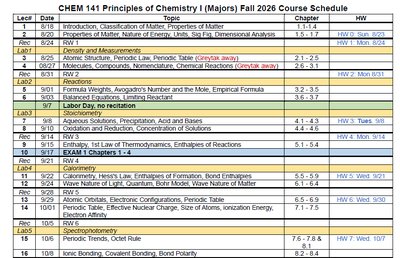
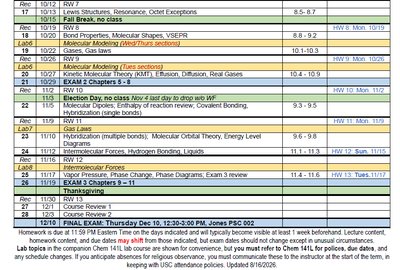
The course covers foundational topics in general chemistry, including properties of matter, atomic structure, chemical reactions, stoichiometry, thermochemistry, electronic structure, periodic trends, bonding, and the behavior of gases, liquids, and solids.
Tips for Success
Read the syllabus and mark key dates.
Stay current with textbook readings and homework assignments.
Participate actively in lectures and recitations.
Practice problem-solving regularly.
Seek help from instructors and teaching assistants as needed.
Summary Table: Classification of Matter
Type | Description | Example |
|---|---|---|
Element | Cannot be decomposed into simpler substances | Oxygen (O2), Gold (Au) |
Compound | Composed of two or more elements in fixed proportions | Water (H2O), Sodium chloride (NaCl) |
Homogeneous Mixture | Uniform composition throughout | Saltwater, Air |
Heterogeneous Mixture | Composition varies from one region to another | Salad, Chocolate chip cookie |
