 Indietro
Liquids and Intermolecular Forces: Structure, Types, and Effects
Guida di studio - Note intelligenti
 Appunti personalizzati basati sui tuoi materiali, ampliati con definizioni chiave, esempi e contesto.
Chapter 11 – Liquids and Intermolecular Forces
11.1 Molecular Comparison of Gases, Liquids, and Solids
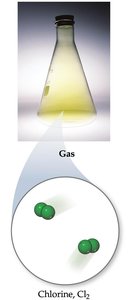
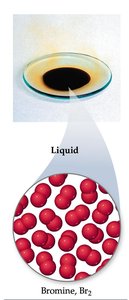
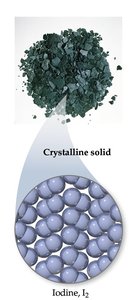
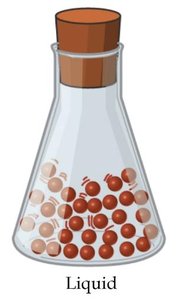
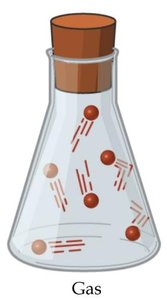
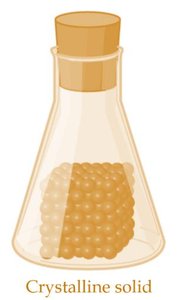
The physical state of a substance—gas, liquid, or solid—is determined by the balance between the kinetic energy of its particles and the strength of the intermolecular forces (IM forces) holding them together. Gases have weak IM forces, liquids have moderate IM forces, and solids have strong IM forces.
Gases: Particles are far apart and move freely; IM forces are very weak.
Liquids: Particles are closer together with moderate movement; IM forces are stronger than in gases but weaker than in solids.
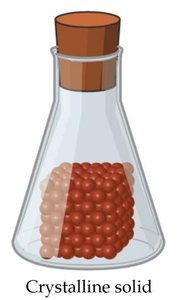
Solids: Particles are closely packed in a fixed arrangement; IM forces are strongest.
11.2 Intermolecular Forces (IM Forces)
Intermolecular forces are the attractive forces between molecules, which are generally much weaker than the intramolecular bonds (covalent or ionic) that hold atoms together within a molecule. These forces are crucial in determining the physical properties of substances, such as boiling and melting points.
Intramolecular bonds: Covalent and ionic bonds within molecules.
Intermolecular forces: Attractions between separate molecules.
IM forces influence the boiling and melting points of substances: stronger IM forces lead to higher boiling and melting points.
Types of Intermolecular Forces
There are four main types of intermolecular forces, each with distinct characteristics and examples:
Dispersion (London dispersion) forces: Present in all molecules, especially significant in nonpolar molecules. Caused by temporary induced dipoles due to electron movement.
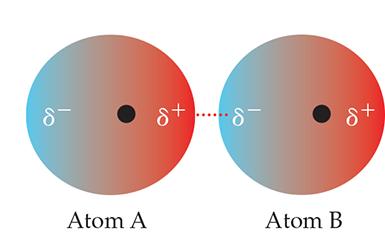
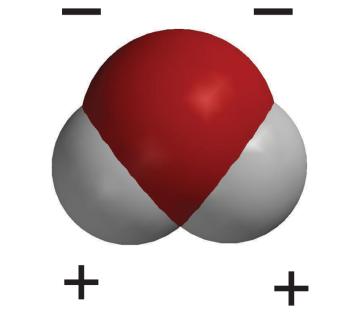
Dipole-dipole interactions: Occur between polar molecules with permanent dipoles. The positive end of one molecule is attracted to the negative end of another.
Hydrogen bonding: A special, strong type of dipole-dipole interaction occurring when hydrogen is bonded to highly electronegative atoms (N, O, or F).
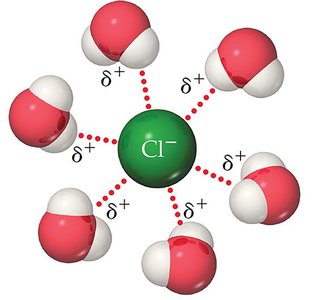
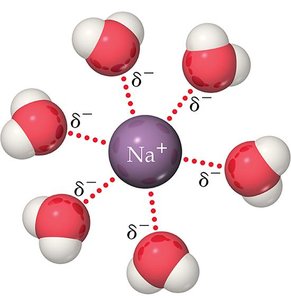
Ion-dipole interactions: Occur between ions and polar molecules, especially important in solutions of ionic compounds in polar solvents.
Dispersion (London Dispersion) Forces
Dispersion forces arise from temporary fluctuations in electron distribution, creating instantaneous dipoles that induce dipoles in neighboring molecules. These forces increase with molecular size and mass.
Example: Helium (He) atoms experience only dispersion forces.
Trend: Larger, heavier molecules (e.g., octane, C8H18) have stronger dispersion forces than smaller ones (e.g., propane, C3H8).
Dipole-Dipole Interactions
Dipole-dipole forces occur between molecules that have permanent dipoles. The strength of these interactions depends on the magnitude of the dipole moment and the distance between molecules.
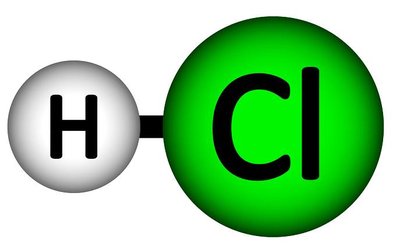
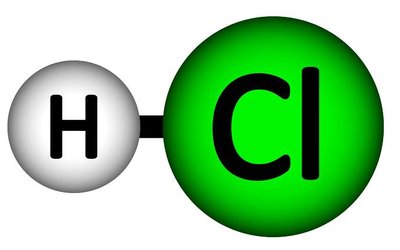
Example: Hydrochloric acid (HCl) molecules interact via dipole-dipole forces.
Hydrogen Bonding
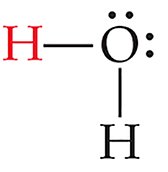
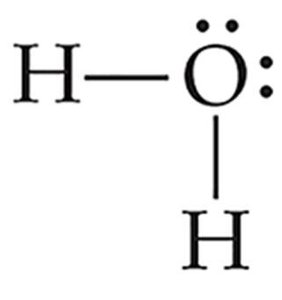
Hydrogen bonding is a particularly strong type of dipole-dipole interaction. It occurs when hydrogen is covalently bonded to a highly electronegative atom (N, O, or F), and is attracted to a lone pair on another electronegative atom in a neighboring molecule.
Example: Water (H2O) molecules form extensive hydrogen bonds, leading to high boiling and melting points.
Ion-Dipole Interactions
Ion-dipole forces are the strongest type of intermolecular force. They occur when an ion interacts with the partial charges on a polar molecule. These interactions are especially important in solutions of ionic compounds in water.
Example: Sodium chloride (NaCl) dissolving in water involves ion-dipole interactions between Na+ or Cl− ions and water molecules.
Checklist for Determining Intermolecular Forces
To determine which intermolecular forces are present in a substance, consider the following:
Are the molecules polar or nonpolar?
Is hydrogen bonded to N, O, or F?
Are ions present in a polar solvent?
Summary Table: Types of Intermolecular Forces
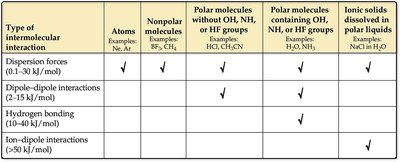
The following table summarizes the types of intermolecular forces and the types of substances in which they are found:
Type of intermolecular interaction | Atoms (e.g., Ne, Ar) | Nonpolar molecules (e.g., BF3, CH4) | Polar molecules without OH, NH, or HF groups (e.g., HCl, CH3CN) | Polar molecules containing OH, NH, or HF groups (e.g., H2O, NH3, HF) | Ionic solids dissolved in polar liquids (e.g., NaCl in H2O) |
|---|---|---|---|---|---|
Dispersion forces (1–30 kJ/mol) | ✓ | ✓ | ✓ | ✓ | ✓ |
Dipole-dipole interactions (2–15 kJ/mol) | ✓ | ✓ | |||
Hydrogen bonding (10–40 kJ/mol) | ✓ | ||||
Ion-dipole interactions (>50 kJ/mol) | ✓ |
Practice Problems
Practice Problem 1
What type of intermolecular forces are present in each of the following molecules? Which is the predominant (strongest) force?
a) SO2
b) H2O
c) H2S
d) N2
Solution Outline:
SO2: Dipole-dipole and dispersion (dipole-dipole is predominant)
H2O: Hydrogen bonding, dipole-dipole, and dispersion (hydrogen bonding is predominant)
H2S: Dipole-dipole and dispersion (dipole-dipole is predominant, but weaker than in H2O)
N2: Dispersion only (dispersion is predominant)
Practice Problem 2
Rank the following compounds/atoms in order of increasing boiling point (lowest BP to highest BP): BaCl2, H2, CO, HF, Ne
Solution Outline:
Ne (dispersion only, lowest BP)
H2 (dispersion only, slightly higher BP than Ne)
CO (dipole-dipole and dispersion, higher BP)
HF (hydrogen bonding, much higher BP)
BaCl2 (ionic, highest BP)
Additional info: The strength of intermolecular forces increases in the order: dispersion < dipole-dipole < hydrogen bonding < ion-dipole/ionic, which directly affects boiling and melting points.
