Indietro
Mass Relationships in Chemical Reactions: Stoichiometry and the Mole Concept
Guida di studio - Note intelligenti
 Appunti personalizzati basati sui tuoi materiali, ampliati con definizioni chiave, esempi e contesto.
Mass Relationships in Chemical Reactions
Atomic Mass and the Mole Concept
The concept of atomic mass and the mole is fundamental to understanding chemical reactions and stoichiometry. Atomic mass is measured in atomic mass units (amu), and the mole is a counting unit that allows chemists to relate the microscopic world of atoms and molecules to the macroscopic world of grams and laboratory measurements.
Atomic Mass: The mass of an atom in atomic mass units (amu). For example, 1 atom of 12C weighs 12 amu.
Average Atomic Mass: Calculated based on the natural abundance of isotopes. For lithium: amu.
Mole (mol): The amount of substance containing as many entities as there are atoms in 12.00 grams of 12C. Avogadro’s number () is .
Molar Mass: The mass of one mole of a substance in grams. For any element, atomic mass (amu) = molar mass (grams).
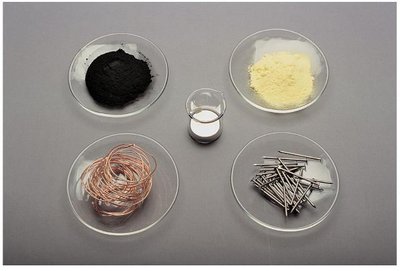
Example: 1 mole of carbon (C) = 12.01 g, 1 mole of sulfur (S) = 32.07 g, etc.
Counting Units: Pair, Dozen, Mole
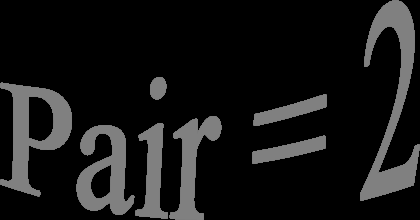
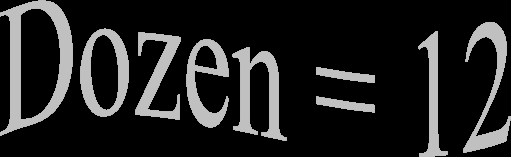
Chemists use counting units to simplify calculations. A pair is 2, a dozen is 12, and a mole is .
Pair: 2 items
Dozen: 12 items
Mole: items
Converting Between Mass, Moles, and Atoms
To relate mass to the number of atoms or molecules, use the molar mass and Avogadro’s number.
Conversion Example: How many atoms are in 0.551 g of potassium (K)?
Molecular Mass and Molar Mass
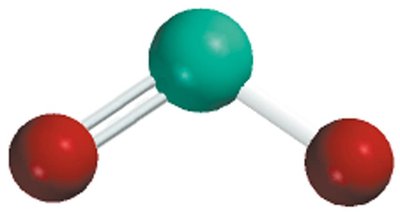
The molecular mass (or molecular weight) is the sum of the atomic masses in a molecule. The molar mass is the mass of one mole of that molecule in grams.
Example: For SO2:
1 mole SO2 = 64.07 g SO2
Percent Composition
Percent composition expresses the mass percentage of each element in a compound.
Formula:
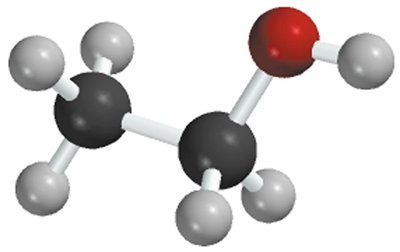
Example: For C2H6O:
%C =
%H =
%O =
Empirical and Molecular Formulas
The empirical formula is the simplest whole-number ratio of atoms in a compound. The molecular formula gives the actual number of atoms in a molecule.
Example: Combustion analysis of ethanol yields empirical formula C2H6O.
Chemical Reactions and Equations
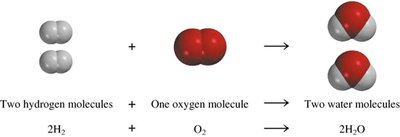
Chemical reactions involve the transformation of reactants into products. Chemical equations represent these changes using chemical symbols.
Example:
Equations can be interpreted in terms of atoms, molecules, moles, and mass.
Balancing Chemical Equations
Balancing equations ensures the same number of each type of atom on both sides. Steps include writing correct formulas, adjusting coefficients, and checking atom counts.
Do not change subscripts, only coefficients.
Balance elements appearing in only one reactant and one product first.
Balance remaining elements, often oxygen last.
Multiply to remove fractions if necessary.
Stoichiometry: Mass Relationships in Reactions
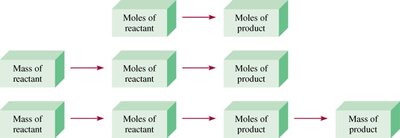
Stoichiometry is the calculation of reactant and product quantities in chemical reactions. It uses balanced equations and molar relationships.
Steps:
Write balanced chemical equation.
Convert known quantities to moles.
Use coefficients to find moles of desired substance.
Convert moles to desired units (mass, volume, etc.).
Example: Methanol combustion:
209 g CH3OH produces 235 g H2O.
Limiting Reagents
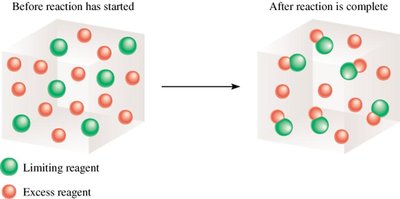
The limiting reagent is the reactant that is completely consumed first, limiting the amount of product formed. The excess reagent remains after the reaction.
Example: 124 g Al reacts with 601 g Fe2O3. Al is the limiting reagent.
Use the limiting reagent to calculate the theoretical yield of product.
Theoretical Yield, Actual Yield, and Percent Yield
Theoretical yield is the maximum amount of product possible from the limiting reagent. Actual yield is the amount actually obtained. Percent yield measures efficiency.
Formula:
Chemistry in Action: Chemical Fertilizers
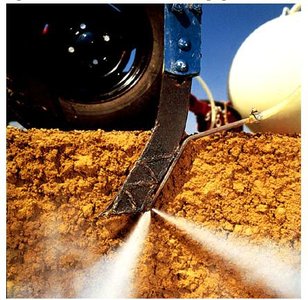
Chemical fertilizers supply essential elements for plant growth, such as nitrogen, phosphorus, and potassium. Industrial processes produce these compounds through chemical reactions.
Example Reactions: