 Indietro
Matter, Chemical Formulas, Stoichiometry, Limiting Reactant, and Percent Yield: Study Notes for General Chemistry
Guida di studio - Note intelligenti
 Appunti personalizzati basati sui tuoi materiali, ampliati con definizioni chiave, esempi e contesto.
Unit 3: Matter and Chemical Quantities
The Mole Concept
The mole is a fundamental unit in chemistry used to express amounts of a chemical substance. It allows chemists to relate the mass of a substance to the number of particles it contains, making it a convenient unit for expressing macroscopic quantities of atoms or molecules involved in chemical reactions.
Definition: 1 mole = particles (Avogadro’s number, ).
Application: Used to convert between mass, number of particles, and moles.
Example: If you had one mole of basketballs, you could create a planet the size of Earth.

Formula Mass and Molar Mass
Formula mass (or molar mass) is the mass in grams of one mole of a substance. It is calculated by summing the atomic masses of all atoms in a formula unit or molecule.
Formula Mass: Mass of the smallest, electrically neutral unit for ionic compounds; mass of a molecule for molecular compounds.
Molar Mass: Mass (in grams) of one mole of a substance.
Example: Molar mass of CO2 is .
Mole as a Conversion Factor
The mole is used as a conversion factor to relate mass, number of particles, and moles. Dimensional analysis is used to ensure correct unit conversions.
Particles to Moles:
Moles to Mass:
Mass to Moles:
Stoichiometry
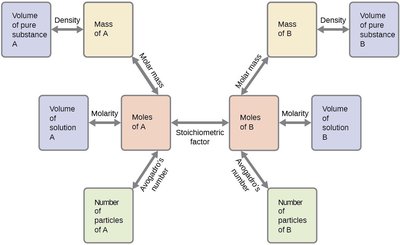
Stoichiometry is the quantitative relationship between reactants and products in a chemical equation. It is based on the coefficients in balanced chemical equations and allows calculation of the amounts of substances involved.
Stoichiometric Calculations: Use mole ratios from balanced equations to convert between moles of reactants and products.
Example: For the combustion of propanol: Calculate grams of CO2 produced from a given mass of propanol.
Chemical Reactions and Equations
Law of Conservation of Mass
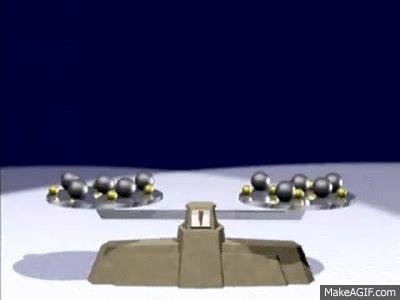
The law of conservation of mass states that the sum of the masses of the reactants in a chemical equation is equal to the sum of the masses of the products. This principle is fundamental to balancing chemical equations.
Implication: Atoms are neither created nor destroyed in a chemical reaction; they are rearranged.
Balancing: Coefficients are used to ensure the number of atoms of each element is equal on both sides.
Chemical Equations
Chemical equations describe the ratios of reactants and products during a chemical reaction. They include coefficients and physical states.
Physical States: (s) = solid; (l) = liquid; (g) = gas; (aq) = aqueous solution.
Example:
Types of Chemical Reactions
Chemical reactions are classified into several types based on the nature of the reactants and products.
Combination (Synthesis):
Decomposition:
Combustion: Reaction with O2, producing CO2 and H2O for hydrocarbons.
Single Displacement:
Double Displacement:
Acid-Base: Acid + Base → Salt + Water
Redox: Transfer of electrons
Balancing Chemical Equations
Balancing chemical equations ensures the law of conservation of mass is obeyed. The process involves adjusting coefficients to equalize the number of atoms of each element on both sides.
Steps:
Write correct formulas for reactants and products.
Balance elements appearing in only one reactant and product first.
Choose coefficients to balance other elements as needed.
Example:
Limiting Reactants and Percent Yield
Limiting Reactant
The limiting reactant is the substance that is completely consumed in a chemical reaction, determining the maximum amount of product that can be formed.
Identification: Compare the mole ratios of reactants to the stoichiometry of the balanced equation.
Example: For , if you have 5 mol CH4 and 8 mol O2, O2 is the limiting reactant.
Limiting Reactants: Minecraft Edition
Limiting reactants can be illustrated using crafting recipes in Minecraft, where the number of available resources determines how many items can be crafted.
Diamond Sword: Requires 2 diamonds and 1 stick.
Diamond Pickaxe: Requires 3 diamonds and 2 sticks.




Percent Yield
Percent yield measures the efficiency of a chemical reaction by comparing the actual yield to the theoretical yield.
Theoretical Yield: Calculated amount of product based on the limiting reactant.
Actual Yield: Measured amount of product formed.
Percent Yield Formula:
Empirical and Molecular Formulas
Percent Composition
Percent composition is the mass percentage of each element in a compound. It is determined from the formula or experimental data.
Formula:
Example: For C2H5OH, calculate the mass of each element in 1 mole and divide by the molar mass.
Finding Empirical Formula from Composition Data
The empirical formula is determined from percent composition by converting percentages to grams, then to moles, and finding the simplest whole-number ratio.
Convert percentages to grams (assume 100 g sample).
Convert grams to moles using molar mass.
Divide all by the smallest number of moles.
Multiply ratios to obtain whole numbers if necessary.
Molecular Mass and Mass Spectrometry
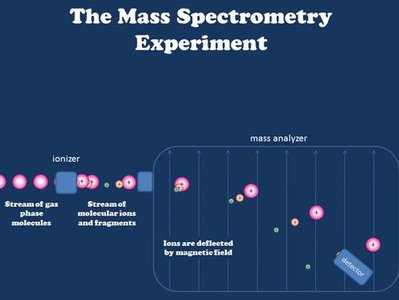
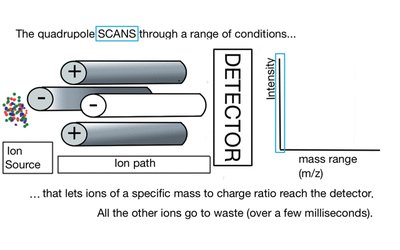
Mass spectrometry is used to determine the mass of substances by converting molecules into ions and separating them based on mass/charge ratio.
Process: Ionization, mass analysis, detection.
Application: Used to determine molecular formula from empirical formula and molecular mass.
Empirical vs. Molecular Formulas
The empirical formula gives the simplest ratio of elements in a compound, while the molecular formula gives the actual number of atoms in a molecule.
Determination:
Compute empirical formula weight.
Find ratio of molecular weight to empirical formula weight.
Multiply each subscript of empirical formula by this ratio.
Example: Glycoaldehyde: Empirical formula CH2O, empirical mass 30 g/mol, molar mass 60 g/mol, molecular formula C2H4O2.
Combustion Reactions and Analysis
Combustion Reactions
Combustion reactions involve the reaction of a compound with oxygen, typically producing CO2 and H2O for hydrocarbons.
Example:

Combustion Analysis
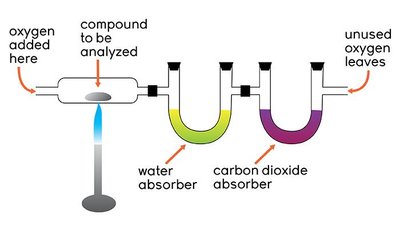
Combustion analysis is used to determine the percent composition of C and H in a compound by measuring the mass of CO2 and H2O produced.
Process: Compound is combusted in excess O2, and the masses of CO2 and H2O are measured.
Application: Used to determine empirical formula.
Summary of Learning Objectives
Comprehend law of conservation of mass and its implications
Write, balance, and interpret chemical equations
Demonstrate an appreciation for the mole concept and its centrality to chemistry
Understand Avogadro’s number, , and relate moles to particles
Calculate formula weight from a formula
Convert moles of substance to grams and vice versa
Calculate the number of molecules in a given mass
Calculate percentage composition from the formula
Determine empirical and molecular formulas
Relate quantities in a chemical equation
Calculate yield with a limiting reagent
----------------------------------------
