 Indietro
Matter, Measurement, and Problem Solving: Foundations of General Chemistry
Guida di studio - Note intelligenti
 Appunti personalizzati basati sui tuoi materiali, ampliati con definizioni chiave, esempi e contesto.
Matter, Measurement & Problem Solving
Introduction to Chemistry
Chemistry is the central science that connects and underpins all other scientific disciplines. It is the study of matter, its properties, and the changes it undergoes. Understanding chemistry helps us explain everyday phenomena, develop analytical thinking, and solve both structured and unstructured problems.
Chemistry deals with the study of matter and its transformations.
It is linked to biology, physics, geology, medicine, environmental science, astronomy, plant science, and biochemistry.
Skills developed: analytical reasoning, problem-solving, and application of scientific knowledge.
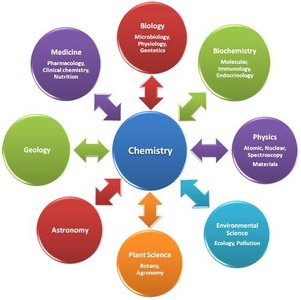
Everyday Relevance of Chemistry
Chemistry explains how substances behave and why they undergo physical and chemical changes. It is fundamental to understanding products and processes in daily life, such as cleaning agents, medicines, and food.
Examples: detergents, medicines, and food additives.

Atoms, Elements, Molecules, and Compounds
What is Matter?
Matter is anything that occupies space and has mass. It is composed of atoms, which are the smallest units retaining the properties of an element. Elements consist of only one type of atom, while molecules are groups of atoms bonded together. Compounds are substances formed from two or more different elements.
Atom: Smallest particle of an element with its chemical properties.
Element: Pure substance made of one type of atom (118 known elements).
Molecule: Two or more atoms joined and acting as a unit.
Compound: Substance made of two or more different elements.
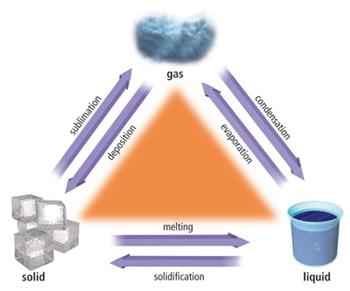
States of Matter
Matter exists in three primary states: solid, liquid, and gas. Each state has distinct physical properties.
Solid: Rigid shape, fixed volume.
Liquid: Fluid shape, fixed volume.
Gas: Expands to fill its container.
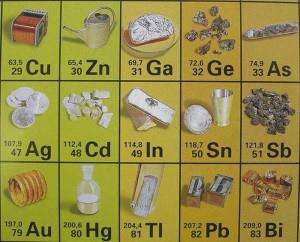
Elements and Their Properties
Chemical elements can often be distinguished by their color and state at room temperature. The periodic table organizes elements based on their properties.
Examples: Copper (Cu), Zinc (Zn), Gold (Au), Mercury (Hg).
Measurement, Significant Figures, and Accuracy
Measurement in Chemistry
Measurements are fundamental in chemistry, allowing us to quantify properties such as mass, volume, density, and temperature. Measurements can be exact or estimated, and each involves a number and a unit.
Exact numbers: Defined values (e.g., 1 inch = 2.54 cm).
Measured numbers: Obtained through instruments, subject to uncertainty.
Significant Figures
Significant figures indicate the precision of a measurement. They include all certain digits plus one uncertain digit.
Non-zero digits are always significant.
Zeros between significant digits are significant.
Leading zeros are not significant; trailing zeros after a decimal point are significant.
Exact numbers have infinite significant figures.
Rules for Calculations with Significant Figures
Multiplication/Division: Result has the same number of significant figures as the measurement with the fewest significant figures.
Addition/Subtraction: Result has the same number of decimal places as the measurement with the fewest decimal places.
Rounding: Round only at the end of calculations to avoid accumulating error.
Precision and Accuracy
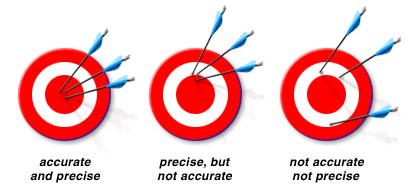
Precision refers to how close repeated measurements are to each other, while accuracy indicates how close a measurement is to the true value. Both are important for reliable scientific data.
Accuracy: Closeness to the actual value.
Precision: Closeness of repeated measurements.
Units and Dimensional Analysis
SI Units
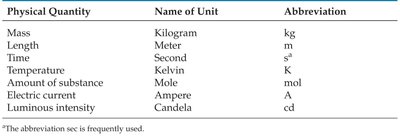
The International System of Units (SI) is used for scientific measurements. Each physical quantity has a standard unit.
Physical Quantity | Name of Unit | Abbreviation |
|---|---|---|
Mass | Kilogram | kg |
Length | Meter | m |
Time | Second | s |
Temperature | Kelvin | K |
Amount of substance | Mole | mol |
Electric current | Ampere | A |
Luminous intensity | Candela | cd |
SI Prefixes
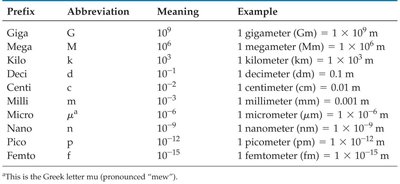
Prefixes are used to express multiples or fractions of base units, making measurements more convenient.
Prefix | Abbreviation | Meaning | Example |
|---|---|---|---|
Giga | G | 109 | 1 gigameter (Gm) = 1 × 10⁹ m |
Mega | M | 106 | 1 megameter (Mm) = 1 × 10⁶ m |
Kilo | k | 103 | 1 kilometer (km) = 1 × 10³ m |
Deci | d | 10-1 | 1 decimeter (dm) = 0.1 m |
Centi | c | 10-2 | 1 centimeter (cm) = 0.01 m |
Milli | m | 10-3 | 1 millimeter (mm) = 0.001 m |
Micro | μ | 10-6 | 1 micrometer (μm) = 1 × 10⁻⁶ m |
Nano | n | 10-9 | 1 nanometer (nm) = 1 × 10⁻⁹ m |
Pico | p | 10-12 | 1 picometer (pm) = 1 × 10-12 m |
Femto | f | 10-15 | 1 femtometer (fm) = 1 × 10-15 m |
Derived Units: Volume and Density
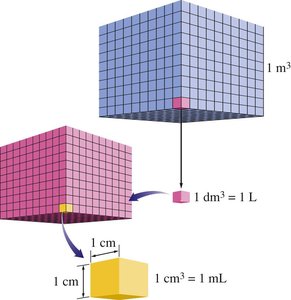
Volume and density are derived units commonly used in chemistry. Volume is the measure of three-dimensional space, and density is mass per unit volume.
Volume of a cube:
Volume of a sphere:
Volume of a cylinder:
Density:
Temperature and Its Measurement
Temperature Scales
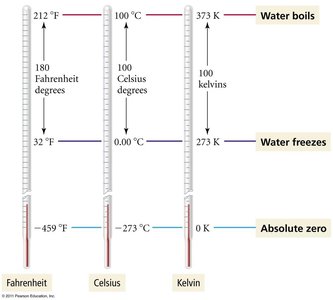
Temperature is a measure of the average kinetic energy of particles. Three scales are commonly used: Fahrenheit (°F), Celsius (°C), and Kelvin (K).
Fahrenheit: Used in the U.S.
Celsius: Used worldwide.
Kelvin: Absolute scale, no negative values, 0 K is absolute zero.
Temperature Conversion Equations
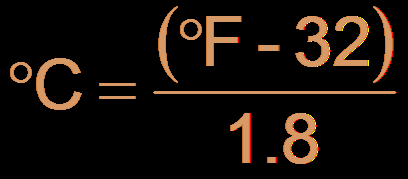
To convert Fahrenheit to Celsius:
To convert Celsius to Kelvin:
Dimensional Analysis and Unit Conversions
Dimensional Analysis
Dimensional analysis is a method for converting between units using conversion factors. It ensures that calculations are consistent and accurate.
Conversion factor: a ratio expressing how two units are related.
Conceptual plan: sort information, strategize, solve, check, and round.


Examples of Unit Conversions
Convert 1.76 yd to centimeters: (rounded to correct sig. figs.)
Convert 0.0833 lbs to milligrams:
Convert density of silver (10.5 g/cm3) to kg/m3:
Additional info:
Volume displacement can be used to determine the mass of an object by measuring the change in liquid volume.
Density and volume calculations are essential for determining mass in various contexts, such as laboratory measurements.
