 Indietro
Matter, Measurement, and Problem Solving: General Chemistry Study Notes
Guida di studio - Note intelligenti
 Appunti personalizzati basati sui tuoi materiali, ampliati con definizioni chiave, esempi e contesto.
Matter, Atoms, and Molecules
Definitions and Fundamental Concepts
Matter is anything that occupies space and has mass. Chemistry seeks to understand the nature of matter by studying its fundamental building blocks: atoms and molecules. Atoms are submicroscopic particles that constitute the basic units of matter, while molecules are combinations of atoms bound together in specific arrangements. The properties of atoms and molecules determine the properties of substances.
Matter: Exists in various forms and is composed of atoms and molecules.
Atoms: Fundamental units of matter.
Molecules: Groups of atoms bonded together.
Example: Water molecules consist of two hydrogen atoms and one oxygen atom (H2O).
Small differences in atomic arrangement: Can lead to large differences in properties (e.g., graphite vs. diamond).
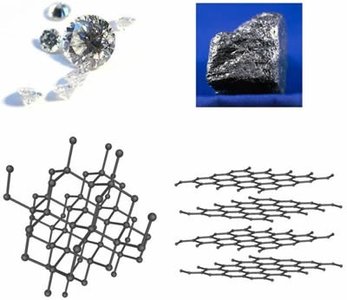
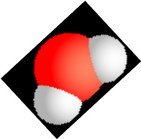
Additional info: Diamond and graphite are both forms of carbon, but their atomic arrangements result in vastly different physical properties.
The Scientific Method in Chemistry
Process and Key Concepts
The scientific method is a systematic approach to investigating the natural world. It involves making observations, formulating hypotheses, conducting experiments, and developing laws and theories.
Observation: Gathering data, which can be quantitative (numerical) or qualitative (descriptive).
Hypothesis: A tentative explanation for observations.
Experiment: Controlled procedures to test hypotheses.
Scientific Law: Describes what happens (e.g., Law of Conservation of Mass).
Theory: Explains why phenomena occur (e.g., Dalton’s atomic theory).
Classification of Matter
By State: Solids, Liquids, and Gases
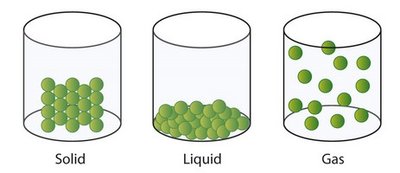
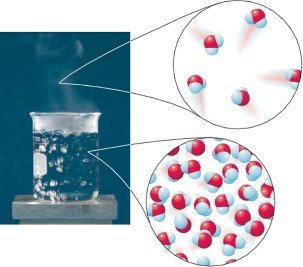
Matter can be classified based on its physical state: solid, liquid, or gas. The arrangement and motion of atoms or molecules differ in each state, leading to distinct properties.
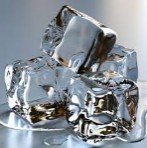
Solid: Atoms/molecules are closely packed and fixed in position; solids have definite shape and volume.
Liquid: Atoms/molecules are close but can move past each other; liquids have definite volume but take the shape of their container.
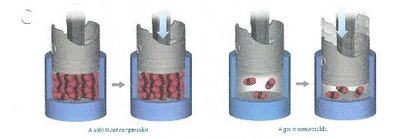
Gas: Atoms/molecules are far apart and move freely; gases are compressible and have neither definite shape nor volume.
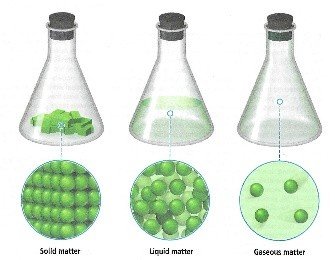
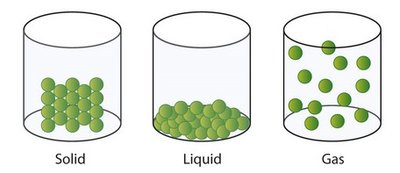
By Composition: Pure Substances and Mixtures
Matter is also classified by its composition: pure substances (elements and compounds) and mixtures (homogeneous and heterogeneous).
Pure Substance: Made of only one type of atom or molecule; composition is invariant.
Element: Cannot be chemically broken down; consists of one type of atom.
Compound: Composed of two or more elements in fixed proportions; can be decomposed by chemical reactions.
Mixture: Contains two or more components; proportions can vary.
Homogeneous Mixture: Uniform composition throughout (e.g., sweetened tea).
Heterogeneous Mixture: Non-uniform composition (e.g., sand and salt mixture).
Separation of Mixtures
Techniques and Applications
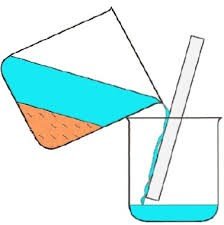
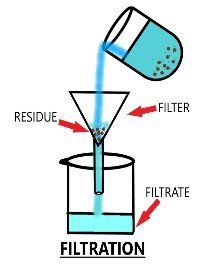
Mixtures can be separated by exploiting differences in physical properties of their components. Common separation methods include:
Decanting: Pouring off a liquid to separate it from a solid.
Filtration: Separating an insoluble solid from a liquid using filter paper.
Distillation: Separating liquids based on differences in boiling points.
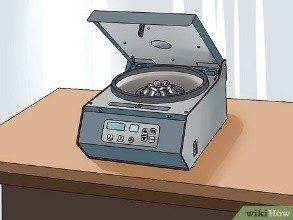
Centrifugation: Using centrifugal force to separate components based on density.
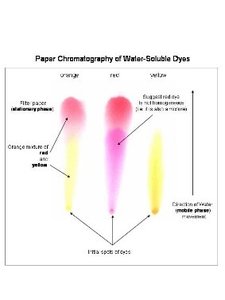
Chromatography: Separating substances based on solubility and intermolecular forces.
Properties and Changes in Matter
Physical and Chemical Properties
Properties of matter are classified as physical or chemical. Physical properties can be observed without changing the substance’s composition, while chemical properties involve a change in composition.
Physical Properties: Odor, taste, color, appearance, melting point, boiling point, density.
Chemical Properties: Flammability, corrosiveness, acidity, toxicity.
Physical and Chemical Changes
Changes in matter are either physical (altering state or appearance) or chemical (altering composition).
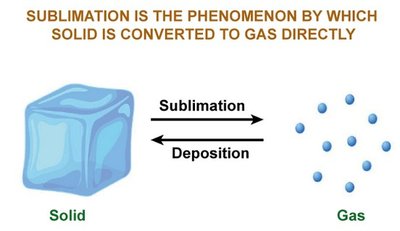
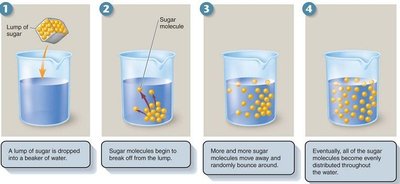
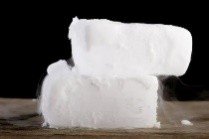
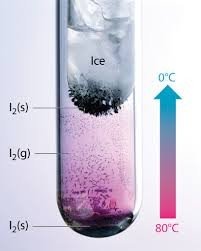
Physical Change: No change in composition; examples include boiling, melting, freezing, sublimation, deposition, and dissolving.
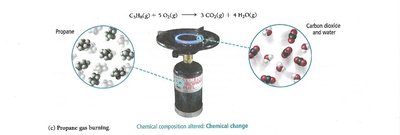
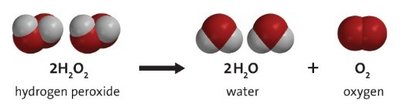
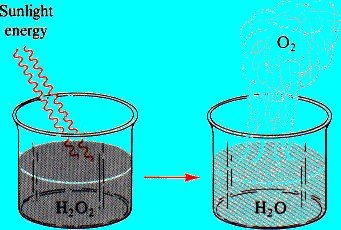
Chemical Change: Atoms rearrange to form new substances; examples include rusting, combustion, and decomposition.

Energy in Chemistry
Types and Conservation of Energy
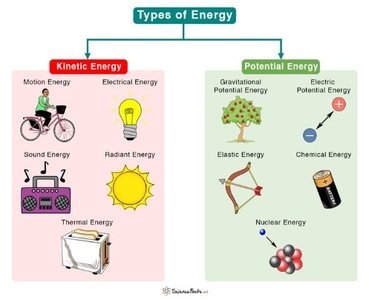
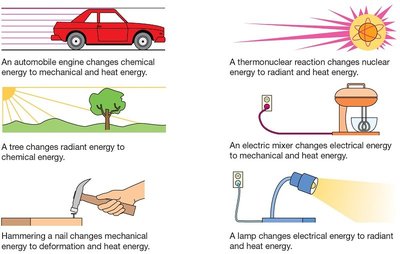
Energy is the capacity to do work. It is involved in all physical and chemical changes. The main types of energy relevant to chemistry are kinetic and potential energy.
Kinetic Energy: Energy of motion; includes thermal energy.
Potential Energy: Energy due to position or composition; includes chemical energy stored in bonds.
Law of Conservation of Energy: Energy is neither created nor destroyed in physical or chemical changes.
Measurement and Units
SI Units and Prefixes
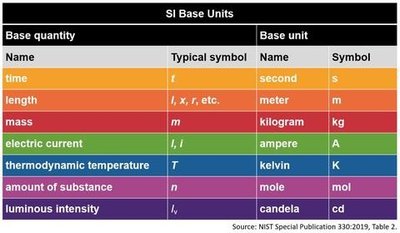
Measurements in chemistry use standard units, primarily the International System of Units (SI). SI base units include meter (length), kilogram (mass), second (time), kelvin (temperature), mole (amount of substance), ampere (electric current), and candela (luminous intensity).
SI Base Units: Fundamental units for scientific measurement.
Prefix Multipliers: Used to express multiples or fractions of units (e.g., kilo-, milli-, micro-).
Length, Area, and Volume
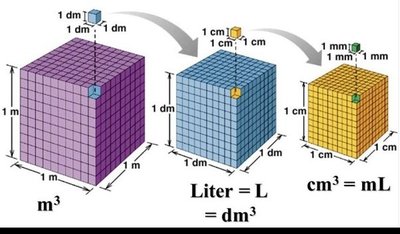
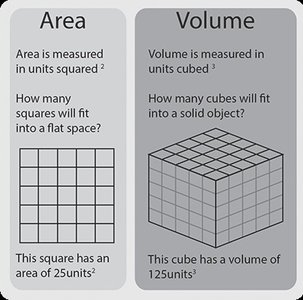
Length is measured in meters, area in square meters, and volume in cubic meters. Common units of volume include liter (L) and milliliter (mL).
1 meter: 39.37 inches
1 liter: 1 dm3
1 mL: 1 cm3

Mass and Time
Mass is measured in kilograms (kg) and grams (g). Time is measured in seconds (s).

Temperature and Its Measurement
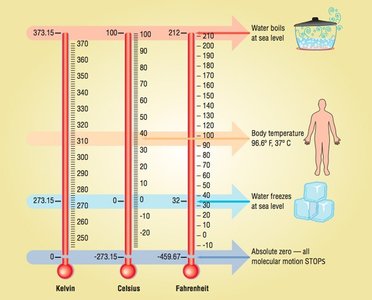
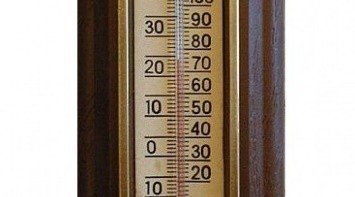
Temperature is a measure of the average kinetic energy of particles. The SI unit is kelvin (K). Temperature can also be measured in Celsius (°C) and Fahrenheit (°F).
Kelvin scale: Absolute zero (0 K) is the lowest possible temperature.
Conversion formulas:
Density and Measurement Properties
Intensive vs. Extensive Properties
Properties of matter are classified as intensive (independent of amount) or extensive (dependent on amount).
Intensive: Density, color, boiling point.
Extensive: Mass, volume.
Density Calculations
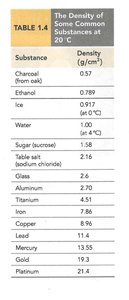
Density is the ratio of mass to volume and is an intensive property.
Formula:
Units: g/cm3 (solids), g/mL (liquids), g/L (gases)
Example: If an object has mass 12.5 g and volume 4.2 cm3, its density is g/cm3.
Significant Figures, Precision, and Accuracy
Significant Figures in Measurement
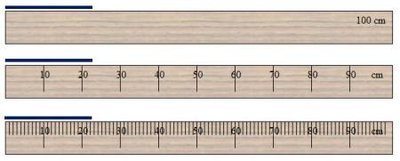
Significant figures reflect the precision of a measurement. Rules for counting significant figures include:
All nonzero digits are significant.
Interior zeros (between nonzero digits) are significant.
Trailing zeros after a decimal point are significant.
Leading zeros are not significant.
Exact numbers have unlimited significant figures.
Precision and Accuracy
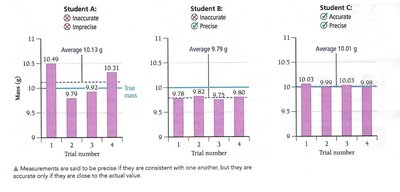
Precision refers to the reproducibility of measurements, while accuracy refers to how close measurements are to the true value.
Problem Solving and Dimensional Analysis
Unit Conversion and Dimensional Analysis
Unit conversion is a fundamental skill in chemistry. Dimensional analysis uses conversion factors to solve problems involving units.
Conversion factor: Fractional quantity from a unit equation (e.g., 2.54 cm = 1 in).
Strategy: Multiply given information by conversion factors to obtain desired units.
Units raised to a power: Raise both the number and unit (e.g., (2.54 cm)2 = (1 in)2).
Data Analysis and Interpretation
Analyzing Experimental Data
Data analysis involves identifying patterns and relationships in experimental results. For example, decomposing water into hydrogen and oxygen shows a constant ratio of masses, illustrating the law of definite proportions.
Summary of Chapter 1 Topics
Chemistry and the Scientific Method
Composition and Classification of Matter
Physical and Chemical Properties and Changes
Energy
Measurement and Units
Density
Significant Figures
Precision and Accuracy
Problem Solving by Dimensional Analysis
Data Interpretation
