 Indietro
Molecules and Compounds: Structure, Bonding, and Formulas
Guida di studio - Note intelligenti
 Appunti personalizzati basati sui tuoi materiali, ampliati con definizioni chiave, esempi e contesto.
Molecules and Compounds
Elements to Molecules
When two or more nonmetallic elements combine, they form a molecule. Molecules can consist of the same element (e.g., O2) or different elements (e.g., H2O). The diversity of substances in nature arises from the ability of elements to form compounds, which are substances composed of two or more elements in fixed, definite proportions.
Elemental molecules: O2, N2
Compound molecules: H2O, CO2
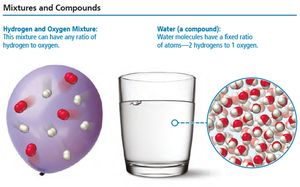
Hydrogen, Oxygen, and Water
The properties of compounds are often dramatically different from those of the elements that compose them. For example, hydrogen and oxygen are both gases, but when combined in a 2:1 ratio, they form water, a liquid with unique properties.
Law of Definite Proportion
The Law of Definite Proportion states that a chemical compound always contains the same proportion of elements by mass. For water, this means every molecule contains exactly two hydrogen atoms for every one oxygen atom (2:1 ratio).
Types of Chemical Bonds
Ionic and Covalent Bonds
Chemical bonds are the forces that hold atoms together in compounds. They form because they lower the potential energy of the system. There are two main types:
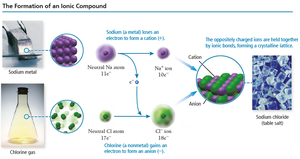
Ionic bonds: Formed by the transfer of electrons from a metal to a nonmetal, resulting in the formation of cations and anions.
Covalent bonds: Formed by the sharing of electrons between two or more nonmetals.
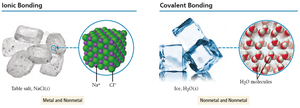
Ionic Bonds: Formation and Structure
Ionic bonds occur when a metal atom transfers electrons to a nonmetal atom, forming oppositely charged ions that attract each other. The resulting ionic compound forms a crystal lattice structure.
Covalent Bonds: Bonds Between Nonmetal Atoms
Covalent bonds involve the sharing of electrons between nonmetal atoms. The resulting molecules are called molecular compounds.
Representing Compounds: Chemical Formulas and Models
Chemical Formulas
A chemical formula indicates the type and number of each element in a compound. There are three main types:
Empirical formula: Simplest whole-number ratio of atoms (e.g., CH2O for glucose).
Molecular formula: Actual number of atoms in a molecule (e.g., C6H12O6 for glucose).
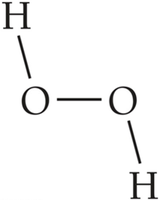
Structural formula: Shows how atoms are bonded (e.g., H–O–H for water).
Structural and Molecular Models
Structural formulas and molecular models provide visual representations of molecules, showing how atoms are connected and arranged in space.
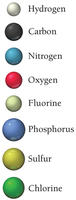
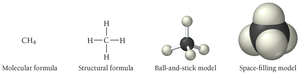
Ways of Representing a Compound: Benzene, Acetylene, Glucose, Ammonia
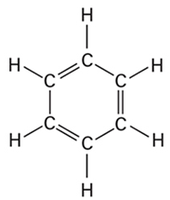
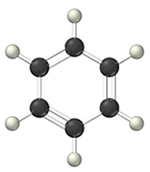
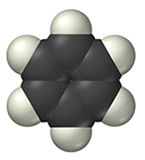
Compounds can be represented in multiple ways, including structural formulas, ball-and-stick models, and space-filling models. For example, benzene (C6H6) can be shown as:
Glucose (C6H12O6) can be shown as:
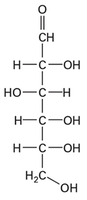
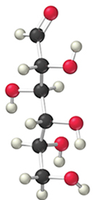
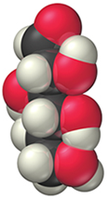
Ammonia (NH3):
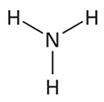
Lewis Structure Model and the Octet Rule
Lewis Structures
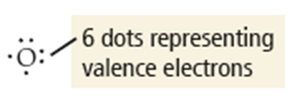
The Lewis model represents valence electrons as dots around the chemical symbol. Lewis structures help visualize the transfer or sharing of electrons in bonding.
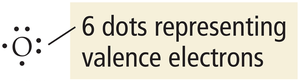
The Octet Rule
Atoms tend to gain, lose, or share electrons to achieve a noble gas configuration, usually eight valence electrons (an octet). Hydrogen and helium are exceptions, aiming for two electrons (a duet).
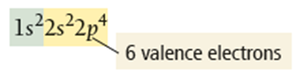
Ionic Bonding and Properties of Ionic Compounds
Ionic Bonding Model
Ionic compounds are composed of cations (metals) and anions (nonmetals) arranged in a crystal lattice. The basic unit is the formula unit, not a discrete molecule.
Properties of Ionic Compounds
Hard and brittle
Do not conduct electricity as solids, but do when molten or dissolved in water
High melting and boiling points due to strong electrostatic forces
Naming Compounds
Naming Ionic Compounds
Ionic compounds are named based on the cation and anion present. For metals with invariant charge, the name is simply "[metal] [nonmetal]-ide" (e.g., sodium chloride). For metals with variable charge, a Roman numeral indicates the charge (e.g., iron(III) chloride).
Naming Molecular Compounds
Molecular compounds (two nonmetals) use prefixes to indicate the number of each atom (e.g., dinitrogen tetroxide, N2O4).
Calculations Involving Compounds
Formula Mass and Molar Mass
The formula mass (or molecular mass) is the sum of the atomic masses of all atoms in a formula unit or molecule. The molar mass is the mass of one mole of a substance, in grams per mole.
Percent Composition
The percent composition of an element in a compound is calculated as:
Empirical and Molecular Formulas
The empirical formula gives the simplest whole-number ratio of atoms in a compound. The molecular formula is a whole-number multiple of the empirical formula, determined by the compound's molar mass.
where
Combustion Analysis
Combustion analysis is used to determine the empirical formula of organic compounds by burning a known mass and measuring the products (CO2 and H2O).
Organic Compounds and Hydrocarbons
Organic Compounds
Organic compounds are primarily composed of carbon and hydrogen, sometimes with oxygen, nitrogen, phosphorus, sulfur, and other elements. Carbon forms four covalent bonds and can create chains, branches, and rings.
Common Hydrocarbons
Hydrocarbons are compounds containing only carbon and hydrogen. They are classified as alkanes (single bonds), alkenes (double bonds), and alkynes (triple bonds).
Additional info: This summary covers the core concepts of Chapter 4: Molecules and Compounds, including bonding, formulas, naming, and calculations relevant to General Chemistry.
