Indietro
Molecules and Compounds: Structure, Types, and Nomenclature
Guida di studio - Note intelligenti
 Appunti personalizzati basati sui tuoi materiali, ampliati con definizioni chiave, esempi e contesto.
Molecules and Compounds
Introduction to Compounds
Elements combine to form compounds, resulting in the vast diversity of substances found in nature. Compounds have properties distinct from the elements that compose them. When two or more elements combine, they form a new substance with unique characteristics.
Element: A pure substance consisting of only one type of atom.
Compound: A substance composed of two or more elements in fixed, definite proportions.
Mixture: A combination of two or more substances in variable proportions.
Properties of Elements vs. Compounds
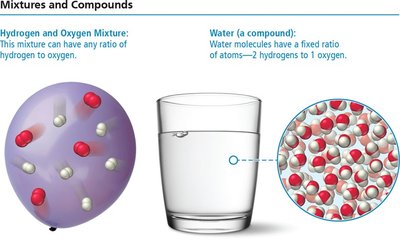
The properties of compounds are often dramatically different from those of their constituent elements. For example, hydrogen and oxygen are both gases, but when combined in a 2:1 ratio, they form water, a liquid at room temperature.
Definite Proportion
Compounds always contain elements in fixed, definite proportions. For example, water (H2O) always contains two hydrogen atoms for every one oxygen atom. In contrast, mixtures can have any proportion of their components.
Chemical Bonds
Types of Chemical Bonds
Atoms in compounds are held together by chemical bonds, which arise from the attractions between charged particles (electrons and protons). Chemical bonds are broadly classified into two types:
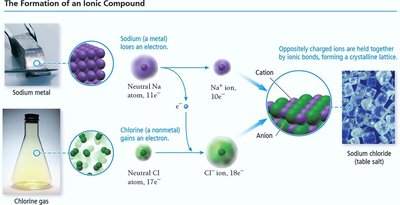
Ionic Bonds: Involve the transfer of electrons from a metal to a nonmetal, resulting in the formation of cations and anions held together by electrostatic forces.
Covalent Bonds: Involve the sharing of electrons between two or more nonmetals, resulting in the formation of molecules.
Representing Compounds
Chemical Formulas
A chemical formula indicates the elements present in a compound and the relative number of atoms or ions of each. There are several types of chemical formulas:
Empirical Formula: Shows the simplest whole-number ratio of atoms in a compound.
Molecular Formula: Shows the actual number of atoms of each element in a molecule.
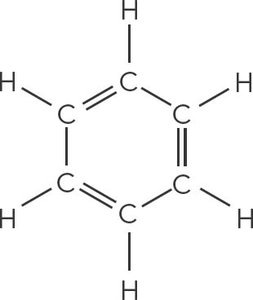
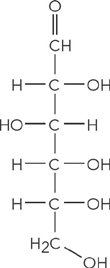
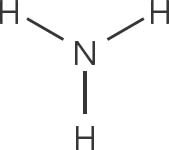
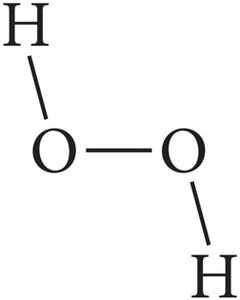
Structural Formula: Shows how atoms are connected or bonded in a molecule, sometimes indicating geometry.
Molecular Models
Molecular models provide a visual representation of molecules:
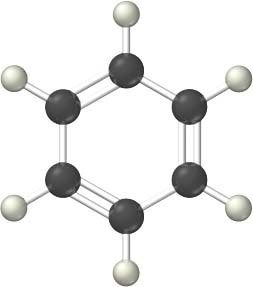
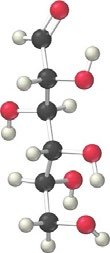
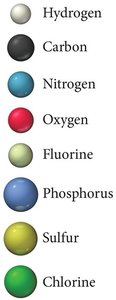
Ball-and-Stick Model: Atoms are represented as balls and bonds as sticks, showing the shape of the molecule.
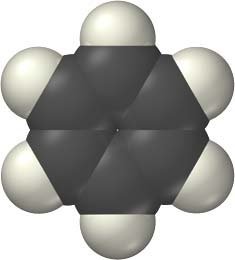
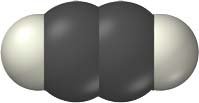
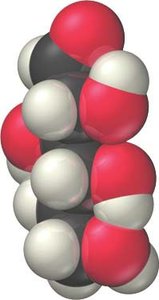
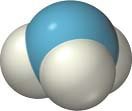
Space-Filling Model: Atoms fill the space between each other, approximating the actual size and shape of the molecule.
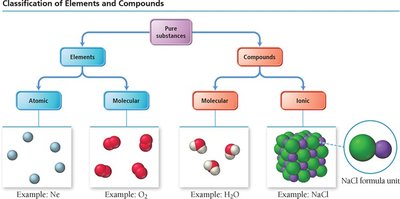
Classification of Elements and Compounds
Atomic and Molecular Elements
Elements can exist as single atoms (atomic elements) or as molecules composed of two or more atoms of the same element (molecular elements). There are seven diatomic elements: H2, N2, O2, F2, Cl2, Br2, and I2. Some elements, like P4 and S8, exist as polyatomic molecules.
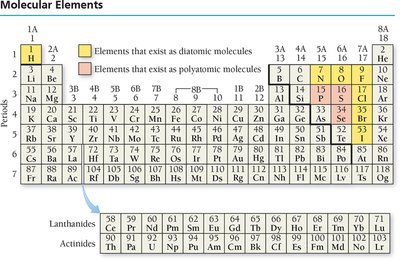
Molecular and Ionic Compounds
Compounds are classified as molecular or ionic:
Molecular Compounds: Composed of covalently bonded nonmetals; basic units are molecules (e.g., H2O, CO2).
Ionic Compounds: Composed of cations (usually metals) and anions (usually nonmetals) bound by ionic bonds; basic units are formula units (e.g., NaCl).
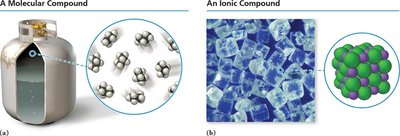
Naming Compounds
Naming Ionic Compounds
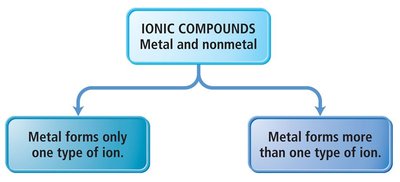
Ionic compounds are named based on the type of metal present:
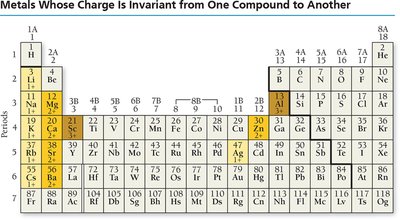
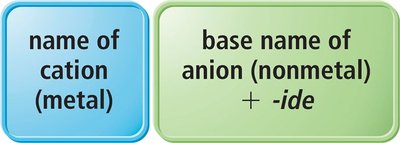
Type I: Metal forms only one type of ion (charge is invariant). Name = cation name + base name of anion + -ide.
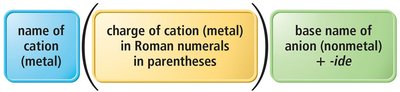
Type II: Metal forms more than one type of ion (usually transition metals). Name = cation name + (charge in Roman numerals) + base name of anion + -ide.
Naming Molecular Compounds
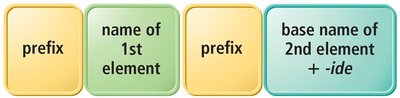
Molecular compounds (two or more nonmetals) use prefixes to indicate the number of each atom. The first element is named first, followed by the second element with an -ide ending. Prefixes (mono-, di-, tri-, etc.) are used for both elements, but mono- is usually omitted for the first element.
Naming Acids
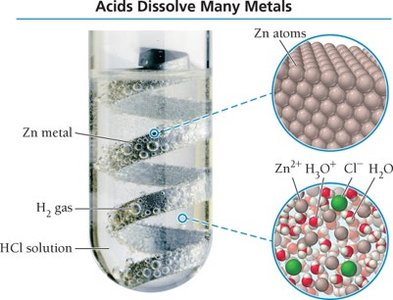
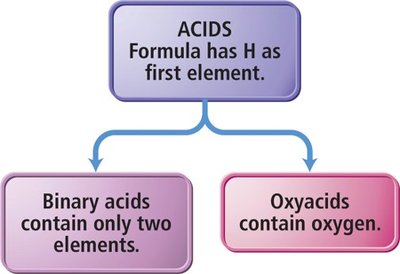
Acids are molecular compounds that release H+ ions in water. They are named based on their composition:
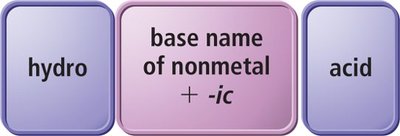
Binary Acids: Contain hydrogen and a nonmetal. Name: hydro- + base name of nonmetal + -ic + acid.
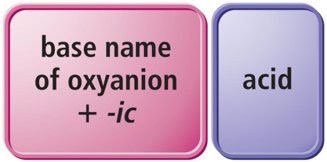
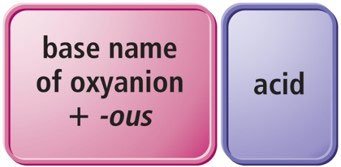
Oxyacids: Contain hydrogen, oxygen, and another element (usually a polyatomic ion). If the polyatomic ion ends in -ate, the acid name ends in -ic; if it ends in -ite, the acid name ends in -ous.
Formula Mass and Molar Mass
Formula Mass
The formula mass (or molecular mass) is the sum of the atomic masses of all atoms in a molecule or formula unit. It is calculated as:

Molar Mass
The molar mass of a compound is the mass in grams of one mole of its molecules or formula units. It is numerically equal to the formula mass but expressed in g/mol.
For example, the molar mass of H2O is 18.02 g/mol.
Using Molar Mass in Calculations
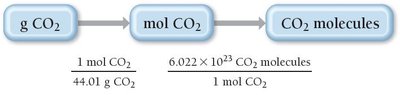
Molar mass can be used to convert between mass, moles, and number of molecules using Avogadro's number ( molecules/mol).
Composition of Compounds
Mass Percent Composition
The mass percent of an element in a compound is calculated as:
Mass percent composition can be used as a conversion factor between the mass of an element and the mass of the compound.
Empirical and Molecular Formulas
Empirical Formula
The empirical formula gives the simplest whole-number ratio of atoms in a compound. It can be determined from percent composition or mass data.
Convert percentages to grams (assume 100 g sample).
Convert grams to moles using molar mass.
Write a pseudoformula using moles as subscripts.
Divide all subscripts by the smallest number of moles.
If necessary, multiply to obtain whole numbers.
Molecular Formula
The molecular formula is a whole-number multiple of the empirical formula. It is determined by dividing the molar mass of the compound by the empirical formula mass:
Molecular formula = (empirical formula) × n
Organic Compounds
Introduction to Organic Compounds
Organic compounds are primarily composed of carbon and hydrogen, sometimes with oxygen, nitrogen, sulfur, and other elements. Carbon's ability to form four covalent bonds allows for a vast array of structures, including chains and rings.
Hydrocarbons
Hydrocarbons are organic compounds containing only carbon and hydrogen. They are classified based on the types of bonds present:
Alkanes: Only single bonds (-ane suffix).
Alkenes: At least one double bond (-ene suffix).
Alkynes: At least one triple bond (-yne suffix).
Functionalized Hydrocarbons
Functional groups are specific atoms or groups of atoms that impart characteristic chemical properties to organic compounds. Families of organic compounds are defined by their functional groups, such as alcohols, ethers, aldehydes, ketones, carboxylic acids, esters, and amines.
Summary Table: Ways of Representing Compounds
Name of Compound | Empirical Formula | Molecular Formula | Structural Formula | Ball-and-Stick Model | Space-Filling Model |
|---|---|---|---|---|---|
Benzene | CH | C6H6 |
|
|
|
Acetylene | CH | C2H2 |
|
| |
Glucose | CH2O | C6H12O6 |
|
| |
Ammonia | NH3 | NH3 |
|
|