 Indietro
Periodic Properties of the Elements: Structure, Electron Configuration, and Trends
Guida di studio - Note intelligenti
 Appunti personalizzati basati sui tuoi materiali, ampliati con definizioni chiave, esempi e contesto.
Periodic Properties of the Elements
Introduction to Periodic Properties
The periodic properties of elements are predictable based on their position within the periodic table. These properties include atomic radius, density, ionization energy, electron affinity, and metallic character. Understanding these trends is essential for predicting the behavior of elements in chemical reactions.
Finding Patterns: The Periodic Law and the Periodic Table
Historical Development of the Periodic Table
The periodic table was developed through the recognition of recurring patterns in element properties:
Döbereiner's Triads: Groups of three elements with similar properties.
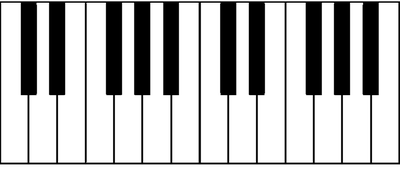
Newlands' Law of Octaves: Every eighth element had similar properties, analogous to musical octaves.
Mendeleev's Periodic Law: When elements are arranged by increasing atomic mass, certain properties recur periodically.
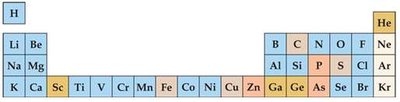
Moseley's Contribution: Arranged elements by atomic number, resolving inconsistencies.
Prediction and Discovery of Elements
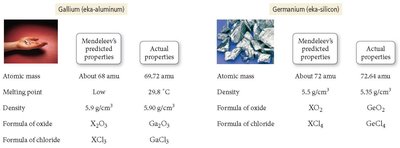
Mendeleev predicted the properties of undiscovered elements (e.g., eka-aluminum and eka-silicon), which were later confirmed by experimental data.
Structure of the Periodic Table
Classification of Elements
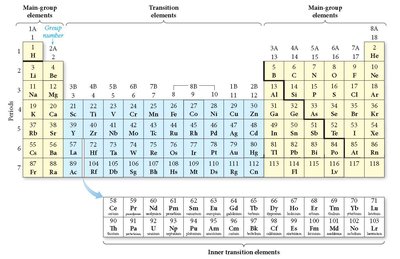
The periodic table is divided into main group elements, transition elements, and inner transition elements (lanthanides and actinides). Elements are grouped by similar valence electron configurations, which determine their chemical properties.
Electron Configurations and the Periodic Table
Principles of Electron Configuration
Electrons occupy the lowest energy orbitals available, following the Aufbau principle. The Pauli Exclusion Principle states that no two electrons in an atom can have the same four quantum numbers, and each orbital can hold a maximum of two electrons with opposite spins.
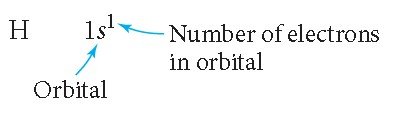
s sublevel: 1 orbital, holds 2 electrons
p sublevel: 3 orbitals, holds 6 electrons
d sublevel: 5 orbitals, holds 10 electrons
f sublevel: 7 orbitals, holds 14 electrons

Condensed Electron Configurations
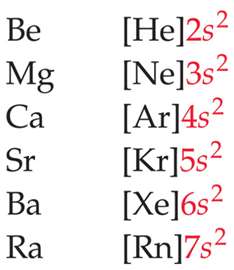
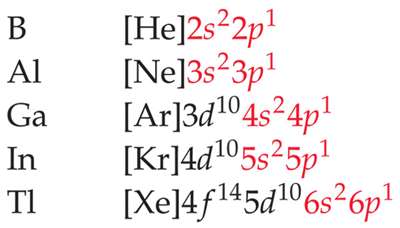
Condensed electron configurations use noble gas notation to simplify the representation of core electrons. Elements in the same group have similar valence electron configurations, leading to similar chemical properties.
Periodic Trends in Atomic and Ionic Properties
Atomic Radius
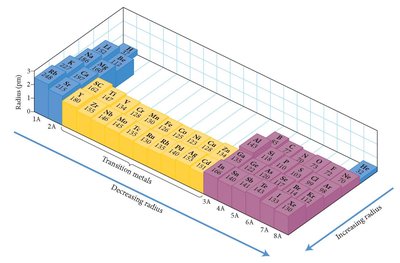
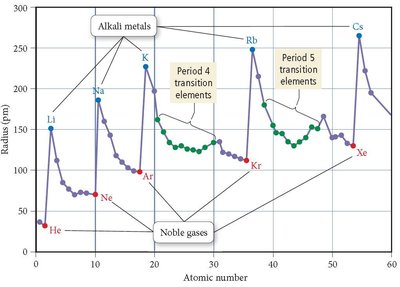
The atomic radius is determined by the distance between nuclei in bonded atoms or in a crystal lattice. Within a group, atomic radius increases from top to bottom; within a period, it decreases from left to right due to increasing effective nuclear charge.
Effective Nuclear Charge and Shielding
Effective nuclear charge (Zeff) is the net positive charge experienced by valence electrons, accounting for shielding by core electrons. It is calculated as , where is the shielding constant.
Ionic Radius
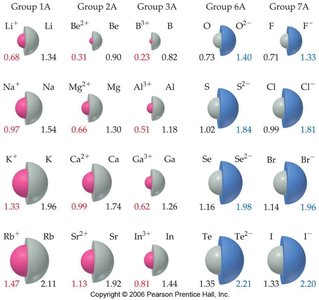
Cations are smaller than their parent atoms due to loss of electrons and reduced electron-electron repulsion. Anions are larger than their parent atoms due to increased electron-electron repulsion.
Ionization Energy
Definition and Trends
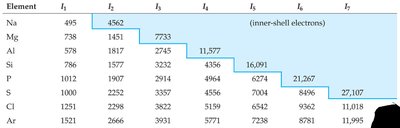
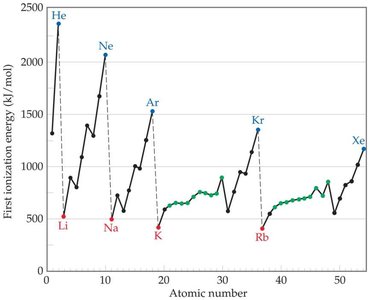
Ionization energy is the energy required to remove an electron from a gaseous atom or ion. First ionization energy generally increases across a period and decreases down a group. Successive ionization energies increase as more electrons are removed.

Electron Affinity
Definition and Trends
Electron affinity is the energy change when an electron is added to a gaseous atom. Elements with high electron affinity (e.g., halogens) readily gain electrons, while noble gases have low or positive electron affinity.

Metallic Character
Trends in Metallic Character
Metallic character increases down a group and decreases across a period. Metals tend to lose electrons, while nonmetals tend to gain electrons. Metalloids exhibit properties intermediate between metals and nonmetals.
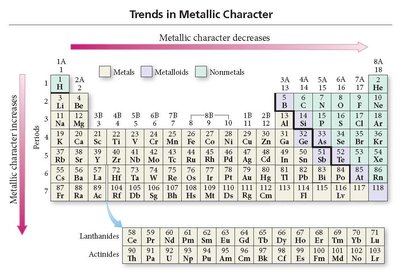
Summary Table: Key Periodic Properties
Property | Trend Across Period | Trend Down Group |
|---|---|---|
Atomic Radius | Decreases | Increases |
Ionization Energy | Increases | Decreases |
Electron Affinity | Generally increases | Generally decreases |
Metallic Character | Decreases | Increases |
Example: Sodium (Na) has a larger atomic radius and lower ionization energy than chlorine (Cl), making it more metallic and reactive as a metal.
