 Indietro
Periodic Trends of the Elements: Electron Configurations and Properties
Guida di studio - Note intelligenti
 Appunti personalizzati basati sui tuoi materiali, ampliati con definizioni chiave, esempi e contesto.
Periodic Trends of the Elements
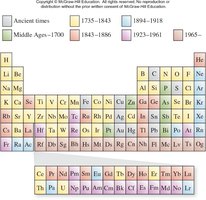
Development of the Periodic Table
The periodic table is a systematic arrangement of elements based on their atomic number and properties. Its development began with early observations of recurring chemical properties and culminated in the modern table, which organizes elements by atomic number and electron configuration.
Law of Octaves: John Newlands observed that every eighth element had similar properties when arranged by atomic number.
Mendeleev's Periodicity: Dmitri Mendeleev grouped elements by properties and predicted undiscovered elements.
Moseley's Contribution: Henry Moseley established the correlation between atomic number and X-ray frequency, resolving inconsistencies in the table.
Electron Configurations
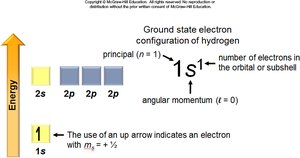
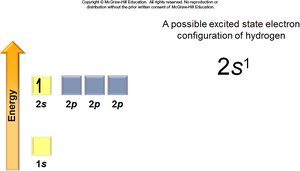
Electron configuration describes the distribution of electrons in atomic orbitals. The arrangement follows specific rules and principles, which determine the chemical properties of elements.
Ground State: Electrons occupy the lowest energy orbitals available.
Excited State: Electrons may occupy higher energy orbitals temporarily.
Energies of Atomic Orbitals in Many-Electron Systems
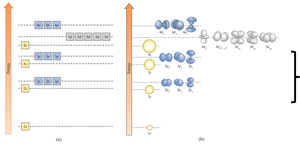
In atoms with multiple electrons, energy levels split into subshells (e.g., 3s, 3p, 3d), each with distinct energies. This splitting is crucial for understanding electron arrangements and chemical behavior.
Quantum Numbers and the Pauli Exclusion Principle
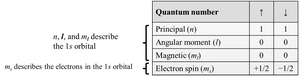
Each electron in an atom is described by four quantum numbers: principal (n), angular momentum (l), magnetic (ml), and spin (ms). The Pauli exclusion principle states that no two electrons in an atom can have the same set of four quantum numbers.
The Aufbau Principle
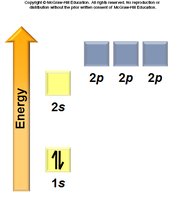
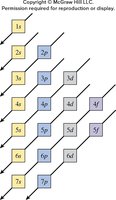
Electrons fill orbitals starting with the lowest energy levels before moving to higher ones. The order of filling is determined by the increasing energy of subshells.
Example: Lithium (Li) has three electrons; the third electron occupies the next available lowest energy orbital.
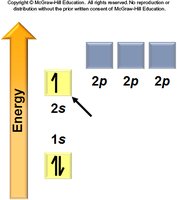
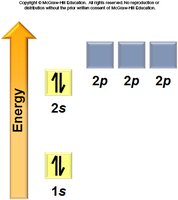
Example: Beryllium (Be) and Boron (B) follow similar filling patterns.
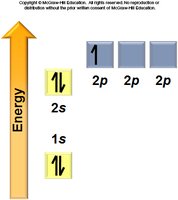
Hund’s Rule
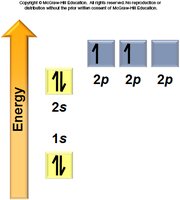
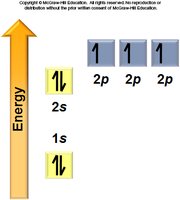
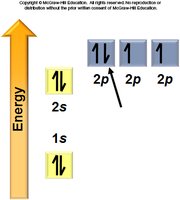
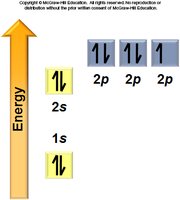
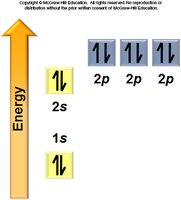
Hund’s rule states that electrons will occupy degenerate orbitals singly with parallel spins before pairing. This maximizes the number of unpaired electrons and stabilizes the atom.
Example: Carbon (C), Nitrogen (N), Oxygen (O), and Fluorine (F) demonstrate Hund’s rule in their 2p orbital filling.
General Rules for Writing Electron Configurations
Electrons fill orbitals in order of increasing energy.
Each orbital holds a maximum of two electrons.
Electrons occupy degenerate orbitals singly before pairing.
Electron Configurations and the Periodic Table
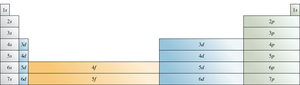
The periodic table reflects the electron configurations of elements. Noble gas notation is used to simplify configurations, and the table is divided into blocks (s, p, d, f) based on the subshell being filled.
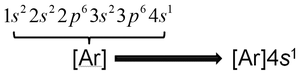
Noble Gas Core: Electron configurations can be abbreviated using the nearest noble gas.
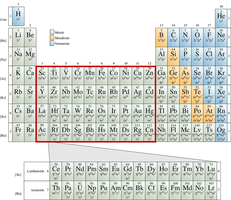
Transition Metals: Groups 3–11 are transition metals, filling d subshells.
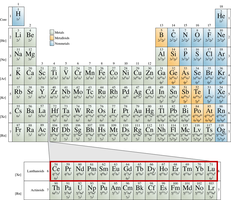
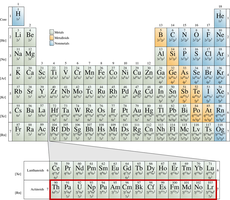
Lanthanides and Actinides: These series fill f subshells.
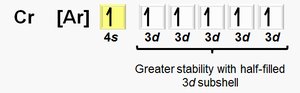
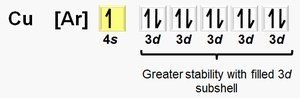
Exceptions: Some transition metals (e.g., Cr, Cu) have anomalous electron configurations due to stability of half-filled or fully filled d subshells.
Classification of Elements
Elements are classified as main group elements, transition metals, lanthanides, actinides, and noble gases based on their electron configurations and properties.
Main Group Elements: Groups 1, 2, and 13–17.
Noble Gases: Group 18, with completely filled p subshells.
Transition Metals: Groups 3–11, filling d subshells.
Lanthanides and Actinides: f-block elements.
Effective Nuclear Charge
Effective nuclear charge (Zeff) is the net positive charge experienced by an electron in a multi-electron atom. It is influenced by both the attraction to the nucleus and repulsion from other electrons (shielding).
Formula:
Z is the atomic number; σ is the shielding constant.
Zeff increases left to right across a period and changes little down a group.
Periodic Trends in Properties of Elements
Atomic Radius
Atomic radius is the distance from the nucleus to the valence shell. It varies based on metallic or covalent bonding.
Increases down a group (higher n, outer shell farther from nucleus).
Decreases left to right across a period (higher Zeff pulls electrons closer).
Ionization Energy
Ionization energy is the minimum energy required to remove an electron from an atom in the gas phase. It increases with Zeff and decreases with increasing atomic radius.
Increases left to right across a period.
Decreases down a group.
Higher for electrons in lower energy subshells and for paired electrons due to repulsion.
Electron Affinity
Electron affinity is the energy released when an atom in the gas phase accepts an electron. It increases left to right across a period and is higher for elements with higher Zeff.
Easier to add electrons to s orbitals than p orbitals.
Easier to add electrons to empty orbitals than to already occupied ones.
Metallic Character
Metallic character describes the tendency of an element to exhibit properties typical of metals, such as conductivity, malleability, and low ionization energy.
Metals: Shiny, malleable, good conductors, low ionization energy.
Nonmetals: Dull, brittle, poor conductors, high electron affinity.
Metalloids: Intermediate properties.
Electron Configuration of Ions
To write the electron configuration of ions, add electrons for anions and remove electrons for cations. For d-block elements, electrons are removed first from the highest n shell.
Isoelectronic Species: Ions with identical electron configurations to noble gases.
Ionic Radius
Ionic radius is the radius of a cation or anion. Cations are smaller than their parent atoms due to loss of electrons and reduced repulsion; anions are larger due to increased repulsion.
Comparing Ionic Radius with Atomic Radius
When atoms gain electrons to become anions, their radius increases. When they lose electrons to become cations, their radius decreases.
Isoelectronic Series
An isoelectronic series consists of species with identical electron configurations but different nuclear charges. The radius decreases as nuclear charge increases.
Summary of Key Points
Development and structure of the periodic table
Electron configurations and principles (Pauli, Aufbau, Hund's rule)
Classification of elements and periodic table blocks
Effective nuclear charge and periodic trends (atomic radius, ionization energy, electron affinity, metallic character)
Electron configurations of ions, ionic radius, and isoelectronic series
