 Indietro
Quantum-Mechanical Model of the Atom: Study Notes for General Chemistry
Guida di studio - Note intelligenti
 Appunti personalizzati basati sui tuoi materiali, ampliati con definizioni chiave, esempi e contesto.
The Quantum-Mechanical Model of the Atom
Introduction
The quantum-mechanical model is a fundamental theory in chemistry that explains the behavior of electrons in atoms. It incorporates both the wave and particle nature of electrons and provides a framework for understanding atomic structure, electron configurations, and the properties of elements.
Wave Nature of Light and Electromagnetic Radiation
Electromagnetic Radiation
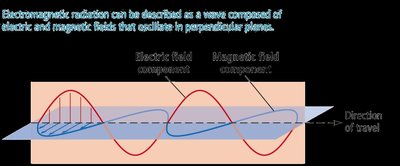
Electromagnetic radiation includes light, x-rays, microwaves, and radio waves. It is a form of radiant energy that travels through a vacuum at the speed of light, c = 3.00 × 10⁸ m/s. Electromagnetic waves have both electric and magnetic components oscillating perpendicular to each other.
Speed of Light (c):
Electric and Magnetic Fields: Oscillate in perpendicular planes.
Wave Characteristics: Wavelength, Amplitude, and Frequency
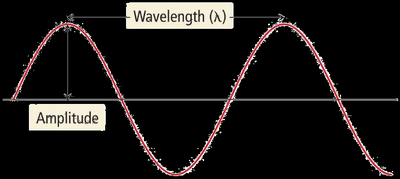
Waves are characterized by their wavelength (λ), amplitude, and frequency (ν).
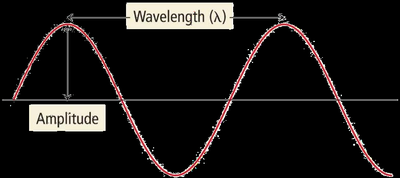
Wavelength (λ): The distance between successive peaks or troughs. Units: meters (m), nanometers (nm).
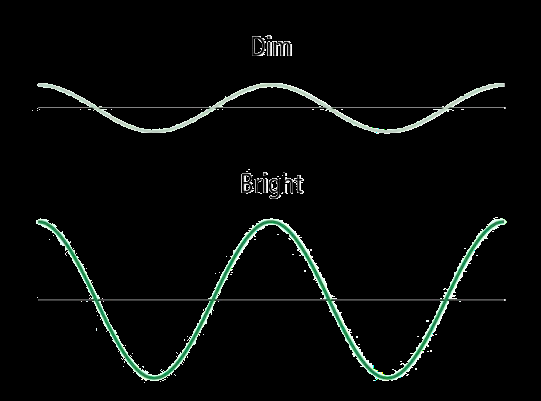
Amplitude: The height of the wave from the node to the crest. Determines the intensity of radiation.
Frequency (ν): The number of cycles a wave undergoes per second. Units: s-1 or Hz (hertz).
Relationship Between Wavelength, Frequency, and Speed
The speed of a wave is given by the product of its wavelength and frequency:
Wave Speed Equation:
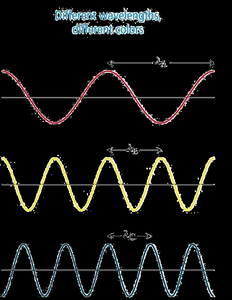
Inverse relationship: As wavelength increases, frequency decreases.
Electromagnetic Spectrum
Overview of the Spectrum
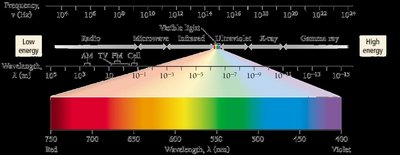
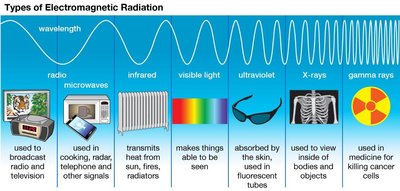
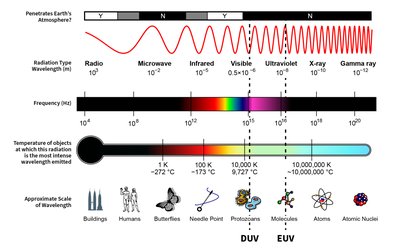
The electromagnetic spectrum ranges from long-wavelength, low-frequency, low-energy waves (radio waves) to short-wavelength, high-frequency, high-energy waves (gamma rays). Visible light is a small portion of this spectrum.
Long Wavelengths: Radio, microwave, infrared
Short Wavelengths: Ultraviolet, X-ray, gamma ray
Visible Light: 400–750 nm; colors range from red (longer λ) to violet (shorter λ)
Applications of Electromagnetic Radiation
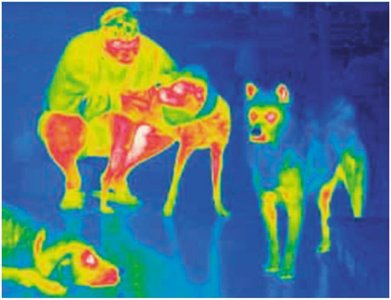
Infrared: Used in thermal imaging to detect heat signatures.
X-rays: Used in medical imaging to view inside bodies.
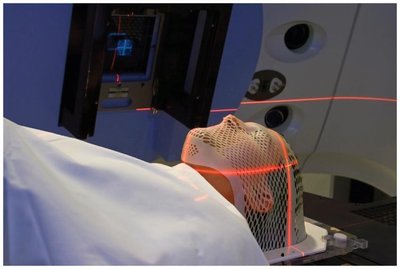
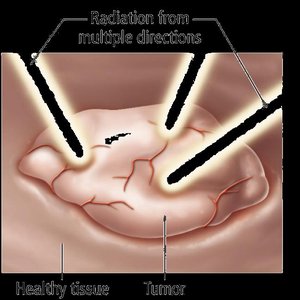
Gamma rays: Used in radiation therapy for cancer treatment.

Wave-Particle Duality and Quantum Theory
Interference and Diffraction
Waves can interact through interference and diffraction. Constructive interference occurs when waves add together, while destructive interference occurs when they cancel each other. Diffraction is the bending of waves around obstacles.
Constructive Interference: Waves in-phase add to make a larger wave.
Destructive Interference: Waves out-of-phase cancel each other.
Diffraction: Waves bend around obstacles or openings.
Photoelectric Effect
The photoelectric effect demonstrates the particle nature of light. When light shines on a metal surface, electrons are emitted if the light has a minimum threshold frequency. Einstein explained this by proposing that light energy is delivered in packets called photons.
Threshold Frequency: Minimum frequency required to eject electrons.
Energy of a Photon:
Planck's Constant:
Photon Energy and Wavelength:
Atomic Spectroscopy and Bohr's Model
Emission and Absorption Spectra
Atoms emit light when excited, producing an emission spectrum unique to each element. The emission spectrum is non-continuous and reveals characteristic wavelengths. Flame tests and spectroscopy are used to identify elements.
Emission Spectrum: Unique pattern of light emitted by an atom.
Absorption Spectrum: Pattern of light absorbed by an atom.
Bohr's Model of the Atom
Bohr's model describes electrons orbiting the nucleus in quantized energy levels. Electrons emit or absorb photons when transitioning between energy levels.
Energy Levels: (ground state), or higher (excited states), (zero-energy state)
Energy of an Electron in Hydrogen:
Electron Transitions:
Photon Wavelength:
Wave Nature of Matter and Quantum Mechanics
de Broglie Wavelength
Louis de Broglie proposed that particles such as electrons have wave properties. The wavelength of a particle is given by:
de Broglie Equation:
Where is mass and is velocity.
Heisenberg's Uncertainty Principle
The uncertainty principle states that it is impossible to know both the position and velocity of a particle simultaneously with absolute precision.
Uncertainty Principle:
Position and velocity are complementary properties.
Schrödinger's Wave Equation
Schrödinger's equation describes the behavior of electrons as wave functions (Ψ). The square of the wave function () gives the probability density of finding an electron in a particular region.
Schrödinger Equation:
Probability Density: Regions of high probability for electron location.
Quantum Numbers and Atomic Orbitals
Quantum Numbers
Quantum numbers describe the size, shape, orientation, and spin of atomic orbitals.
Principal Quantum Number (n): Energy level;
Angular Momentum Quantum Number (l): Shape of orbital;
Magnetic Quantum Number (ml): Orientation;
Spin Quantum Number (ms): Electron spin;
Quantum Number | Values | Significance |
|---|---|---|
Principal, n | 1, 2, 3, ... | Distance from nucleus |
Angular momentum, l | 0, 1, ..., n-1 | Shape of orbital |
Magnetic, ml | -l, ..., 0, ..., +l | Orientation of orbital |
Spin, ms | -½, +½ | Direction of electron spin |
Shapes of Atomic Orbitals
Atomic orbitals have distinct shapes based on their quantum numbers:
s-orbital: Spherical;
p-orbital: Dumbbell-shaped;
d-orbital: Mainly 4-lobed;
f-orbital: Mainly 8-lobed;
Summary Table: Quantum Numbers
Quantum Number | Symbol | Allowed Values | Physical Meaning |
|---|---|---|---|
Principal | n | 1, 2, 3, ... | Energy level, size of orbital |
Angular Momentum | l | 0, 1, ..., n-1 | Shape of orbital |
Magnetic | ml | -l to +l | Orientation in space |
Spin | ms | +½, -½ | Spin direction |
Additional info: These notes expand on the original lecture slides by providing full academic explanations, formulas, and context for each topic. All included images directly reinforce the concepts discussed in the adjacent paragraphs.
