 Indietro
Saturated Solutions, Solubility, and Factors Affecting Solubility
Guida di studio - Note intelligenti
 Appunti personalizzati basati sui tuoi materiali, ampliati con definizioni chiave, esempi e contesto.
Saturated Solutions and Solubility
Definition of Solubility and Saturated Solutions
Solubility is defined as the maximum amount of a solute that can dissolve in a given quantity of solvent at a specific temperature, resulting in a saturated solution. In a saturated solution, the dissolved solute is in dynamic equilibrium with the undissolved solute, meaning the rate of dissolution equals the rate of precipitation.
Saturated Solution: Contains the maximum concentration of solute that can dissolve at equilibrium at a given temperature.
Dynamic Equilibrium: The process where solute particles dissolve and precipitate at equal rates.
Example: The solubility of NaCl in water at 25 °C is approximately 35 g per 100 mL of water.
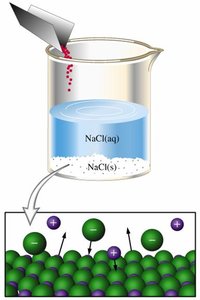
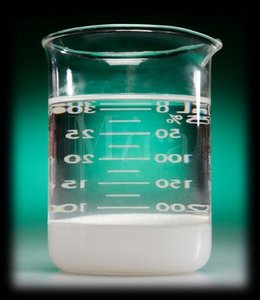
Measuring Solubility: The concentration of dissolved solute in a saturated solution can be measured to determine solubility, provided equilibrium conditions are maintained.
Unsaturated and Supersaturated Solutions
Solutions can also be classified based on the amount of solute relative to the solubility limit:
Unsaturated Solution: Contains less solute than the solubility limit; more solute can dissolve.
Supersaturated Solution: Contains more solute than the solubility limit; these are unstable and excess solute will precipitate if disturbed.
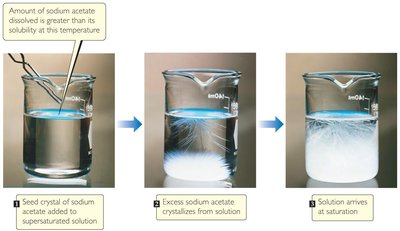
Example: Adding a seed crystal to a supersaturated solution causes rapid crystallization until saturation is reached.
Factors Affecting Solubility
Polarity and the Principle of 'Like Dissolves Like'
The solubility of substances depends largely on the nature of the solute and solvent, particularly their polarity:
Polar solutes dissolve well in polar solvents due to dipole-dipole interactions (e.g., ethanol in water).
Ionic solids dissolve in polar solvents due to ion-dipole forces (e.g., NaCl in water).
Nonpolar solutes dissolve in nonpolar solvents (e.g., iodine in carbon tetrachloride).
Miscibility: Liquids that mix in all proportions are called miscible; those that do not are immiscible.
Examples of Miscibility
1-Butanol (C4H9OH): Moderately polar, limited miscibility with water.
Hexane (C6H14): Nonpolar, immiscible with water.
Ethanol (C2H5OH): Highly polar, completely miscible with water.
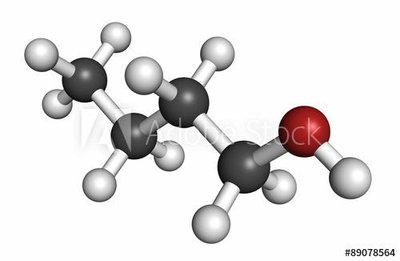
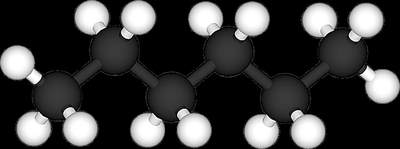
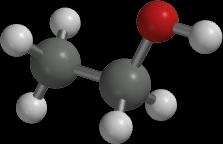
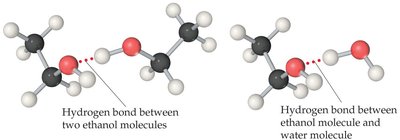
Solubility of Alcohols in Water and Hexane
The solubility of alcohols in water decreases as the hydrocarbon chain length increases, due to the decreasing influence of the polar -OH group relative to the nonpolar hydrocarbon chain.
Alcohol | Solubility in H2O | Solubility in C6H14 |
|---|---|---|
Methanol (CH3OH) | ∞ | 0.12 |
Ethanol (CH3CH2OH) | ∞ | ∞ |
Propanol (CH3CH2CH2OH) | ∞ | ∞ |
Butanol (CH3CH2CH2CH2OH) | 0.11 | ∞ |
Pentanol (CH3CH2CH2CH2CH2OH) | 0.030 | ∞ |
Hexanol (CH3CH2CH2CH2CH2CH2OH) | 0.0058 | ∞ |
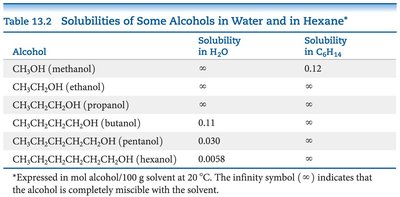
Additional info: The infinity symbol (∞) indicates complete miscibility.
Solubility of Vitamins
Vitamins can be classified based on their solubility:
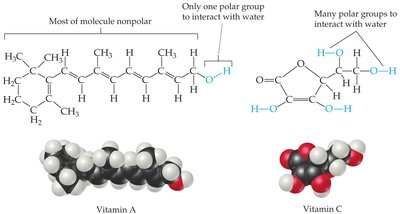
Fat-soluble vitamins (A, D, E, K): Nonpolar, not soluble in water, stored in fatty tissues.
Water-soluble vitamins (B, C): Polar, soluble in water, not stored in the body to a significant extent.
Solubility of Gases and Temperature Effects
Henry's Law
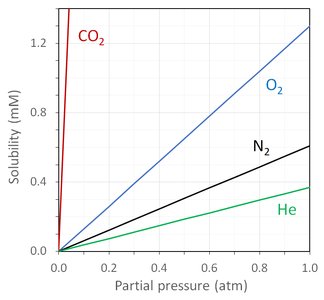
The solubility of a gas in a liquid is directly proportional to the partial pressure of the gas above the solution. This relationship is described by Henry's Law:
Henry's Law Equation:
Sg: Solubility of the gas (mol/L)
k: Henry's Law constant (mol/L·atm)
Pg: Partial pressure of the gas (atm)
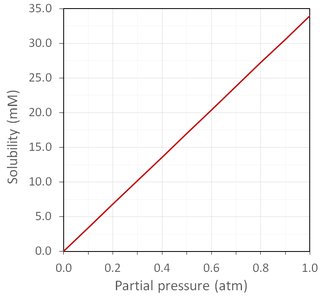
Example: The solubility of O2 in water at 20 °C and 1 atm is mol/L, which is greater than that of N2 under the same conditions.
Why Gas Solubility Depends on Pressure
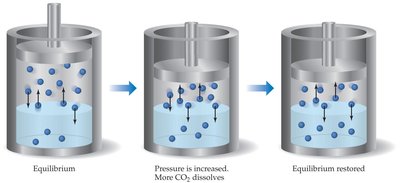
Increasing the pressure of a gas above a liquid increases the number of gas molecules colliding with the surface, leading to more gas dissolving until equilibrium is re-established.
Temperature Effects on Solubility
The solubility of solids and gases in liquids is affected differently by temperature:
Solids: Solubility generally increases with temperature.
Gases: Solubility decreases with increasing temperature.

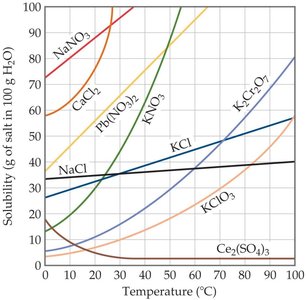
Entropy Considerations: The entropy of a gas is much greater than that of a solid or solution, so increasing temperature favors the escape of gas from solution.
Summary Table: Factors Affecting Solubility
Factor | Effect on Solubility of Solids | Effect on Solubility of Gases |
|---|---|---|
Increasing Temperature | Usually increases | Decreases |
Increasing Pressure | No significant effect | Increases (per Henry's Law) |
Polarity | "Like dissolves like" | More soluble in polar solvents if gas is polar |
