 Indietro
Solids and Modern Materials: Classification, Structure, and Properties
Guida di studio - Note intelligenti
 Appunti personalizzati basati sui tuoi materiali, ampliati con definizioni chiave, esempi e contesto.
Solids and Modern Materials
Classification and Structures of Solids
Solids are classified based on the nature of their bonding and structural organization. Understanding these classifications is essential for predicting their properties and applications.
Metallic solids: Held together by a 'sea' of collectively shared electrons, resulting in high electrical and thermal conductivity.
Ionic solids: Composed of cations and anions attracted by electrostatic forces; typically have high melting points and are brittle.
Covalent-network solids: Atoms are joined by an extensive network of covalent bonds, leading to very high melting points and hardness.
Molecular solids: Consist of discrete molecules held together by weak intermolecular forces (dispersion, dipole-dipole, hydrogen bonds).
Polymers: Long chains of atoms connected by covalent bonds, with chains linked by weak forces; exhibit unique properties compared to small molecules or metals.
Nanomaterials: Crystalline compounds with crystal sizes in the 1–100 nm range, resulting in distinct properties from larger crystals.
Organization of Solids
Solids can be either crystalline or amorphous, depending on the arrangement of their constituent particles.
Crystalline solids: Exhibit a regular, repeating pattern of atoms; most studied by chemists due to their predictable properties.
Amorphous solids: Lack long-range order in atomic arrangement.
Unit Cells and Crystal Lattices
The structure of crystalline solids is defined by their unit cell and crystal lattice.
Unit cell: The smallest repeating unit that defines the structure of the solid.
Crystal lattice: The geometric arrangement of unit cells in two or three dimensions.
Lattice points: Positions that define the overall structure.
Lattice vectors (a, b, c): Connect lattice points and define the unit cell dimensions.
Types of Crystal Lattices
There are seven basic three-dimensional lattices: cubic, tetragonal, orthorhombic, rhombohedral, hexagonal, monoclinic, and triclinic. Cubic lattices are further divided into:
Primitive (simple) cubic: Atoms only at lattice points.
Body-centered cubic: Atoms at corners and one in the center.
Face-centered cubic: Atoms at corners and centers of each face.
Motifs
Motifs are groups of atoms that define the overall structure, even if not all atoms are located at lattice points.
Metallic Solids
Structure and Packing
Metals often adopt cubic unit cells, and their atoms pack closely together to maximize density.
Hexagonal close-packed (HCP): Layers stack in an ABAB pattern.
Cubic close-packed (CCP): Layers stack in an ABCABC pattern; identical to face-centered cubic.
Coordination number: Number of nearest neighbors to each atom.
Alloys
Alloys are mixtures of metals with other elements to modify properties.
Substitutional alloys: Second element replaces metal atoms.
Interstitial alloys: Second element fills spaces in the lattice.
Heterogeneous alloys: Components are not uniformly dispersed.
Intermetallic compounds: Ordered structures with definite composition, often more brittle.
Metallic Bonding
Electron-Sea Model and Molecular Orbital Theory
Metallic bonding is explained by the electron-sea model and molecular orbital (MO) theory.
Electron-sea model: Metals are viewed as cations in a sea of delocalized electrons, accounting for conductivity, ductility, and malleability.
MO theory: Atomic orbitals combine to form molecular orbitals extending over the entire metal, resulting in energy bands.
Ionic Solids
Structure and Properties
Ionic solids are held together by electrostatic attractions and exhibit high melting points, brittleness, and electrical insulation.
Lattice energy: Determines melting and boiling points.
Common structures: CsCl, NaCl (rock salt), ZnS (zinc blende).
Radius ratio: The size of cation relative to anion affects structure.
Coordination number: Number of ions surrounding a given ion.
Molecular and Covalent-Network Solids
Molecular Solids
Molecular solids are held together by intermolecular forces, and their properties depend on molecular shape and packing.
Boiling point: Influenced by packing efficiency.
Lubrication: Graphite's sliding planes allow for lubrication.
Covalent-Network Solids
Atoms are covalently bonded in a continuous network, resulting in high melting points and hardness. Diamond is a classic example.
Semiconductors
Band Theory and Doping
Semiconductors have a band gap between the valence and conduction bands. Conductivity is modified by doping.
n-type: Extra electrons increase conductivity.
p-type: Fewer electrons create 'holes' that carry charge.
Polymers
Types and Properties
Polymers are large molecules formed from repeating monomer units. They can be natural or synthetic, and their properties depend on structure and processing.
Thermoplastics: Can be melted and reshaped.
Thermosetting plastics: Shaped by irreversible chemical reactions.
Elastomers: Stretch and return to shape unless overstretched.
Polymerization Mechanisms
Addition polymers: Formed by breaking a bond and making new bonds between monomers. Example: Polyethylene.
Condensation polymers: Formed by joining two molecules and removing a small molecule (often water). Example: Nylon.
Examples of Addition Polymers
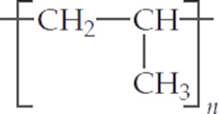
Polypropylene: Repeating unit contains a methyl group.
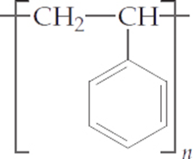
Polystyrene: Repeating unit contains a phenyl group.
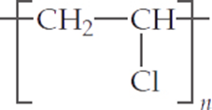
Polyvinyl chloride (PVC): Repeating unit contains a chlorine atom.
Examples of Condensation Polymers
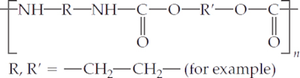
Nylon: Formed from diamine and dicarboxylic acid monomers.
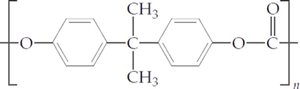
Polycarbonate: Formed from bisphenol A and phosgene.
Bulk Properties and Crystallinity
Polymer chains can vary in length and degree of order, affecting material properties.
Crystallinity: Ordered regions increase density, hardness, and heat resistance.
Crosslinking: Chemical bonds between chains (e.g., vulcanization) increase strength.
Nanomaterials
Properties and Applications
Nanomaterials have dimensions of 1–100 nm and exhibit unique properties due to quantum effects and high surface area.
Quantum dots: Semiconductor nanomaterials with tunable band gaps and colors.
Metal nanoparticles: Exhibit different optical and chemical properties compared to bulk metals.
Carbon allotropes: Includes buckminsterfullerene (buckyballs), carbon nanotubes, and graphene, each with distinct structures and properties.
Carbon Nanomaterials
Buckyballs: Spherical molecules resembling a soccer ball.
Carbon nanotubes: Cylindrical structures with metallic or semiconducting properties; extremely strong.
Graphene: Single layer of graphite; highly conductive.
Summary Table: Types of Solids
Type | Bonding | Properties | Examples |
|---|---|---|---|
Metallic | Delocalized electrons | Conductive, malleable | Iron, copper |
Ionic | Electrostatic | Brittle, high melting point | NaCl, CsCl |
Covalent-network | Covalent bonds | Hard, high melting point | Diamond, SiO2 |
Molecular | Intermolecular forces | Soft, low melting point | Ice, CO2 |
Polymer | Covalent chains | Flexible, variable | Polyethylene, nylon |
Nanomaterial | Varied | Unique optical/electrical | Quantum dots, graphene |
Additional info: Academic context was added to clarify polymerization mechanisms, nanomaterial properties, and the summary table for completeness.
