 Indietro
Solutions and Aqueous Reactions: Structure, Properties, and Calculations
Guida di studio - Note intelligenti
 Appunti personalizzati basati sui tuoi materiali, ampliati con definizioni chiave, esempi e contesto.
Introduction to Solutions and Aqueous Reactions
What Is a Solution?
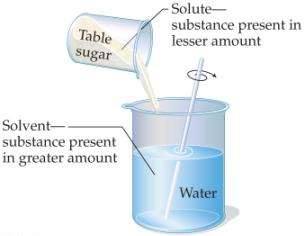
A solution is a homogeneous mixture of two or more substances. The substance present in the greatest amount is called the solvent, while the substance present in a lesser amount is the solute. For example, when sugar is dissolved in water, water acts as the solvent and sugar as the solute.
Solvent: The component present in greater quantity.
Solute: The component present in lesser quantity.
Homogeneous mixture: Uniform composition throughout.
Aqueous solution: Water is the solvent; the most common type of solution.
Common Types of Solutions
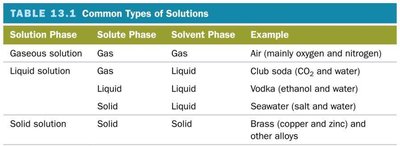
Solutions can exist in various phases depending on the physical states of the solute and solvent. The table below summarizes common types of solutions:
Solution Phase | Solute Phase | Solvent Phase | Example |
|---|---|---|---|
Gaseous solution | Gas | Gas | Air (mainly oxygen and nitrogen) |
Liquid solution | Gas | Liquid | Club soda (CO2 and water) |
Liquid solution | Liquid | Liquid | Vodka (ethanol and water) |
Liquid solution | Solid | Liquid | Seawater (salt and water) |
Solid solution | Solid | Solid | Brass (copper and zinc) |
Solution Concentration
Concentrated vs. Dilute Solutions
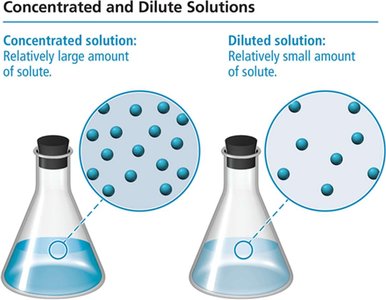
The concentration of a solution describes the relative amount of solute present. A dilute solution contains a small amount of solute compared to the solvent, while a concentrated solution contains a large amount of solute.
Dilute solution: Low solute-to-solvent ratio.
Concentrated solution: High solute-to-solvent ratio.
Molarity (M): Quantitative Measure of Concentration
Molarity (M) is the most common unit for expressing solution concentration in chemistry. It is defined as the number of moles of solute per liter of solution:
Formula:
Units: mol/L
Preparing Solutions of Specified Molarity
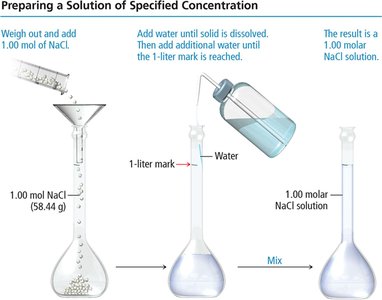
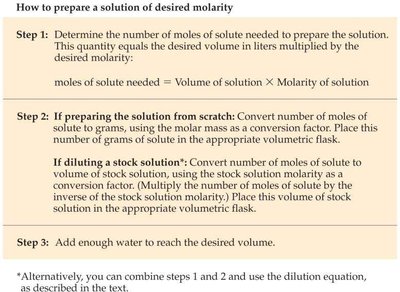
To prepare a solution of a desired molarity, follow these steps:
Calculate the moles of solute needed: moles = volume (L) × molarity (M)
If preparing from scratch, convert moles to grams using molar mass.
If diluting a stock solution, use the dilution equation:
Add enough solvent to reach the desired volume.
Using Molarity in Calculations
Molarity as a Conversion Factor
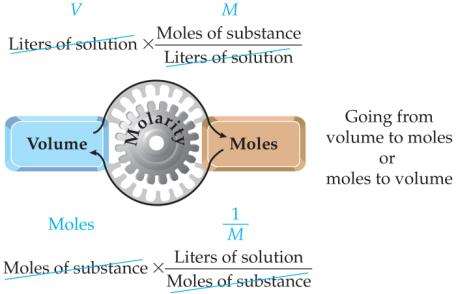
Molarity allows conversion between moles of solute and volume of solution:
From volume to moles:
From moles to volume:


Sample Calculations
To find molarity:
To find volume:
To find moles:

Solution Dilution
Preparing Dilute Solutions from Stock Solutions
Stock solutions are concentrated solutions used to prepare more dilute solutions. The amount of solute remains constant; only the volume changes. The dilution equation is:
Where and are the molarity and volume of the stock solution, and and are those of the diluted solution.

Solution Stoichiometry
Stoichiometry in Aqueous Reactions
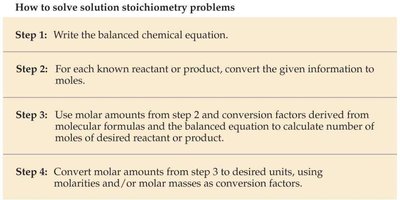
Stoichiometry involves calculating the amounts of reactants and products in chemical reactions. In solution stoichiometry, molarity is used to convert between volume and moles. The general strategy is:
Write the balanced chemical equation.
Convert known quantities to moles.
Use stoichiometric ratios to find moles of desired substance.
Convert moles to desired units (volume, mass, etc.).

Solubility and Types of Aqueous Solutions
Solute-Solvent Interactions
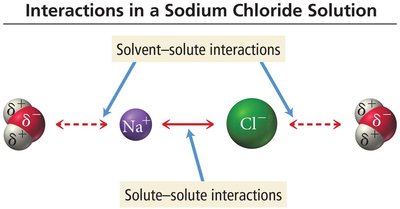
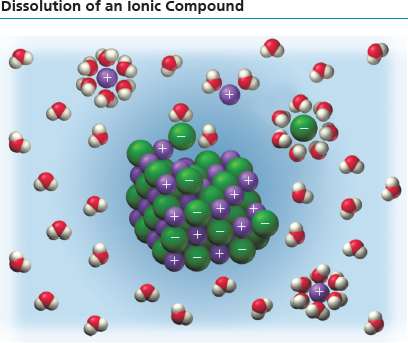
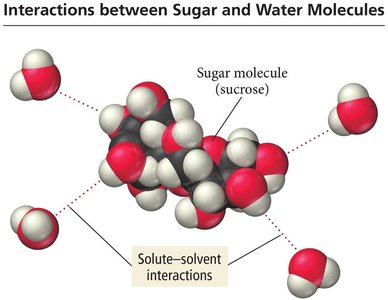
The dissolution of a solute in a solvent depends on the strength of solute-solute, solvent-solvent, and solute-solvent interactions. If solute-solvent interactions are strong enough, the solute will dissolve.

Dissolution of Ionic and Molecular Compounds
Ionic compounds: Dissolve by separating into ions, which are surrounded by water molecules.
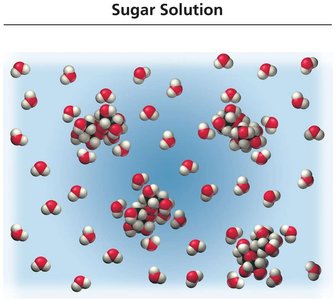
Molecular compounds (e.g., sugar): Dissolve as intact molecules, not ions.
Electrolyte and Nonelectrolyte Solutions
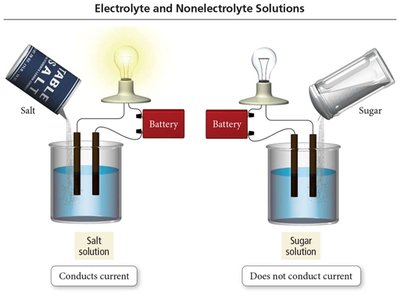
Electrolytes: Solutions containing ions that conduct electricity (e.g., salt solutions).
Nonelectrolytes: Solutions with no ions, do not conduct electricity (e.g., sugar solutions).

Summary
Solutions are homogeneous mixtures of solute and solvent.
Molarity is the key unit for solution concentration.
Stoichiometry in solution relies on molarity for conversions.
Solubility depends on the balance of intermolecular forces.
Electrolyte solutions conduct electricity; nonelectrolyte solutions do not.
Additional info: The notes above expand on brief points with academic context, definitions, and examples to ensure completeness and clarity for exam preparation.
