 Indietro
The Mole, Avogadro’s Number, Molar Mass, and Chemical Formulas
Guida di studio - Note intelligenti
 Appunti personalizzati basati sui tuoi materiali, ampliati con definizioni chiave, esempi e contesto.
The Mole and Avogadro’s Number
Definition and Significance
The mole is a fundamental unit in chemistry used to express amounts of a chemical substance. It allows chemists to relate microscopic atomic and molecular quantities to macroscopic laboratory measurements. The mole is defined as the amount of substance containing as many elementary entities (atoms, molecules, ions, etc.) as there are atoms in exactly 12 grams of carbon-12.
Avogadro’s Number (NA): The number of particles in one mole is .
Analogy: Just as a dozen means 12 items, a mole means items.
Scale: The mole is an extremely large number; for example, 1 mole of hockey pucks would equal the mass of the moon, 1 mole of basketballs would fill a bag the size of the earth, and 1 mole of pennies would cover the Earth 1/4 mile deep.



Example: 1 mole of carbon atoms is atoms and weighs exactly 12 grams.
Converting Between Particles and Moles
To convert between the number of particles and moles, use Avogadro’s number as a conversion factor:
Number of moles = Number of particles
Number of particles = Number of moles

Molar Mass and the Periodic Table
Definition and Calculation
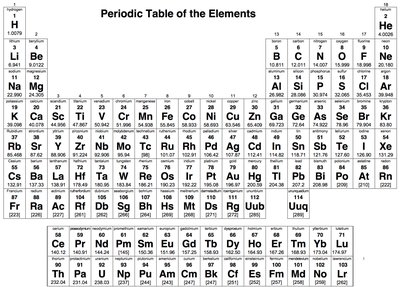
The molar mass of a substance is the mass in grams of one mole of that substance. It is numerically equal to the atomic or molecular mass in atomic mass units (amu), but expressed in grams per mole (g/mol).
Calculation: The molar mass of a compound is the sum of the molar masses of the atoms in its chemical formula.
Examples:
CO2: g/mol
H2O: g/mol
NaCl: g/mol
NaHCO3: g/mol
C12H22O11: g/mol
Mole Conversions and Unit Analysis
Converting Mass to Moles
To convert grams of a substance to moles, divide by the molar mass:
Formula:
Example: How many moles of carbon are in 26 g of carbon?

Converting Moles to Atoms or Molecules
To find the number of atoms or molecules in a given number of moles, multiply by Avogadro’s number and the number of atoms per formula unit:
Example: How many O atoms are present in 5.32 moles of chalk (CaCO3)?

Converting Moles to Molecules
Example: How many molecules are in 2.50 moles of C12H22O11?

Comprehensive Conversion Relationships
Conversions between mass, moles, molecules, and atoms are fundamental in chemistry. The relationships are summarized in the following diagram:

Empirical and Molecular Formulas
Definitions and Differences
The empirical formula is the simplest whole-number ratio of elements in a compound, while the molecular formula gives the actual number of atoms of each element in a molecule. The molecular formula is always a whole-number multiple of the empirical formula.
Example: Acetylene: Empirical formula = CH, Molecular formula = C2H2 (CH × 2)
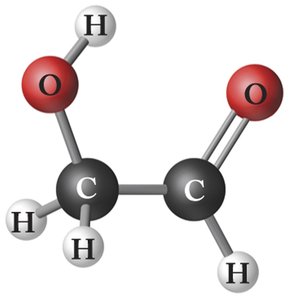
Many compounds can share the same empirical formula but have different molecular formulas. For example, glycolaldehyde (C2H4O2) and glucose (C6H12O6) both have the empirical formula CH2O.

Percentage Composition
Definition and Calculation
Percentage composition expresses the mass percent of each element in a compound. It is calculated as:
Example: To find the percent iron in iron(III) oxide (Fe2O3), assume 1 mole of compound and use the formula above.
Summary Table: Empirical vs. Molecular Formula
Substance | Molecular Formula | Empirical Formula |
|---|---|---|
Water | H2O | H2O |
Methane | CH4 | CH4 |
Benzene | C6H6 | CH |
Sulfur | S8 | S |
Glucose | C6H12O6 | CH2O |

Additional info: The notes cover core concepts from General Chemistry Chapter 4 (Chemical Reactions and Chemical Quantities), Chapter 3 (Molecules and Compounds), and Chapter 1 (Matter, Measurement & Problem Solving), including lab-relevant conversion techniques and formula relationships.
