 Indietro
Thermochemistry: Energy, Heat, and Work in Chemical Systems
Guida di studio - Note intelligenti
 Appunti personalizzati basati sui tuoi materiali, ampliati con definizioni chiave, esempi e contesto.
Thermochemistry
Nature of Energy
Thermochemistry is the study of the relationships between chemistry and energy, focusing on how energy is transferred during chemical reactions and physical changes. Energy is defined as the capacity to do work, and it can be transferred between objects through heat or work.
Work is a force acting over a distance:
Heat is the flow of energy caused by a temperature difference.
Energy can be exchanged between objects through direct contact, such as collisions.
Classification of Energy
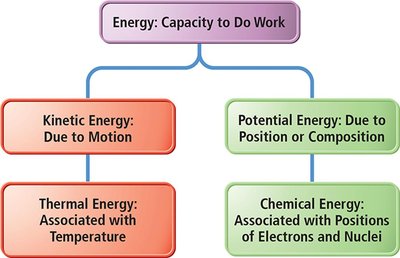
Energy can be classified based on its form and how it is stored or transferred:
Kinetic Energy: Energy due to motion. Includes thermal energy, which is associated with temperature.
Potential Energy: Energy stored due to position or composition. Chemical energy is a type of potential energy stored in the structure of atoms and molecules.
Energy Transformations
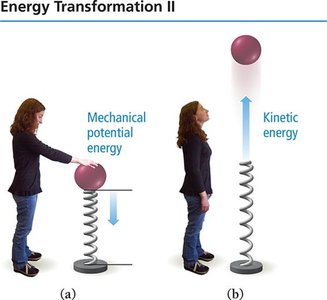
Energy can be transformed from one form to another. For example, mechanical potential energy can be converted to kinetic energy, as seen in a compressed spring releasing a ball.
Conservation of Energy
The law of conservation of energy states that energy cannot be created or destroyed, only transferred or converted from one form to another. The total energy of the universe remains constant.
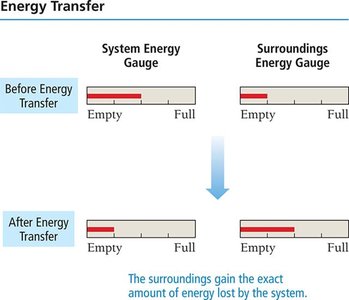
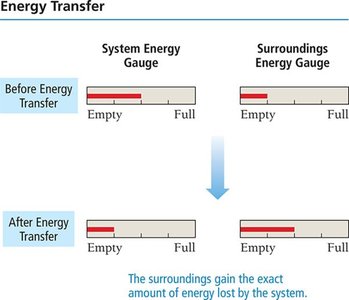
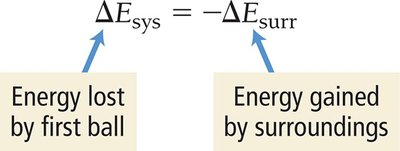
When energy is transferred between a system and its surroundings, the amount lost by one is gained by the other.
System and Surroundings
In thermochemistry, the system is the part of the universe being studied, while the surroundings are everything else. Energy exchange occurs between the system and surroundings.
Energy lost by the system is gained by the surroundings, and vice versa.
State Functions
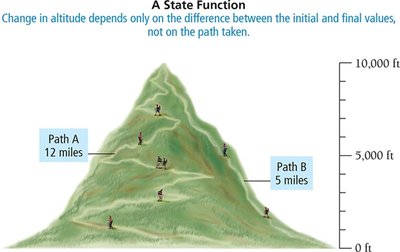
A state function is a property that depends only on the initial and final states of a system, not on the path taken. Internal energy (E) is a state function.
Example: The change in elevation when climbing a mountain depends only on the difference between the base and the peak, not the path taken.
Energy Flow in Chemical Reactions
During a chemical reaction, energy can be released or absorbed:
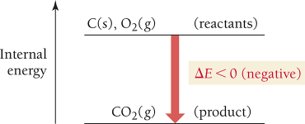
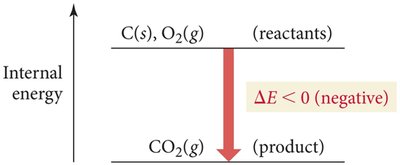
If the products have lower internal energy than the reactants, energy is released (exothermic reaction).
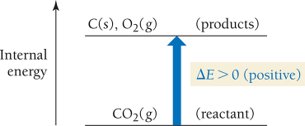
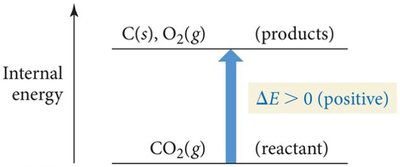
If the products have higher internal energy than the reactants, energy is absorbed (endothermic reaction).
Energy Flow: System and Surroundings
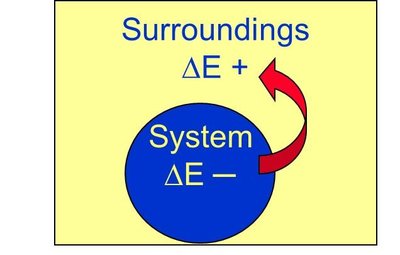
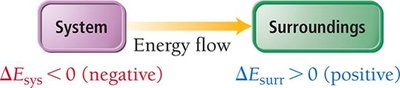
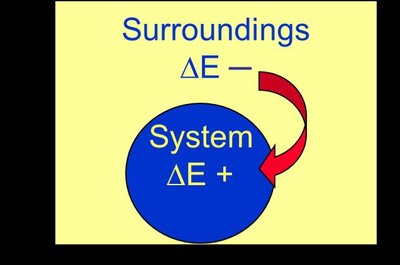
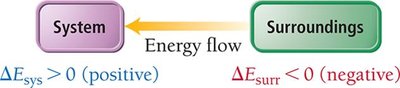
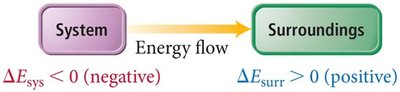
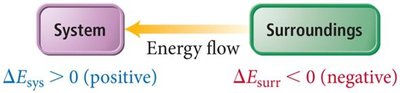
Energy flow is described by the sign of the change in internal energy ():
When energy flows out of the system, is negative and is positive.
When energy flows into the system, is positive and is negative.
Energy Diagrams
Energy diagrams visually represent the direction and magnitude of energy changes during a reaction.
Heat and Work
Energy is exchanged between the system and surroundings as heat (q) or work (w):
Heat and work are not state functions; their values depend on the process.
Examples: Billiard Ball Collisions
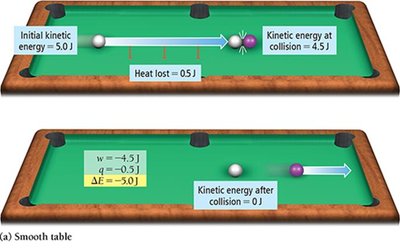
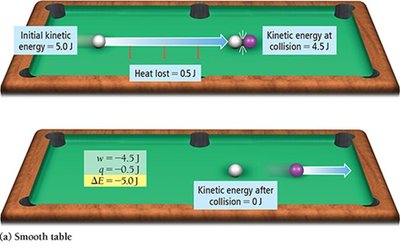
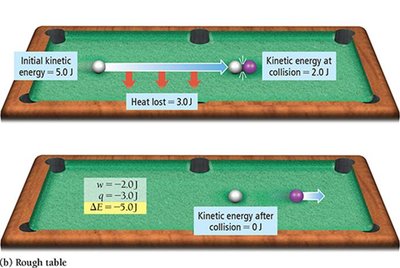
When a billiard ball collides with another, energy is transferred as work and some is lost as heat due to friction. The total change in energy is the sum of work and heat.

Heat Capacity and Specific Heat
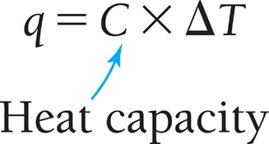
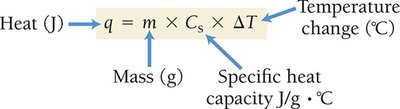
Heat capacity (C) is the amount of heat required to raise the temperature of an object by 1°C. Specific heat capacity (C_s) is the amount of heat required to raise the temperature of 1 gram of a substance by 1°C.
Formula:
Formula:
Thermal Energy Transfer
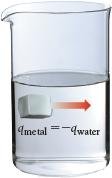
When two objects at different temperatures are in contact, heat flows from the hotter to the cooler object until thermal equilibrium is reached. The heat lost by the hot object equals the heat gained by the cold object.

Pressure-Volume Work
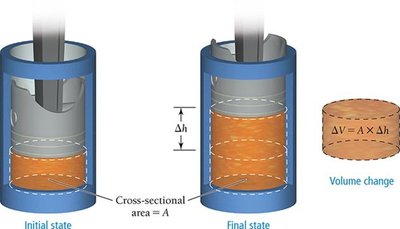
When a gas expands or contracts against an external pressure, it does work on the surroundings. The work done by the gas is given by:
Calorimetry
Calorimetry is the measurement of heat flow in a chemical reaction. A bomb calorimeter is used to measure changes in internal energy at constant volume, especially for combustion reactions.
Additional info: The above notes cover the fundamental concepts of thermochemistry, including energy types, conservation, transfer, and measurement, with relevant equations and visual aids for clarity.
