 Indietro
A Brief History and Foundations of Genetics
Guida di studio - Note intelligenti
 Appunti personalizzati basati sui tuoi materiali, ampliati con definizioni chiave, esempi e contesto.
Introduction to Genetics
Historical Perspectives on Heredity
The study of genetics has evolved from ancient philosophical ideas to a modern scientific discipline. Early theories tried to explain how traits pass from one generation to the next but lacked experimental evidence and an understanding of cellular and molecular mechanisms.
Pre-1700s: Ancient and medieval biologists, including Aristotle, speculated about inheritance without knowledge of cells or DNA.
1700-1900: The concept of blending inheritance was widely accepted, suggesting offspring are a blend of parental traits.
Preformation vs. Epigenesis: Preformation posited that organisms develop from miniature versions of themselves, while epigenesis proposed that organisms develop through a series of progressive changes.
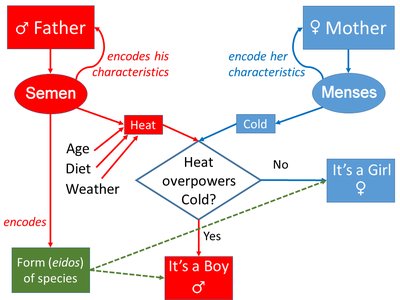
Additional info: Aristotle believed that the father's semen and the mother's menses contributed to the offspring, with environmental factors influencing the outcome.
Experimental Approaches to Heredity
Testing Blending Inheritance
Before the discovery of cells and DNA, biologists could only use observational and breeding experiments to test theories of inheritance. To test blending inheritance, one could cross individuals with distinct traits and observe the traits in subsequent generations.
What to measure: The appearance of traits in offspring over multiple generations.
Organisms: Pea plants, due to their distinct and easily observable traits.
Supporting blending inheritance: If offspring always show intermediate traits between parents.
Rejecting blending inheritance: If parental traits reappear unchanged in later generations (as Mendel observed).
Mendelian Genetics
Gregor Mendel and the Laws of Inheritance
Gregor Mendel, through his experiments with pea plants, demonstrated that inheritance is governed by discrete units (now called genes) that follow specific patterns. His work laid the foundation for modern genetics, although it was not recognized until decades later.
Mendel's Laws:
Law of Segregation: Each individual has two alleles for each gene, which segregate during gamete formation.
Law of Independent Assortment: Genes for different traits assort independently during gamete formation.
Rediscovery: Mendel's work was independently rediscovered by three scientists in 1900, confirming the particulate nature of inheritance.
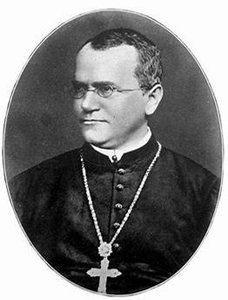
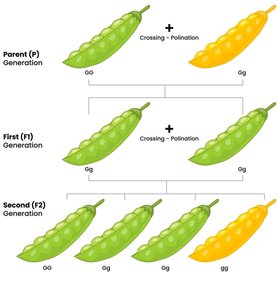
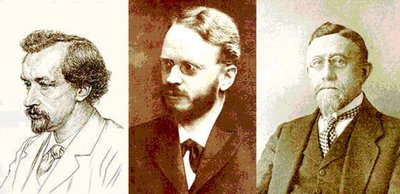
Additional info: Mendel's experiments with pea plants (Pisum sativum) involved tracking traits such as seed color and shape across generations, leading to the formulation of his laws.
Chromosomes and the Cellular Basis of Heredity
Discovery of Chromosomes
The invention of the microscope enabled scientists to observe structures within the cell nucleus, later identified as chromosomes. This discovery linked Mendel's 'particles' to physical entities within cells.
Chromosomes: Thread-like structures in the nucleus that carry genetic information.
Technological advances: Improved microscopy, staining techniques, and chemical analysis allowed for the isolation and study of DNA, RNA, and proteins.
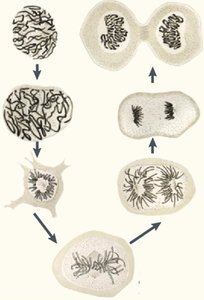
Additional info: The observation of chromosomes during cell division (mitosis and meiosis) provided evidence for the physical basis of inheritance.
DNA as the Genetic Material
The Hershey-Chase Experiment
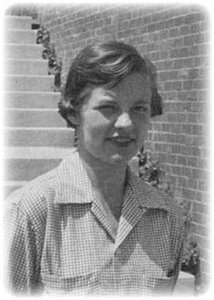
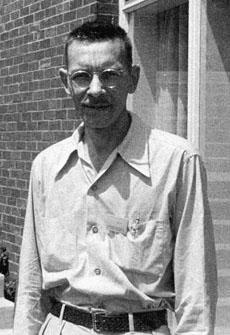
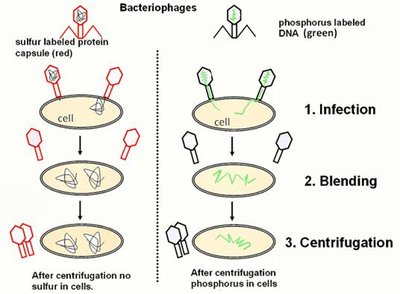
In 1952, Martha Chase and Alfred Hershey demonstrated that DNA, not protein, is the hereditary material in cells. They used bacteriophages labeled with radioactive isotopes to show that only DNA enters bacterial cells during infection.
Key finding: DNA carries genetic information, not proteins.
Experimental design: Used sulfur-labeled protein and phosphorus-labeled DNA to track which molecule entered the cell.
The Structure of DNA
Watson, Crick, Wilkins, and Franklin
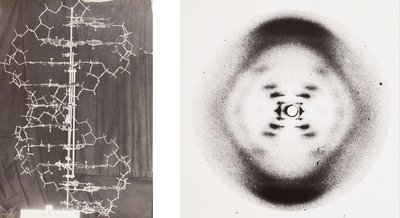
In 1953, James Watson, Francis Crick, Maurice Wilkins, and Rosalind Franklin elucidated the double helix structure of DNA. This discovery explained how genetic information is stored and replicated.
Double helix: DNA consists of two strands forming a helical structure, with complementary base pairing (A-T, G-C).
Experimental evidence: X-ray crystallography images provided by Franklin were critical to solving the structure.
Additional info: The structure of DNA provided a molecular explanation for the faithful transmission of genetic information.
Modern Genetics and Genomics
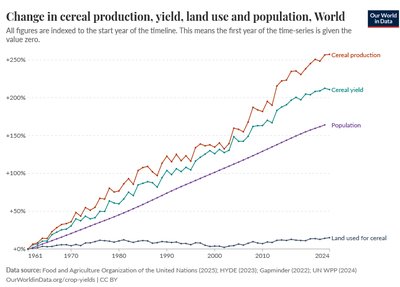
The Green Revolution
The application of genetics to agriculture in the 1960s led to the Green Revolution, which dramatically increased crop yields and food production worldwide.
Key advances: Development of high-yield, disease-resistant crop varieties using genetic principles.
Impact: Benefited developing nations by improving food security.
Genome Sequencing and the Human Genome Project
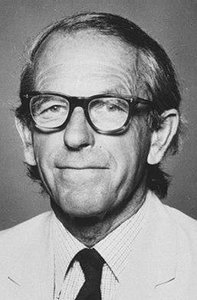
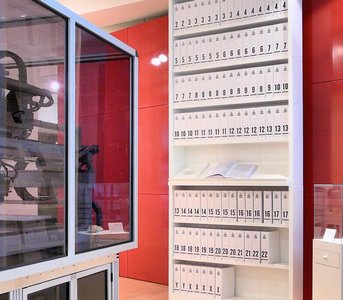
The development of DNA sequencing techniques by Frederick Sanger in 1977 enabled the reading of genetic information. The Human Genome Project (1990-2003) sequenced the entire human genome, revolutionizing biology and medicine.
Genome sequencing: Determining the order of nucleotides in DNA.
Human Genome Project: International effort to sequence all human genes, completed in 2003.
Impact: Enabled personalized medicine, comparative genomics, and advanced genetic research.
Genetic Engineering and CRISPR
Genetic engineering allows scientists to modify organisms by inserting, deleting, or altering genes. The first genetically engineered drug, human insulin produced in bacteria, was approved in 1982. The advent of CRISPR technology has made gene editing more precise and accessible.
Recombinant DNA technology: Combining DNA from different organisms to produce new genetic combinations.
CRISPR: A revolutionary gene-editing tool that allows targeted modifications in DNA sequences.
Applications: Medicine, agriculture, and biotechnology.

Additional info: The only current limitation to genetic engineering is our understanding of gene function and regulation.
