 Indietro
Chapter 10: DNA Structure and Analysis – Study Notes
Guida di studio - Note intelligenti
 Appunti personalizzati basati sui tuoi materiali, ampliati con definizioni chiave, esempi e contesto.
Chapter 10: DNA Structure and Analysis
Introduction
This chapter explores the discovery, structure, and analysis of DNA, the molecule responsible for heredity. It covers the essential characteristics of genetic material, historical experiments that established DNA as the genetic material, the chemical structure of DNA and RNA, and modern analytical techniques used to study nucleic acids.
Characteristics of Genetic Material
Requirements for Genetic Material
To function as genetic material, a molecule must fulfill four key criteria:
Information Storage: Must encode the information necessary for the structure, function, and regulation of an organism's cells and development.
Replication: Must be able to make accurate copies of itself for transmission to the next generation.
Expression: Must be able to direct the synthesis of proteins and other molecules (gene expression).
Variation by Mutation: Must be capable of undergoing changes (mutations) to allow for genetic diversity.
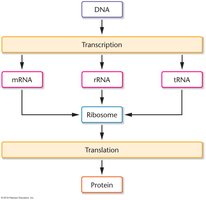
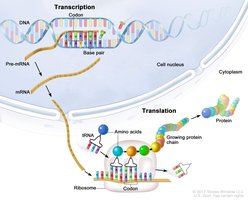
Central Dogma of Molecular Genetics: Information flows from DNA to RNA to protein, through the processes of transcription and translation.
Historical Perspective: DNA vs. Protein as Genetic Material
The Tetranucleotide Hypothesis and Protein Favoritism
Early in the 20th century, DNA was thought to be too simple to serve as genetic material due to the tetranucleotide hypothesis, which proposed that DNA was composed of repeating units of four nucleotides in equal amounts. Proteins, with their 20 different amino acids, were favored as the genetic material due to their greater chemical diversity.
Experimental Evidence for DNA as Genetic Material
Key Experiments
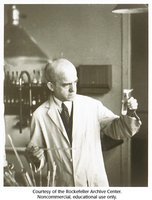
Griffith's Transformation Experiment (1927): Demonstrated that a "transforming principle" from dead virulent bacteria could convert live avirulent bacteria into a virulent form.
Avery, MacLeod, and McCarty (1944): Identified DNA as the "transforming principle" responsible for heredity in bacteria.
Hershey-Chase Experiment (1952): Used bacteriophages and radioisotopes to show that DNA, not protein, is the genetic material transmitted to bacteria during viral infection.
Griffith's Transformation Experiment
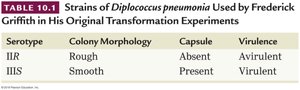
Griffith worked with two strains of Diplococcus pneumoniae:
Serotype | Colony Morphology | Capsule | Virulence |
|---|---|---|---|
IIR | Rough | Absent | Avirulent |
IIIS | Smooth | Present | Virulent |
Conclusion: A chemical component from dead virulent cells transformed live avirulent cells into virulent ones, suggesting the presence of a "transforming principle."
Avery, MacLeod, and McCarty Experiment
This experiment used enzymatic digestion to show that only DNA, not protein or RNA, could transform avirulent bacteria into virulent forms.
Hershey-Chase Experiment
By labeling DNA with phosphorus-32 and protein with sulfur-35 in bacteriophages, Hershey and Chase demonstrated that only DNA entered bacterial cells and directed viral replication, confirming DNA as the genetic material.
Chemistry and Structure of DNA
Nucleotides: Building Blocks of DNA
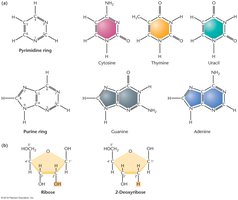
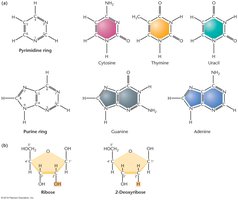
DNA is a polymer of nucleotides, each consisting of:
Pentose sugar: Deoxyribose in DNA, ribose in RNA
Nitrogenous base: Purines (adenine, guanine) and pyrimidines (cytosine, thymine in DNA; uracil in RNA)
Phosphate group: Provides a negative charge and links nucleotides via phosphodiester bonds
Phosphodiester Bonds
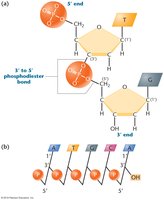
Nucleotides are joined by phosphodiester bonds between the 5' phosphate group of one nucleotide and the 3' hydroxyl group of the next, forming the sugar-phosphate backbone of DNA.
Watson and Crick Model of DNA Structure
Watson and Crick (1953) proposed the double helix structure of DNA, based on Chargaff's base composition rules and Rosalind Franklin's X-ray diffraction data.
Double helix: Two antiparallel strands coiled around a central axis
Base pairing: Adenine pairs with thymine (A-T) via two hydrogen bonds; guanine pairs with cytosine (G-C) via three hydrogen bonds
Complementarity: Ensures accurate replication and information transfer
Chargaff's Rules
Chargaff found that the amount of adenine equals thymine, and the amount of guanine equals cytosine in DNA, but the ratio of (A+T) to (G+C) varies among species.
X-ray Diffraction
Rosalind Franklin's X-ray diffraction images (notably "Photograph 51") revealed the helical structure and periodicity of DNA.

Structure of RNA
Differences Between DNA and RNA
Sugar: RNA contains ribose; DNA contains deoxyribose
Bases: RNA uses uracil instead of thymine
Strandedness: RNA is usually single-stranded; DNA is double-stranded
Three main classes of RNA function in gene expression:
mRNA (messenger RNA): Carries genetic information from DNA to ribosomes
rRNA (ribosomal RNA): Structural and functional component of ribosomes
tRNA (transfer RNA): Brings amino acids to ribosomes during protein synthesis
RNA as Genetic Material in Some Viruses
Some viruses, such as retroviruses, use RNA as their genetic material. Retroviruses replicate by reverse transcription, where RNA is used as a template to synthesize DNA via the enzyme reverse transcriptase.
Analytical Techniques for DNA and RNA
Denaturation and Renaturation
DNA can be denatured (separated into single strands) by heat or chemical stress. The melting temperature (Tm) is the point at which half the DNA molecules are denatured. Renaturation (reannealing) occurs when complementary strands reassociate.
Molecular Hybridization
Denatured single strands from different sources can hybridize if complementary, forming the basis for techniques such as Fluorescent In Situ Hybridization (FISH), which uses fluorescent probes to detect specific DNA sequences on chromosomes.
Electrophoresis
Electrophoresis separates DNA or RNA fragments by size using an electric field, allowing for analysis of nucleic acid length and purity.
Summary Table: Key Differences Between DNA and RNA
Feature | DNA | RNA |
|---|---|---|
Sugar | Deoxyribose | Ribose |
Bases | A, T, G, C | A, U, G, C |
Strandedness | Double-stranded | Single-stranded (usually) |
Function | Genetic information storage | Gene expression, catalysis |
Additional info: The chapter also briefly mentions the "RNA world" hypothesis, which proposes that RNA may have been the original genetic material in early life forms due to its ability to store information and catalyze reactions.
