 Indietro
DNA Structure and Evidence for DNA as Genetic Material
Guida di studio - Note intelligenti
 Appunti personalizzati basati sui tuoi materiali, ampliati con definizioni chiave, esempi e contesto.
DNA Structure and Analysis
Chemical Bonds and Components of DNA
The structure of DNA is defined by its chemical bonds and molecular components, which together form the double helix. Understanding these features is essential for grasping how DNA functions as the genetic material.
Phosphodiester Bonds: Nucleotides in a DNA strand are linked by phosphodiester bonds, which connect the 5’ phosphate group of one nucleotide to the 3’ hydroxyl group of the next.
Nitrogenous Bases: DNA contains two types of nitrogenous bases: purines (adenine and guanine) and pyrimidines (cytosine and thymine).
Base Pairing: Adenine pairs with thymine, and cytosine pairs with guanine via hydrogen bonds.
Antiparallel Strands: The two strands of DNA run in opposite directions (5’ to 3’ and 3’ to 5’), a feature known as antiparallel orientation.
DNA Replication Direction: New DNA strands are synthesized in the 5’ to 3’ direction.
Sugar Molecule: The sugar in DNA is deoxyribose, which lacks an oxygen atom at the 2’ position compared to ribose in RNA.
Phosphate Groups: Phosphate groups form the backbone of DNA, providing structural stability and polarity.
Chargaff’s Rules: The amount of adenine equals thymine, and the amount of guanine equals cytosine in DNA.
Example: If one strand of DNA has the sequence 5’-ACGTT-3’, the complementary strand is 3’-TGCAA-5’.
Structural Features of DNA
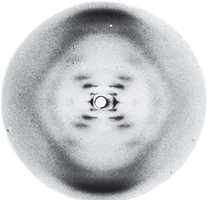
DNA’s double helix structure was elucidated through X-ray diffraction and molecular modeling, revealing its periodicity and helical nature.
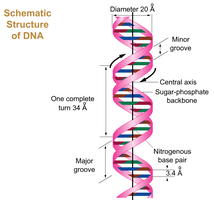
Helical Structure: DNA exhibits a 3.4 Å periodicity, characteristic of a helical structure.
Major and Minor Grooves: The double helix has alternating major and minor grooves, which are important for protein-DNA interactions.
Diameter and Turn: The helix has a diameter of 20 Å and completes one turn every 34 Å.
Historical Discovery of DNA as Genetic Material
Key Figures and Experiments
The identification of DNA as the genetic material was a result of several landmark experiments and contributions from pioneering scientists.
Friedrich Miescher (1869): Discovered nucleic acids in cell nuclei.
Gregory Mendel (1866): Established principles of heredity.
Chromosome Theory: Early 20th-century work linked chromosomes to inheritance.
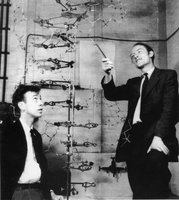
James Watson and Francis Crick (1953): Proposed the double helix model of DNA.
Rosalind Franklin (1950–1953): Used X-ray diffraction to reveal DNA’s helical structure.

Experimental Evidence for DNA as Genetic Material
Several experiments provided direct and indirect evidence that DNA, not protein, is the genetic material responsible for heredity.
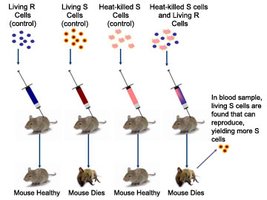
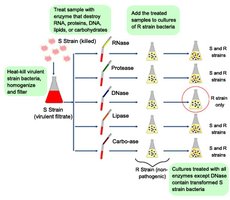
Griffith’s Transformation Principle (1928): Demonstrated that a substance from dead bacteria could transform living bacteria.
Avery, MacLeod, and McCarty (1944): Identified DNA as the transforming principle in bacteria.
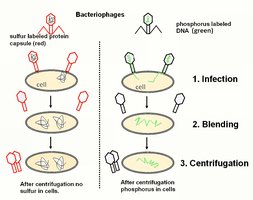
Hershey and Chase (1952): Used radioisotopes to show that DNA, not protein, enters bacteria during viral infection and directs reproduction.
Indirect and Direct Evidence for DNA as Genetic Material
Both indirect and direct evidence support the role of DNA as the genetic material in living organisms.
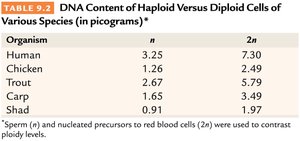
Indirect Evidence: DNA content correlates with chromosome sets in gametes and diploids, unlike proteins. DNA is present in mitochondria and chloroplasts, which perform genetic functions.
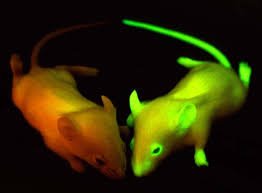
Direct Evidence: Recombinant DNA technology and transgenic animals demonstrate that DNA can encode and express genes across species.
Summary Table: DNA Content in Haploid vs. Diploid Cells
This table compares the DNA content in haploid (n) and diploid (2n) cells of various species, illustrating the correlation between DNA amount and chromosome sets.
Organism | n | 2n |
|---|---|---|
Human | 3.25 | 7.30 |
Chicken | 1.26 | 2.49 |
Trout | 2.67 | 5.79 |
Carp | 1.65 | 3.49 |
Shad | 0.91 | 1.97 |
Check Points for Understanding
Identify the three main structural components of DNA and understand 5’ to 3’ polarity.
Explain phosphodiester bonds and antiparallel double helix structure.
Recognize similarities between DNA and RNA.
Understand direct and indirect evidence for DNA as the genetic material.
Key Equations and Concepts
Phosphodiester Bond Formation:
Chargaff’s Rule:
Practical Questions and Applications
Describe the chemical bond linking nucleotides in DNA.
Identify the types and names of nitrogenous bases in DNA.
Explain the significance of antiparallel strands and directionality in DNA replication.
Interpret DNA sequence complementarity.
Analyze DNA sequences for diagnostic purposes using BLAST.
Discuss the importance of radioisotopes in the Hershey-Chase experiment.
Additional info: Academic context was added to clarify the historical experiments, structural features, and practical applications of DNA analysis.
