 Indietro
DNA Supercoiling and Telomere Replication: Implications for Chromosome Stability
Guida di studio - Note intelligenti
 Appunti personalizzati basati sui tuoi materiali, ampliati con definizioni chiave, esempi e contesto.
DNA and Chromosome Structure
Supercoiling of DNA
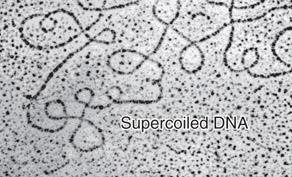
Supercoiling refers to the over- or under-winding of a DNA strand, and is an important aspect of DNA structure in cells. It arises due to torsional strain when the DNA double helix is subject to twisting forces, especially in closed circular DNA or linear DNA with constrained ends.
Definition: Supercoiling is the coiling of a closed duplex DNA in space so that it crosses over its own axis.
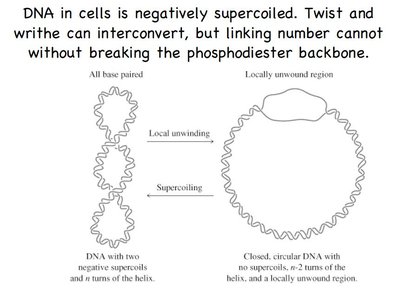
Types: DNA can be negatively or positively supercoiled. In cells, DNA is typically negatively supercoiled, which facilitates processes such as replication and transcription by making strand separation easier.
Biological Importance: Supercoiling compacts DNA, allowing it to fit within the cell, and regulates access to genetic information.
Linking Number (Lk): The total number of times one strand of DNA winds around the other in a closed DNA molecule. Changes in supercoiling alter the linking number only if the DNA backbone is broken.
Resolving Supercoiling: The Role of Topoisomerases
During DNA replication and transcription, the unwinding of the double helix introduces additional supercoils ahead of the replication fork. Specialized enzymes called topoisomerases resolve these topological problems by transiently breaking DNA strands to relieve torsional strain.
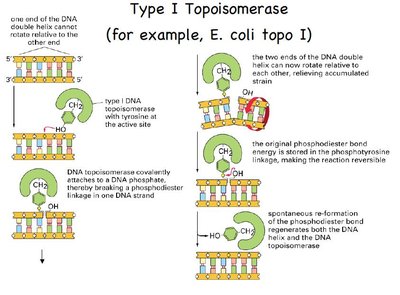
Type I Topoisomerases: Make transient single-strand breaks, allowing the DNA to rotate and relieve supercoiling. They do not require ATP.
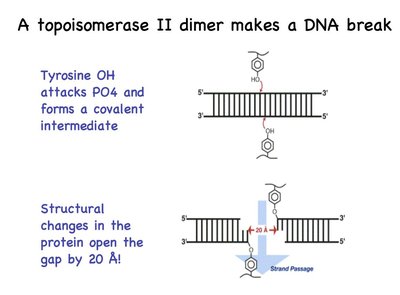
Type II Topoisomerases: Make transient double-strand breaks, passing another segment of the DNA helix through the break. They require ATP and can introduce or remove supercoils.
Mechanism: Both types use a tyrosine residue in their active site to form a transient covalent bond with DNA, facilitating strand passage or rotation.
DNA Replication
The End Replication Problem and Telomeres
Linear chromosomes face a unique challenge during DNA replication: the inability of DNA polymerases to fully replicate the 3' ends of the lagging strand. This leads to progressive shortening of chromosomes with each cell division, a phenomenon known as the end replication problem.
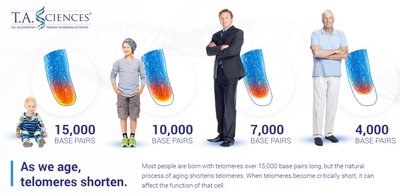
Telomeres: Specialized repetitive DNA sequences at the ends of linear chromosomes that protect coding regions from erosion.
Biological Significance: Telomere shortening is associated with cellular aging and limits the number of times a cell can divide (the Hayflick limit).
Telomerase: Extending Chromosome Ends
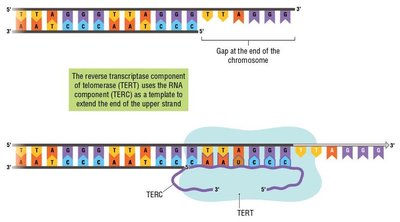
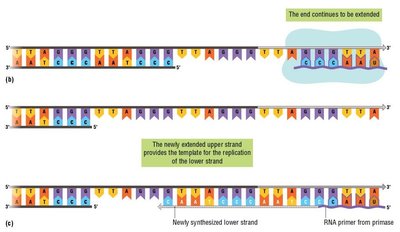
To counteract telomere shortening, certain cells express telomerase, a ribonucleoprotein enzyme with reverse transcriptase activity. Telomerase extends the 3' end of the leading strand using an RNA template, allowing the lagging strand to be fully replicated.
Mechanism: The RNA component of telomerase (TERC) serves as a template for the addition of telomeric repeats by the protein component (TERT).
Cell Types: Telomerase is active in germ cells, stem cells, and most cancer cells, but is inactive in most somatic cells.
Clinical Relevance: Telomerase activity is a target for anti-cancer therapies, as its reactivation is a hallmark of cancer cell immortality.
Summary Table: Key Features of Supercoiling and Telomere Replication
Feature | Supercoiling | Telomere Replication |
|---|---|---|
Definition | Over- or under-winding of DNA | Extension of chromosome ends to prevent shortening |
Key Enzymes | Topoisomerases | Telomerase |
Biological Role | DNA compaction, regulation of replication/transcription | Maintains chromosome integrity during replication |
Clinical Relevance | Target for antibiotics and anti-cancer drugs | Target for anti-aging and cancer therapies |
Additional info: Supercoiling is also important in prokaryotic chromosomes and plasmids, where it affects gene expression and DNA packaging. Telomere length is a biomarker of cellular aging and is studied in age-related diseases.
