 Indietro
Extensions and Modifications of Basic Principles in Genetics
Guida di studio - Note intelligenti
 Appunti personalizzati basati sui tuoi materiali, ampliati con definizioni chiave, esempi e contesto.
Extensions and Modifications of Basic Principles
Overview
This chapter explores how classical Mendelian inheritance is extended and modified by various genetic phenomena. These include different types of dominance, gene interactions, environmental effects, and non-Mendelian inheritance patterns. Understanding these concepts is crucial for interpreting complex inheritance patterns observed in nature and in medical genetics.
Dominance Relationships
Complete, Incomplete, and Codominance
Dominance describes the relationship between alleles of a single gene and how they affect phenotype.
Complete Dominance: The phenotype of the heterozygote is identical to one of the homozygotes.
Incomplete Dominance: The heterozygote displays a phenotype intermediate between the two homozygotes.
Codominance: Both alleles in the heterozygote are fully expressed, resulting in a phenotype that shows both traits simultaneously.
Example: In eggplants, incomplete dominance results in intermediate fruit color in heterozygotes.
Type of Dominance | Definition |
|---|---|
Complete dominance | Phenotype of the heterozygote is the same as one of the homozygotes. |
Incomplete dominance | Phenotype of the heterozygote is intermediate between the two homozygotes. |
Codominance | Phenotype of the heterozygote includes both homozygote phenotypes. |
Penetrance and Expressivity
Variation in Phenotypic Expression
Penetrance and expressivity describe how consistently a genotype produces its associated phenotype.
Penetrance: The percentage of individuals with a particular genotype who express the expected phenotype. Can be complete (100%) or incomplete.
Expressivity: The degree to which a trait is expressed among individuals with the same genotype. Can be variable or unvarying.
Example: Polydactyly is caused by a dominant allele but shows incomplete penetrance and variable expressivity—some individuals with the allele have extra digits, while others do not or show varying numbers of extra digits.
Multiple Alleles and Allelic Series
More Than Two Alleles at a Locus
Many genes have more than two alleles in a population, forming an allelic series with a dominance hierarchy.
Example: The ABO blood group system in humans is determined by three alleles: IA, IB, and i. IA and IB are codominant, and both are dominant over i.
Allelic Series: In mallard ducks, three alleles (MR, M, md) determine feather color with a dominance hierarchy: MR > M > md.
Lethal Alleles
Dominant and Recessive Lethal Effects
Some alleles are lethal when present in certain genotypes, altering expected Mendelian ratios.
Dominant Lethal: Only one copy needed for lethality (e.g., Huntington's disease allele in humans).
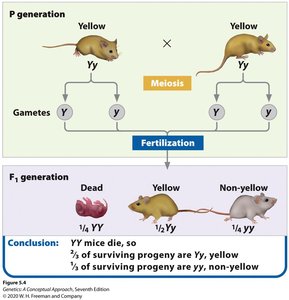
Recessive Lethal: Two copies needed for lethality (e.g., yellow coat color allele in mice).
Gene Interactions
Epistasis and Modified Ratios
Gene interactions occur when alleles at different loci interact to affect a phenotype. Epistasis is a common form of gene interaction where one gene masks the effect of another.
Epistatic gene: The gene that masks the effect of another gene.
Hypostatic gene: The gene whose effect is masked.
Types of Epistasis:
Recessive Epistasis: Two recessive alleles at one locus mask the expression of alleles at another locus (e.g., Labrador retriever coat color).
Dominant Epistasis: A single dominant allele at one locus masks the expression of alleles at another locus (e.g., squash color).
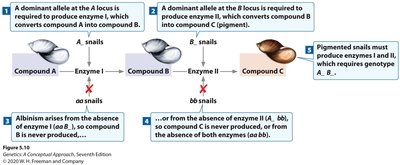
Duplicate Recessive Epistasis: Homozygosity for recessive alleles at either of two loci results in the same phenotype (e.g., albinism in snails).
Ratio | Type of Interaction | Example |
|---|---|---|
9:3:3:1 | None | Seed shape and color in peas |
9:3:4 | Recessive epistasis | Labrador retriever coat color |
12:3:1 | Dominant epistasis | Squash color |
9:7 | Duplicate recessive epistasis | Albinism in snails |
Sex-Influenced and Sex-Limited Traits
Influence of Sex on Phenotype
Sex-Influenced Traits: Traits where the same genotype has different phenotypic effects in males and females (e.g., beardedness in goats).
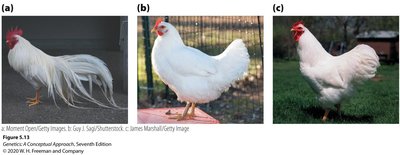
Sex-Limited Traits: Traits expressed in only one sex, even though both sexes carry the alleles (e.g., cock feathering in chickens).
Cytoplasmic Inheritance
Non-Mendelian Inheritance of Organellar Genes
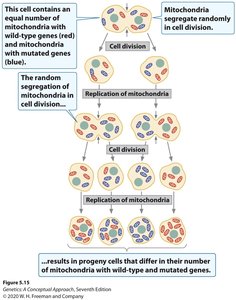
Genes in mitochondria and chloroplasts are inherited cytoplasmically, usually from the mother. This leads to unique inheritance patterns and phenotypic variation.
Traits present in both sexes but usually inherited from the maternal parent.
Reciprocal crosses yield different results.
Extensive phenotypic variation can occur within a family due to random segregation of organelles.
Pronuclear Transfer and Mitochondrial Replacement
Prevention of Mitochondrial Disease
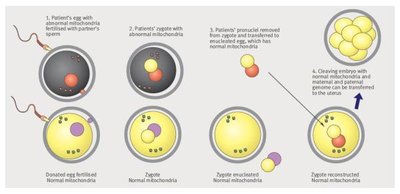
Pronuclear transfer is a technique used in in vitro fertilization to prevent the transmission of mitochondrial diseases by replacing defective mitochondria with healthy ones from a donor egg.
Genetic Maternal Effect
Maternal Genotype Determines Offspring Phenotype
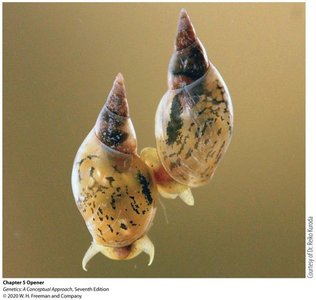
Some nuclear genes are expressed during oogenesis, and their products are deposited in the egg. The phenotype of the offspring is determined by the mother's genotype, not the offspring's own genotype.
Example: Direction of shell coiling in snails is controlled by the maternal genotype.
Genomic Imprinting
Parent-of-Origin Effects
Genomic imprinting is an epigenetic phenomenon where only one parental allele is expressed, depending on its origin. This can affect development and disease risk.
Example: Only the paternally inherited Igf2 allele is expressed in mice; if the paternal allele is mutant, fetal growth is retarded.
Environmental Effects on Phenotype
Gene-Environment Interactions
Environmental factors can influence the expression of genetic traits, sometimes mimicking or modifying genetic effects.
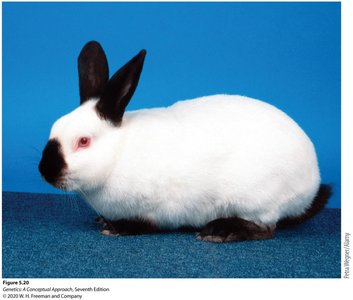
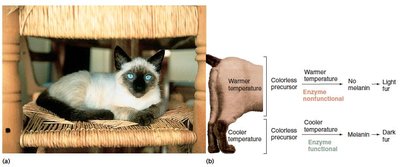
Temperature-sensitive alleles: Some alleles produce functional proteins only at certain temperatures.
Example: Himalayan rabbits and Siamese cats have dark extremities due to temperature-sensitive pigment production.
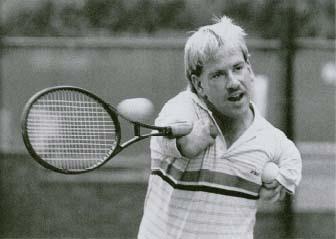
Phenocopy: An environmentally induced phenotype that mimics a genetic mutation (e.g., limb malformations caused by thalidomide exposure resemble the genetic disorder phocomelia).
Pleiotropy
One Gene, Multiple Effects
Pleiotropy occurs when a single gene influences multiple phenotypic traits. This is common in both plants and animals.
Example: The mouse yellow allele affects coat color, obesity, diabetes, and is lethal when homozygous.
Continuous (Quantitative) Characteristics
Polygenic Inheritance
Continuous characteristics, also called quantitative traits, are influenced by multiple genes (polygenic) and often show a range of phenotypes rather than discrete categories.
Examples include height, skin color, and many disease susceptibilities in humans.
Complementation Tests
Determining Genetic Locus of Mutations
Complementation tests are used to determine whether mutations that produce similar phenotypes are in the same gene (allelic) or in different genes (non-allelic).
Summary Table: Modified Dihybrid Ratios Due to Gene Interaction
Ratio | Type of Interaction | Example |
|---|---|---|
9:3:3:1 | None | Seed shape and color in peas |
9:3:4 | Recessive epistasis | Labrador retriever coat color |
12:3:1 | Dominant epistasis | Squash color |
9:7 | Duplicate recessive epistasis | Albinism in snails |
9:6:1 | Duplicate interaction | — |
15:1 | Duplicate dominant epistasis | — |
13:3 | Dominant and recessive epistasis | — |
Additional info: This chapter provides foundational knowledge for understanding complex inheritance patterns, human genetic diseases, and the impact of environment and epigenetics on gene expression.
