 Indietro
Extensions of Mendelian Inheritance: Mechanisms and Examples
Guida di studio - Note intelligenti
 Appunti personalizzati basati sui tuoi materiali, ampliati con definizioni chiave, esempi e contesto.
Extensions of Mendelian Inheritance
Introduction
While Mendel's laws provide the foundation for classical genetics, many inheritance patterns deviate from simple dominant-recessive relationships. These extensions often involve the function or amount of gene product, interactions between genes, or environmental influences. Understanding these mechanisms is crucial for interpreting complex genetic traits.
Sex Determination and Sex Chromosomes
Biological Sex Differences
Sex determination in many species is correlated with the presence and composition of sex chromosomes. The specific combination of sex chromosomes inherited from the parents determines the biological sex of the offspring.
Autosomes: Chromosomes present in two copies in both sexes, usually numbered (e.g., chromosome 1, 2, etc.).
Sex Chromosomes: Chromosomes that determine sex; often one is larger (e.g., X) and one is smaller (e.g., Y).
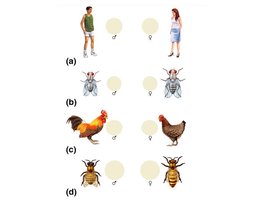
Systems of Sex Determination
X–Y System (Mammals): Females are XX, males are XY.
X–O System (Certain Insects): Females are XX, males are X (no Y).
Z–W System (Birds): Males are ZZ, females are ZW.
Haplo-diploid System (Bees): Females are diploid (32 chromosomes), males are haploid (16 chromosomes).
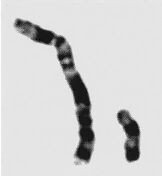
The X and Y Chromosomes
The X chromosome is much larger than the Y chromosome and contains many more genes. In humans and many other species, XX individuals are female and XY individuals are male.
X Chromosome: ~3000 genes, involved in many traits (e.g., blood clotting, color vision).
Y Chromosome: ~30 genes, primarily involved in male development and sperm production.
X-Linked Inheritance
X-Linked Genes
X-linked genes are located on the X chromosome. Males (XY) have only one copy of X-linked genes, while females (XX) have two. This difference affects inheritance patterns, especially for recessive traits.
Notation: XR (dominant allele), Xr (recessive allele).
Males: Only one X chromosome, so a single recessive allele will express the trait.
Females: Two X chromosomes, so two recessive alleles are needed to express the trait.
Punnett Square Example: Red/Green Color Blindness
Red/green color blindness is an X-linked recessive trait. A carrier female (XRXr) crossed with a normal male (XRY) produces the following genotypes and phenotypes:
Genotypes: 1 XRXR : 1 XRXr : 1 XRY : 1 XrY
Phenotypes: All females color-sighted; 50% of males color-sighted, 50% color-blind
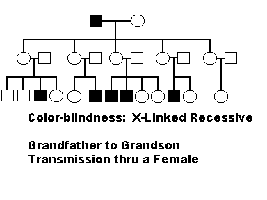
Pedigree Analysis
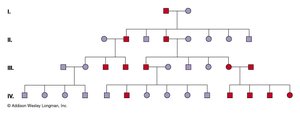
Pedigrees can help determine if a trait is X-linked. X-linked recessive traits often appear more frequently in males and can be transmitted from grandfather to grandson through a carrier female.
Gene Function and Protein Levels
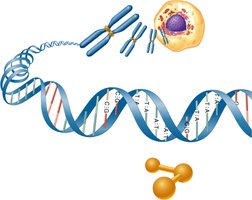
Genes Code for Proteins
Genes contain the instructions for making proteins, which perform essential functions in the cell. The phenotype often depends on the amount and function of the protein produced.
Loss of Function and Gain of Function Mutations
Wild Type: The most prevalent allele in a population; may be dominant or recessive.
Mutant (Variant): An allele altered by mutation, often resulting in loss of function (null allele).
Loss of Function: Protein does not function; often recessive.
Gain of Function: Protein has new or enhanced activity; often dominant.
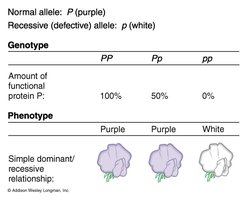
Protein Levels and Mendelian Inheritance
In simple Mendelian inheritance, the amount of functional protein determines the phenotype:
Genotype | Protein Level | Phenotype |
|---|---|---|
PP | 100% | Purple |
Pp | 50% | Purple |
pp | 0% | White |
Incomplete Dominance
Definition and Example
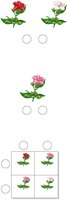
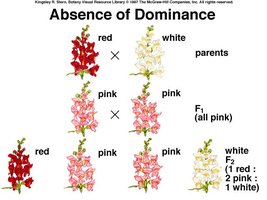
Incomplete dominance occurs when the heterozygote has an intermediate phenotype between the two homozygotes. This is due to insufficient protein function to produce the dominant phenotype.
Example: Crossing red (CRCR) and white (CWCW) flowers produces pink (CRCW) offspring.
Multiple Alleles
Definition and Examples
Some genes have more than two alleles in the population. These alleles can have a dominance hierarchy, resulting in multiple possible genotypes and phenotypes.
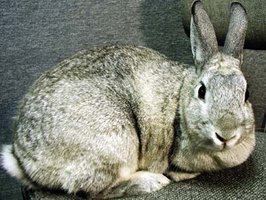
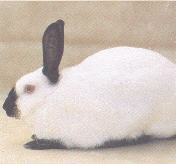
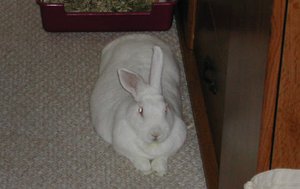
Example: Rabbit coat color is determined by four alleles—brown, chinchilla, Himalayan, and albino—with a specific dominance order.
Phenotype | Genotype |
|---|---|
Brown | CC or C_ |
Chinchilla | cch_ |
Himalayan | ch_ |
Albino | cc |

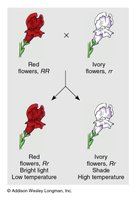
Temperature-Sensitive Alleles
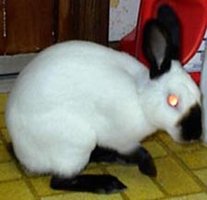
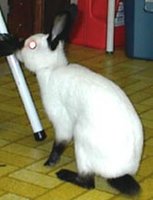
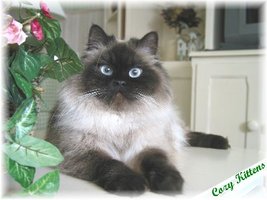
Some alleles are only expressed under certain environmental conditions. For example, the Himalayan allele in rabbits and cats produces pigment only in cooler body regions (ears, nose, paws).
Conditional Alleles
Definition and Example
Conditional alleles only express a phenotype under specific environmental conditions. For example, individuals with phenylketonuria (PKU) are normal on a low-phenylalanine diet but develop symptoms if the diet is not followed.
Multiple Alleles in Blood Types
ABO Blood Group System
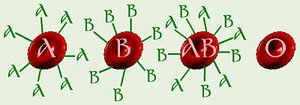
The ABO blood group is determined by three alleles: IA, IB, and i. IA and IB are codominant, while i is recessive. The four blood types are A, B, AB, and O.
Lethal Alleles
Definition
Lethal alleles cause death when present in the homozygous state. They often affect essential genes required for survival.
Penetrance and Expressivity
Incomplete Penetrance
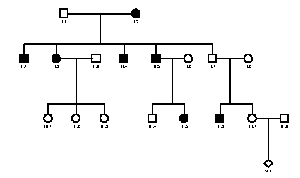
Penetrance refers to the proportion of individuals with a particular genotype who actually express the associated phenotype. Incomplete penetrance means not all individuals with the genotype show the phenotype (e.g., polydactyly in humans).
Expressivity
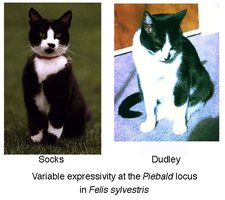
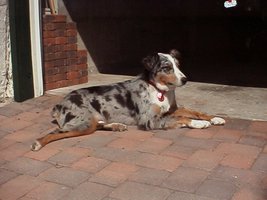
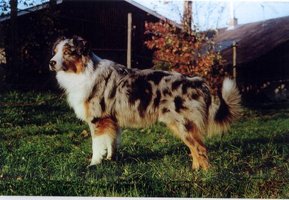
Expressivity describes the degree to which a genotype is expressed in an individual. It can vary among individuals with the same genotype (e.g., variable coat color patterns in cats and dogs).
Sex-Limited and Sex-Influenced Inheritance
Sex-Limited Inheritance
Traits that are expressed in only one sex, even though both sexes carry the genes (e.g., antlers in male deer, milk production in female cows).
Sex-Influenced Inheritance
Traits where the effect of an allele differs between sexes. For example, baldness is dominant in males but recessive in females.
Gene Dosage Effect
Definition and Example
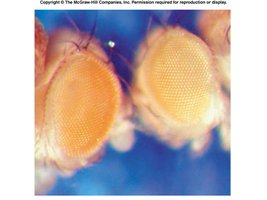
Gene dosage effects occur when the number of gene copies influences the phenotype, often seen in sex-linked genes. For example, female homozygotes may have a stronger phenotype than males with a single copy.
Pleiotropy
Definition and Example
Pleiotropy occurs when a single gene affects multiple phenotypic traits. For example, cystic fibrosis affects ion channels, mucus production, and multiple organs.
Gene Interactions and Epistasis
Two-Gene Interactions
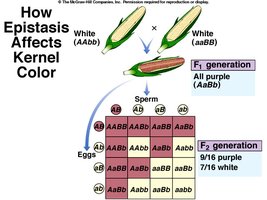
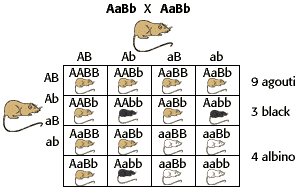
Sometimes, two genes interact to produce a single phenotype. The dihybrid Punnett square is used, but phenotypic ratios may differ from Mendelian expectations.
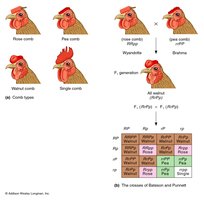
Epistasis
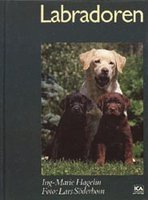
Epistasis occurs when one gene masks or modifies the effect of another gene. For example, in Labrador retrievers, the E gene determines pigment deposition, and the B gene determines pigment color.
Black: B_E_
Brown: bbE_
Yellow: __ee (regardless of B gene)
Other Extensions
Positional Effect
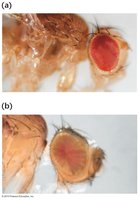
The expression of a gene can be affected by its location within the chromosome, especially if relocated to heterochromatin (inactive DNA).
Nutritional Mutants
Nutritional mutations prevent synthesis of essential nutrients. The phenotype is only expressed if the nutrient is absent from the diet (e.g., phenylketonuria, galactosemia).
Genetic Anticipation
Genetic anticipation is when a genetic disorder appears at an earlier age and with increased severity in successive generations, often due to trinucleotide repeat expansion (e.g., Huntington disease).
Complementation Analysis
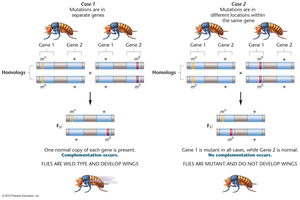
Complementation analysis determines whether mutations causing a similar phenotype are in the same or different genes. If two mutations complement, they are in different genes; if not, they are in the same gene.
Additional info: This guide covers key extensions of Mendelian inheritance, including gene interactions, environmental effects, and complex inheritance patterns. Understanding these concepts is essential for interpreting real-world genetic data and predicting phenotypes.
